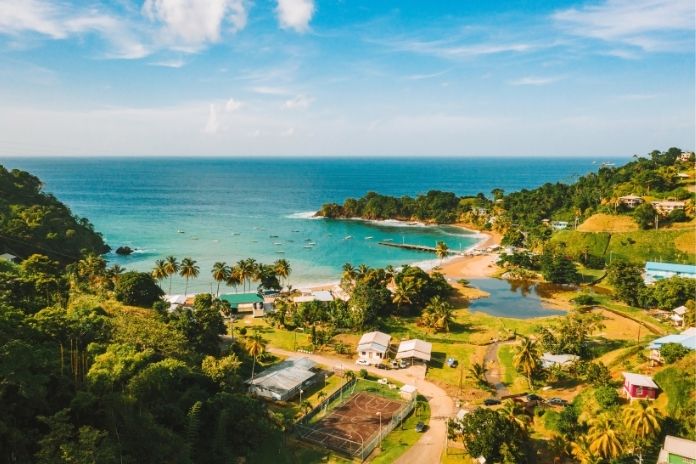
Whether you’re returning to your roots or just looking to get in on the island life, now is a fantastic time to consider making the move to Barbados! Alongside the usual warm Barbadian welcome, Barbados currently offers visas for foreigners working remotely to do so in the island’s warm weather instead. If you know Barbados is part of your story moving forward, here are the next steps for relocating to Barbados from the US.
Apply for Your Visa
There are multiple ways to get a visa that allows you to live in Barbados. The most exciting visa option is currently the Barbados 12-Month Welcome Stamp program. To apply for the Welcome Stamp, you need to pay a $2,000 fee as an individual ($3,000 for families), verify that you have private health insurance, and submit a passport-sized photograph. After a few other small verifications, you can continue the work-from-home job you have now but make a living from the comfort of an island villa instead!
Find Somewhere To Live
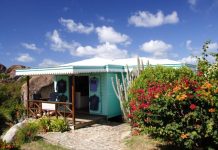
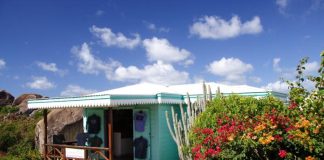
Once you’ve received approval, you need to find somewhere to stay on the island. Barbados is home to a wide variety of property types, from small, cozy villas to luxury, resort-like homes. Every region of the island offers something slightly different, but no matter what coast you choose to live on, taxis can get you where you need to go.
It’s important to consider how long you’d like to stay and what kind of investments you’re willing to make on the island. The decision to rent or buy a home on the island can be difficult, as each option offers unique advantages.
Brush Up on the Local Language
Finally, consider acquainting yourself with the local language before you go. While the national language in Barbados is British English, you’re sure to hear the Bajan dialect the moment you set foot on the island. Bajan is a combination of English and West African influences, and locals use it often in casual and conversational settings.
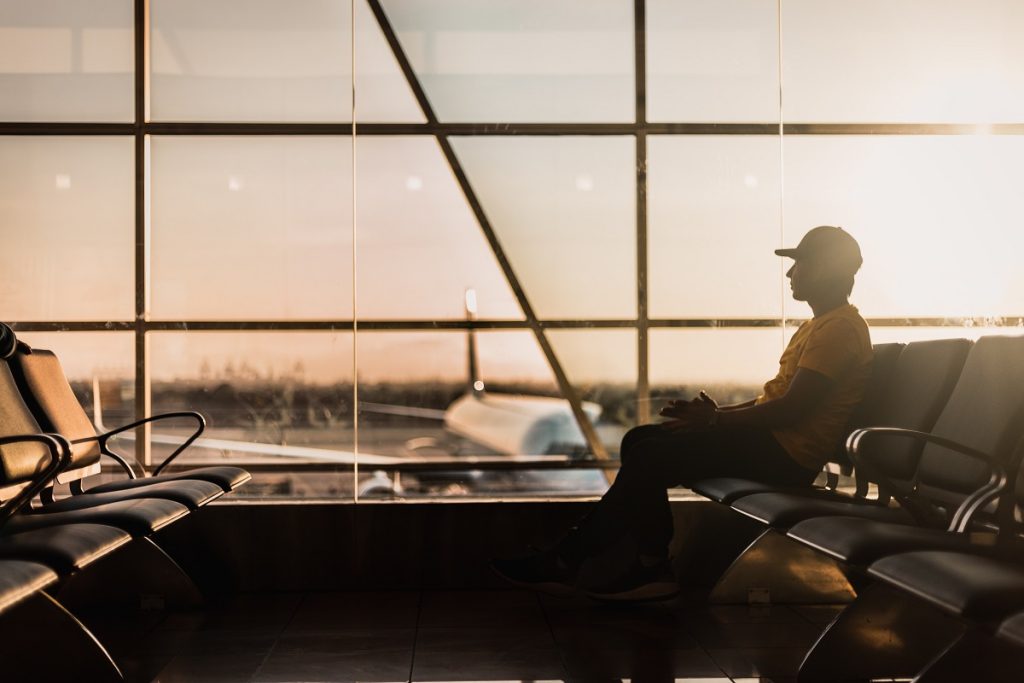
Once you’ve followed these steps for relocating to Barbados from the US, you’ll just need to start packing. The flight to the island is under four hours for Floridians and nearly eight hours for Californians, but you’ll forget a few hours of not being able to stretch your legs when you’re walking on the beach!
November 8, 2021 (Georgetown, Guyana) — !nnovate Guyana, which directs The Global Entrepreneurship Network (GEN) – Guyana Chapter, will be hosting GEN’s Global Entrepreneurship Week (GEW) event virtually on Wednesday, November 10, 2021 from 11:00 AM – 1:00 PM Guyana time for anyone interested in learning about startups and entrepreneurship in Guyana.
GEN is a platform of projects and programmes in 180+ countries that are aimed at making it easier for individuals, globally, to start and scale a business. For GEW, GEN Guyana will host a virtual Start-up Huddle themed “Guyana’s Evolving Startup Ecosystem: Innovation and the Role of Civil Society Business Support Organizations”.
This virtual presentation will feature four (4) Guyanese startup-founders who will pitch their science, technology and other innovative businesses to local and international audiences. The presenters include Guyana Innovation Prize Venture Fellows; and Vickacy Williams, Founder of Aurora and Jubilante Cutting, Founder Guyana Animation Network. Other speakers include: Nestle Vision-to-Reality Startup Competition Awardee, Crystal Charles, Founder of Enbio – a Sisal Production Business; and Together We Win Business Network – Stephanie Noble, Natural Hair and Skincare Products.
Additionally and importantly, the event will include a panel of Civil Society Business Support Organizations (BSOs), including leaders like Sancha Halley, CEO Of Ready Set Grow Consultancy, Onika Stellingburg, Director of Economic Development and the Linden Fund Guyana Inc., just to name a few. The panel will be discussing the evolving startup ecosystem in Guyana and the role of civil society business support organizations in its development. The pitches and panel discussion will be followed by a Q&A session.
The objective of this Start-up Huddle is to inspire innovators and entrepreneurs to engage in entrepreneurial activity, and to seek support from BSOs, all the while connecting them to resources to help grow their businesses.
To register, persons must register for the event through the link found here.
About GEN
Connecting Guyana to the Global Startup Ecosystem – Operating in 180+ countries, the Global Entrepreneurship Network (GEN) is a platform of initiatives and programs designed to support creation of a global entrepreneurial ecosystem. The main goal is to make it simpler for anyone to start and eventually scale a business no matter where they live. The GEN Guyana chapter works to fuel healthier start-up and scale-up ecosystems that create more jobs, educate individuals, accelerate innovation and strengthen economic growth.
About !nnovate Guyana
!nnovate Guyana is a platform that showcases Guyanese inventiveness. !nnovate Guyana consists of the Guyana Innovation Prize, which supportsr ag-science and ag-tech startups; !nnovate Guyana TV on YouTube; the Economic Development Accelerator for growing agro-processors; the Global Entrepreneurship Network Guyana chapter; and the Executive Volunteer Corps, which engages the diaspora and friends of Guyana to support innovators in Guyana’s burgeoning startup ecosystem. !nnovate Guyana is offered by the Guyana Economic Development Trust (GEDT), an independent U.S. and Guyana initiative.
A pipe bursting in the house is every homeowner’s worst fear. It could also cause a fair amount of damage to your home and belongings. Rather than wait for the worst-case scenario, note the telltale signs a pipe burst in your home. That way, you can call a plumber before an emergency arises.
High Water Bill
When your water bill is far higher than it should be, there’s cause for alarm. As you evaluate your water bill, note whether you’ve used a lot of water recently. For example, filling a pool and taking frequent baths could cause a spike.
However, if your water usage routine has remained steady, then there may be a leak in your water line. Call an expert as soon as possible to rule this factor out and prevent any potential water damage.
Low Water Pressure
Whether you’re turning on the faucet or trying to take a shower, you may notice that the water pressure is lower than expected or fluctuates between high and low.
Often, these changes in water pressure are symptoms of a burst or clogged pipe. When there’s a leak in your pipe, some of the water escapes as it travels down the line, which lowers the pressure.
Whistling Pipes
As you turn your water on and off, you may notice an odd whistling sound coming from the pipes. Similarly, you may hear what sounds like running water despite all the faucets in your home remaining off. Both indicate a leak in your water system and give you a reason to contact an expert.
Soft Spots on the Lawn
Maybe you haven’t noticed too much issue inside your house, but you have soggy spots in your yard. Look out for especially green patches of grass or pools of water near the driveway or sidewalks—the ground may even feel softer than the surrounding area when you stand on it.
If a repair expert finds a problem with your water line, they may utilize a trenchless method for repair. By knowing how the various types of trenchless methods work, you can better understand how experts can fix the pipe without destroying your landscaping.
Discolored Water
Brown or otherwise discolored water is another telltale sign a pipe burst in your home. In this case, you need to contact a professional promptly, as sediment or rust could contaminate your water.
And if the water smells sulfurous—often compared to rotten eggs—then there could be a sewage leak. Regardless of what sign you notice, calling an expert right away decreases the chance of the hefty expenses that accompany water damage.
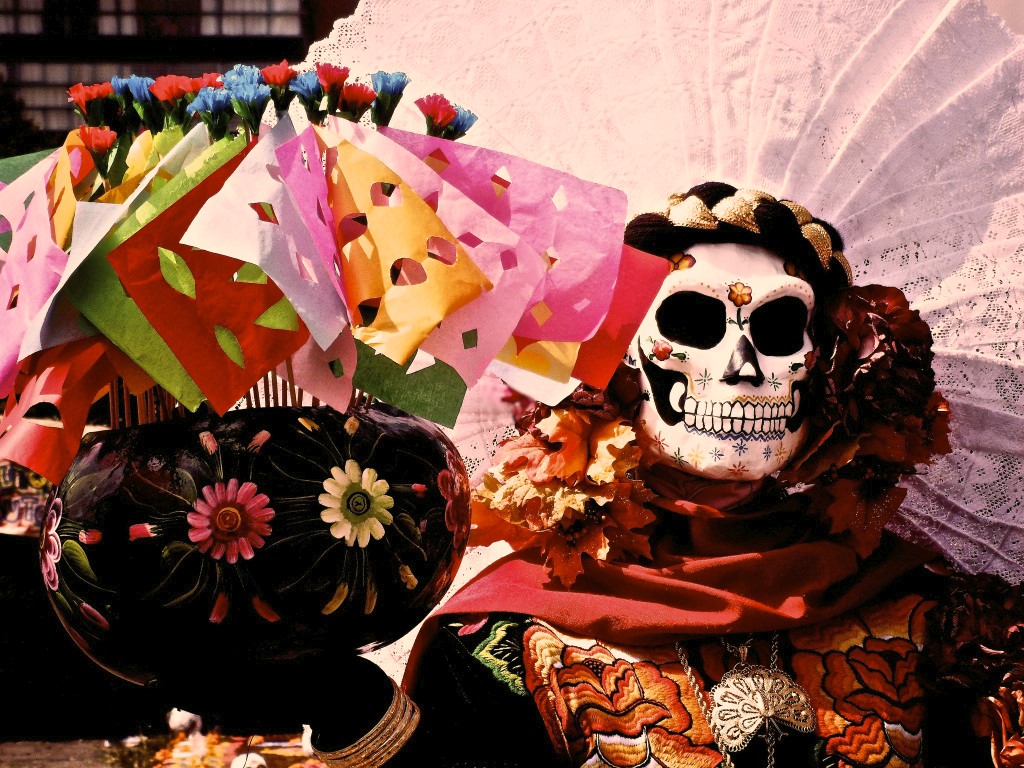
While the Mexican celebration of Dia de Los Muertos with its elaborate costumes and grand parades is becoming commercialized in the US, its origins have deep and spiritual meaning for those who celebrate the holiday. Following All Saints Day, November 2nd is All Souls Day, sometimes referenced as the “Day of the Dead,” for Catholics and Christians around the world. While All Saints Day is a day of recognition to honor all saints and martyrs within the Catholic tradition, All Souls Day is a holiday to remember and celebrate deceased loved ones. Catholics believe that once they celebrated all the pure souls in heaven on All Saints Day, celebrating the souls of friends and family stuck in purgatory the next day would help cleanse them of the sins keeping them from heaven.
Many Catholics believe that the saints and martyrs that were prayed to the day before would help their departed friends and family reach God’s holy kingdom. Rather than a sad commemoration of a loved one’s death, Day of the Dead is a vibrant celebration of their life.
Day of the Dead “Fête Gede” in Haiti
Photo Courtesy of Visit Haiti
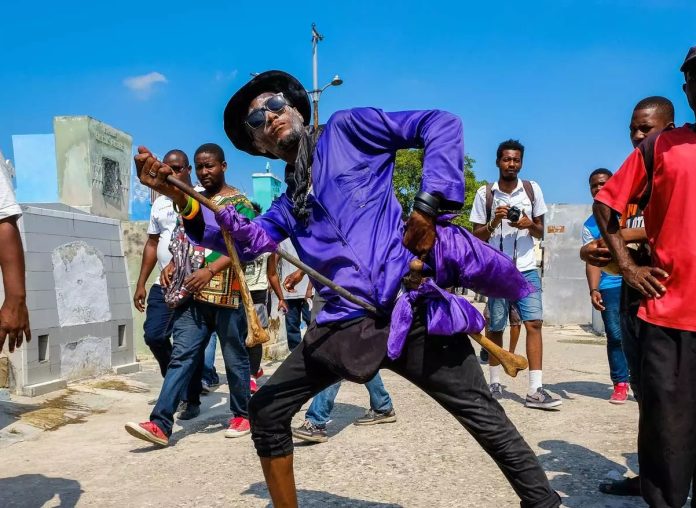
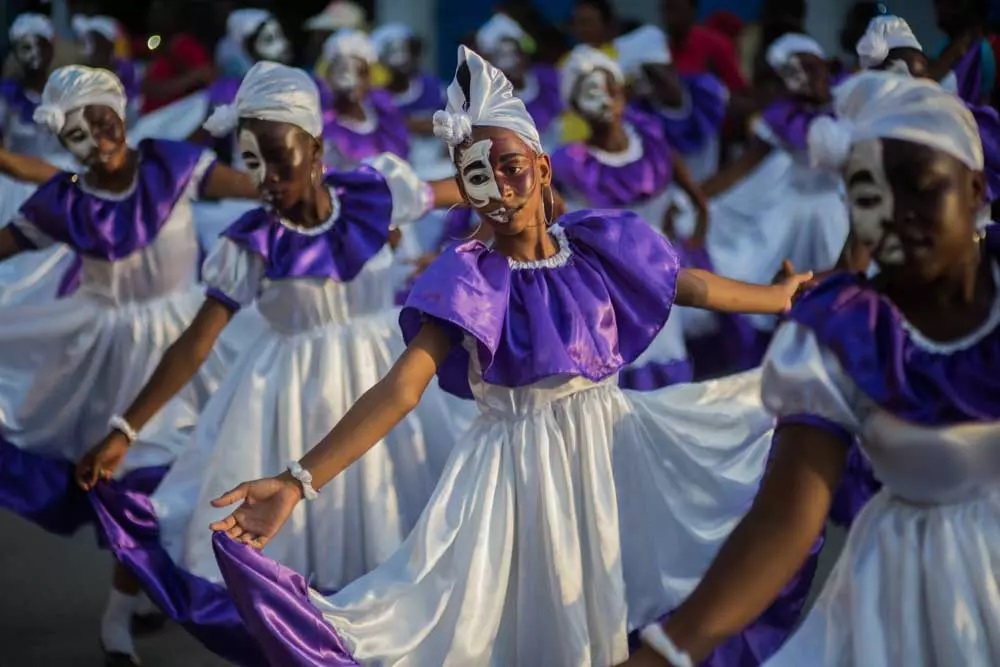
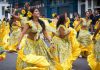
Of the Caribbean islands, Haiti is the most well connected to the Day of the Dead or Fête Gede, celebrating the holiday with community parades, colorful celebrations, music, dance and offerings. Families adorn the graves of their loved ones with flowers and candles, bread and rum.
Voodoo and Catholicism are heavily interwoven in Haiti, so Day of the Dead festivals typically include Voodoo rituals such as bringing offerings to Baron Samedi, the “loa of death” and Gede, his son. Murals and statues are often erected of Baron Samedi around the Grand Cemetery in Port-au-Prince with festival goers passing by throughout the day and night to pay their respects to him.
This celebration is not for the faint of heart, as it also includes animal sacrifices, typically of black chickens or roosters, and Voodoo priests and priestesses preparing individuals for spirit possession by Gede himself. While the official date of All Souls Day is November 2, Fête Gede typically lasts all month long.
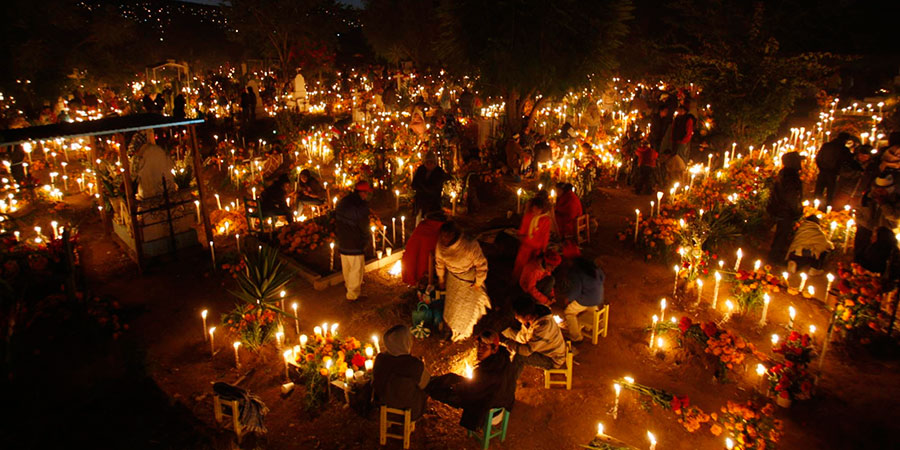
Because the soul’s journey was so long and difficult, it was important for living family members to be encouraging along the way with food, flowers and other offerings that would ease its burden. This is why on All Souls Day people still bring food and water to their loved ones’ grave sites, to help nourish them as they try to find heaven. Another concept of the importance of offerings is the idea that the departed loved one will make the long journey from either purgatory or heaven to come visit their family members on earth on All Souls Day and will need nourishment once they arrive.
Looking for most scary good fun? Check out these haunted sites in the Caribbean that will have you sleeping with the lights on.
What is the difference between All Saints Day and All Souls Day?
While All Saints Day is commonly a day of recognition to honor all saints and martyrs within the Catholic tradition, All Souls Day is a holiday to remember and celebrate deceased loved ones.
What do you do on All Souls Day?
To celebrate All Souls Day, many countries around the world have parades, colorful celebrations, music, dance and offerings. Families typically create ofrendas, which act as offering altars for food and drinks and for others to pray at. In Haiti, many who practice Voodoo participate in animal sacrifices or even spirit possessions.
Is 1st November All Souls Day?
All Souls Day, or Dia de los Muertos is typically celebrated on November 2nd, following the celebration of All Saints Day on November 1st.
You don’t need a hefty cable bill to watch amazing content, especially if you want to see shows that reflect your Caribbean heritage. Mainstream TV doesn’t satisfy when you’re longing for a connection to home. And whether you’re looking for documentaries, celebrity interviews, reality TV, shared experiences or comedy, Caribbean YouTube Shows offer it all. Here are our top 7 most bingeable Caribbean YouTube shows you need to check out ASAP.
Hosted by Jamaicans.com, the leading site for all things Jamaican, this YouTube series focuses on what it’s like being a Jamaican living in places all over the world. Jamaicans.com founder Xavier Murphy interviews Jamaicans from everywhere from China to Ireland, talking about their experience being away from home and adjusting to the new culture around them. Informative interviews discuss food, language, culture, sports, music and adjusting to life as an expatriate. The series and website offer a virtual home away from home, inviting Jamaicans all over to feel more connected to their culture, and non-Jamaicans to learn about it.
In this hilarious YouTube reality show, Tami and Wayne Mitchell, along with their three sons, give insight into life as a celebrity Jamaican family living in Kingston. Between diapers, arguments, cooking and COVID, the Mitchells share their lives with the world, showing pieces of Jamaica along the way.
Hilarious and often all over the place, Trinidad and Tobago’s Yellow Cow TV never covers just one subject. Celebrity hosts Nadia Batson and Miss Alysha talk Caribbean gossip, jokes, issues, and hot topics with each other and special guests, with their favorite hard beverages in hand. Get insight into your favorite soca artists, like Hey Choppi, Lyrikal and Nailah Blackman. Sit back and relax. If this show doesn’t make you laugh within the first two minutes, nothing will.
Former Miss Jamaica World Yendi Phillips is adding a new title to her repertoire: YouTube Host. In her YouTube series, Odyssey with Yendi, she talks with celebrities, influencers and leaders in the Caribbean community who she defines as “shape shifters, game changers and people with something to share.” The YouTube page is perfect for travel enthusiasts, sports fans, those wanting to get a sneak peak into the lives of trailblazing figures or those just looking to be inspired.
In this series, Ricardo Drue, an Antigua-based singer, deep dives into personal experiences in his career in the soca music industry and life in general. The videos feel like a personal one-on-one discussion with Drue as he talks directly into the camera, getting real about hard times in the music industry, growing up as a self proclaimed underdog in Antigua, giving advice and some behind the scenes footage of record production and commentary from his friends and family. If you’re looking to get to know Drue more, this is the video series for you.
90 questions with your favorite Jamaican personalities? Count us in! In this interview series, creator and host Karl Larmond Jr. meets with some of the country’s most intriguing celebrities, asking them 90 unique questions that seek to get to the core of who they are. Past interviewees include Olympic gold medalist Shelly-Ann Fraser-Pryce, former Miss Jamaica Cindy Breakspeare, host of Magnum Kings & Queens of Dancehall Yanique Curvy Diva, and Reggae revivalist Jesse Royal with girlfriend Kandi King. Interviews generally take place in the celebrity’s home which creates an intimate, relaxed and comforting environment that makes the series delightful to watch.
This nationwide cooking show brings the flavor of the Caribbean right to your screen. Taste the Islands takes you on a complete culinary experience with mouthwatering recipes, celebrity chefs and the hilarious Taste the Islands Yellow Cab Karaoke sub-series where famous Caribbean musicians sing along to their own songs and reveal exclusive, behind the scenes info about their work and life. Discover new recipes from Chef Irie and Chef Thia and learn how to cook dishes like snapper ceviche, chicken pelau, mussels chorizo and more. You don’t need a passport to Taste the Islands!
Jerk is a uniquely Caribbean way to season and prepare meat — spicy, smoked and grilled. As a seasoning, it is a complex blend of onion, scallions, Scotch bonnet peppers, thyme, allspice, black pepper and salt. Traditionally, in Jamaica, it is rubbed into the meat of choice — typically pork or chicken — then set upon a bed of pimento wood or sheets of metal used as griddles and slow-cooked to optimal tenderness.
To Caribbean people worldwide, jerk is a taste of freedom. It is the flavor of Maroon heritage, enslaved Africans who liberated themselves from the colonial oppressors and hid in the hills of Jamaica. The mix of spices and unique preparation method yielded smoked meats that could last for days without going bad.
Today, jerk is a cultural ambassador. Like reggae music, it is Jamaican by birth and a global citizen by association. Food, like people, language and culture, is ever-evolving and jerk seasoning is as well.
In the United States, October 24th, 2021 was National Jamaican Jerk Day. Caribbean people and lovers of jerk fired up their grills and slow cooked highly-seasoned, deeply marinated cuts of their favorite meats. But, variety is the spice of life, so we’re trying out some unique jerk recipes that expand the repertoire.
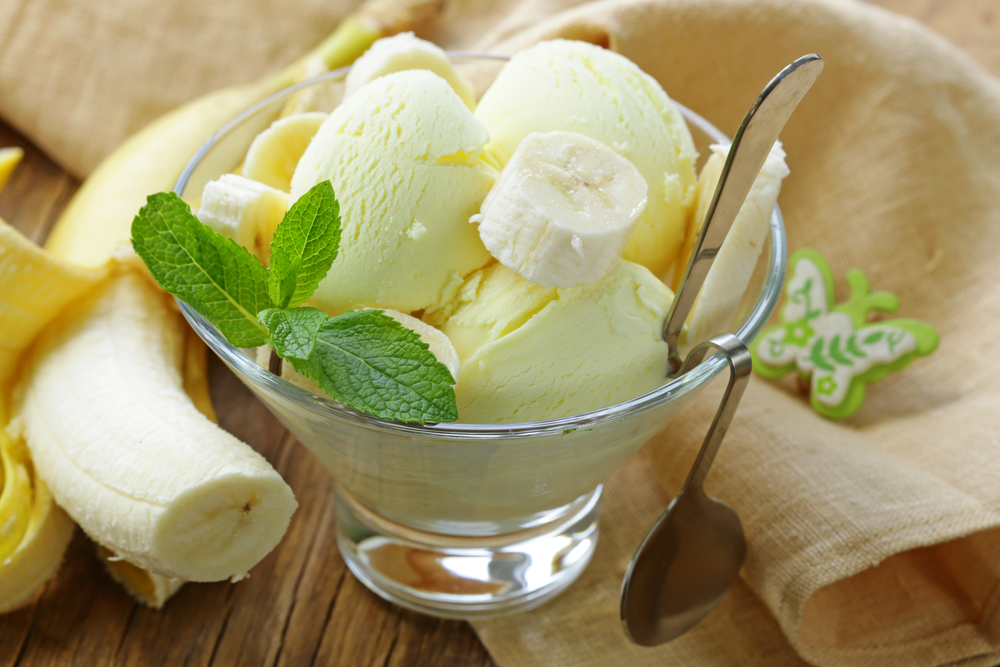
Jerk Banana Ice Cream
When it comes to unusual jerk recipes, jerk banana ice cream certainly ticks the box. A blend of sweet and savory, this one is for the culinary-adventurous spirit who can appreciate the umami flavor created when banana and mild jerk seasoning are paired with each other.
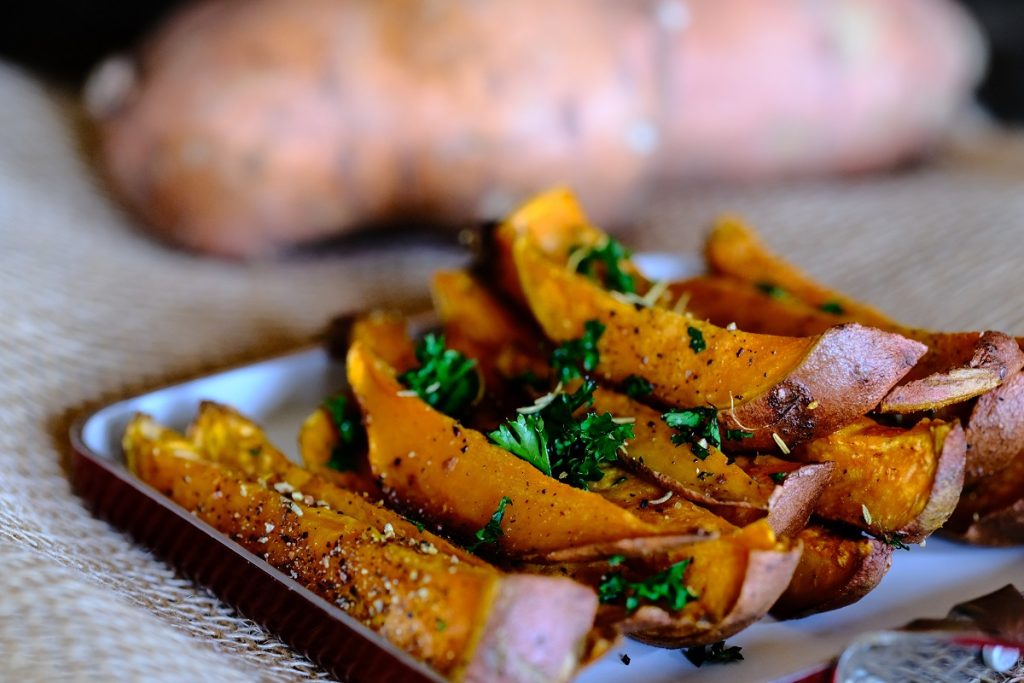
Seasoning recipes that utilize jerk tend to center around pork, chicken and seafood. Jerk sweet potato fries, however, take us on the vegan and vegetarian path while giving meat-eaters an excellent side dish addition to their menus. In this recipe, the fries are baked, which allows the paprika, allspice, and powdered ginger to come alive. Add more punch to the flavor by incorporating the smoked variety of paprika. Top with a sprinkle of cilantro for a mouthwatering experience.
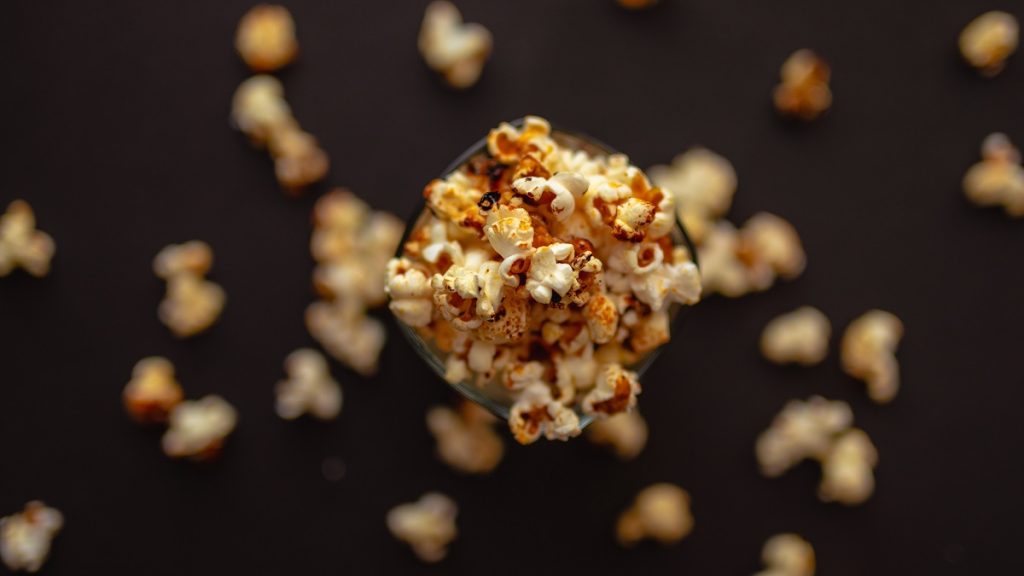
Spice up movie night with jerk popcorn. For lovers of savory snacks, this unique Jerk recipe certainly will hit the spot. The toasted coconut flakes are great for next-level crunchiness. Pair with your favorite fizzy drink and enjoy!
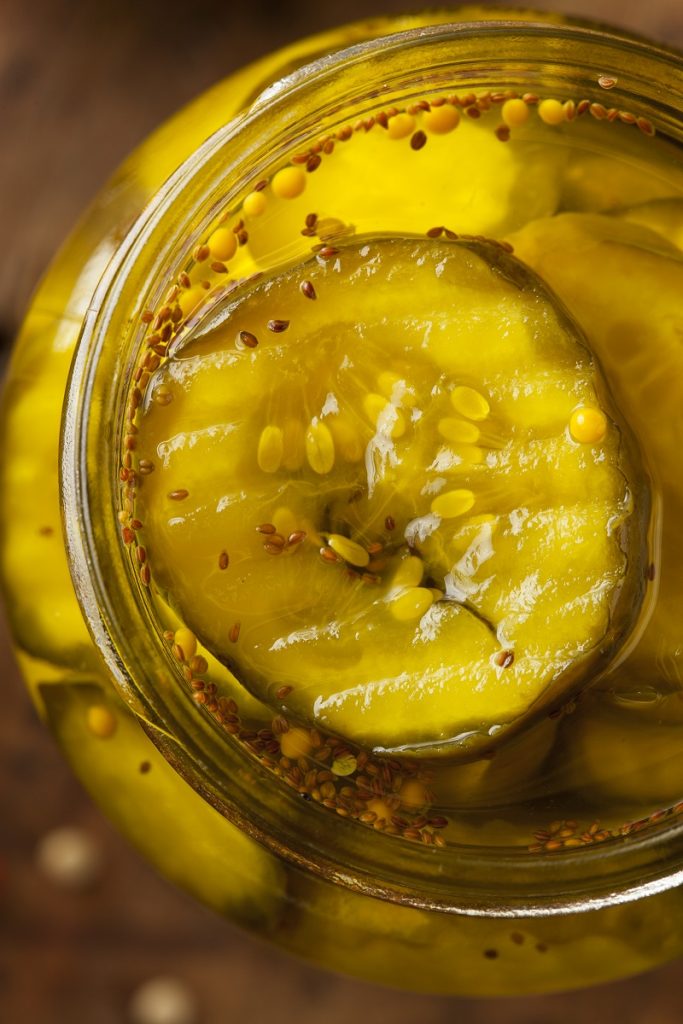
Jamaican jerk pickle chips certainly embrace the idea of slow food. After the pickling cucumbers have been prepared in a seasoning bath, it’ll be a week before you can take the first bite, but the wait is worth it. Steeped in an herbal tea of fresh thyme, cinnamon, allspice, garlic, honey and an assortment of peppers, you might like these smoked chips so much that it becomes a selfish snack.
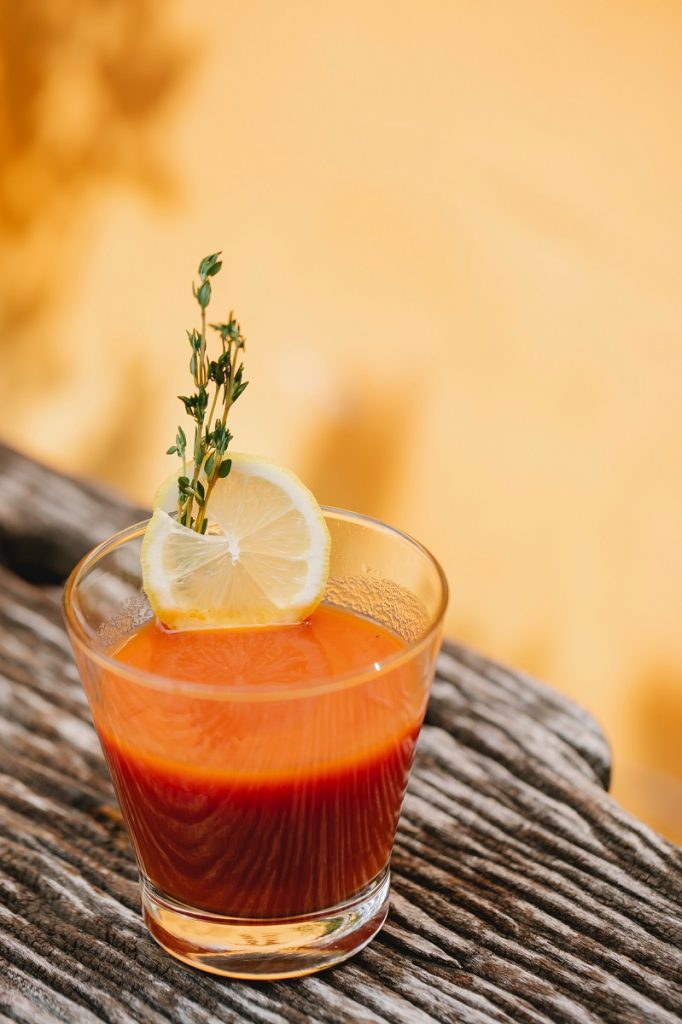
Bottoms up! And this cocktail might leave you that way, literally. It’s a creeper so go easy on the number of glasses you drink. This match-up of jerk seasoning and the cocktail we all know and love works because of the preexisting complementary relationship between tomatoes and jerk seasoning. The white rum slides smoothly in, offering up a nice buzz without disturbing the flavor.
November 1st is celebrated as All Saints Day on the Christian calendar. Considering Christianity is the most widely practiced religion in the Caribbean region, many countries there recognize this as a holiday.
Its origins date as far back as 609 AD, when a Roman pope dedicated the Pantheon as a church to honor the Virgin Mary. Later on in the mid 700s, Pope Gregory III also dedicated a chapel — the famous St. Peter’s Basilica — to saints and martyrs. In 837, Pope Gregory IV extended the honor to all canonized saints within the Catholic religion. This was formally recognized as the first official observance of All Saints Day and November 1 was chosen as the calendar date for its celebration. While important saints each have their own observed days of recognition, All Saints Day recognizes and gives thanks to the many saints who are less commonly known.
Photo: Zorro2212, CC BY-SA 4.0
All Saints Day in the Caribbean
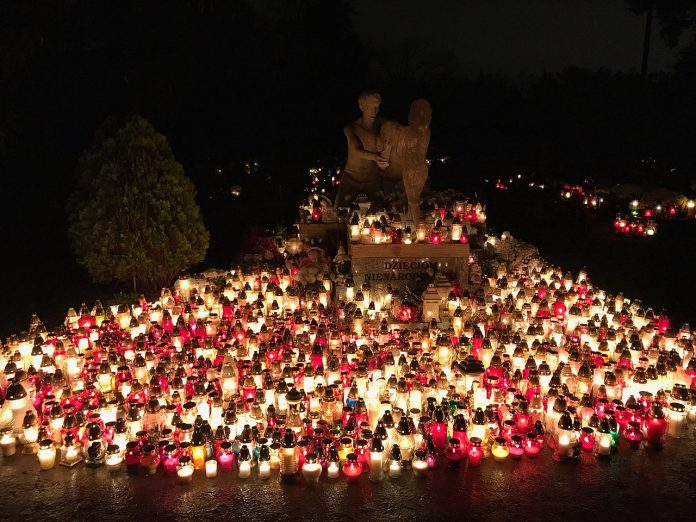
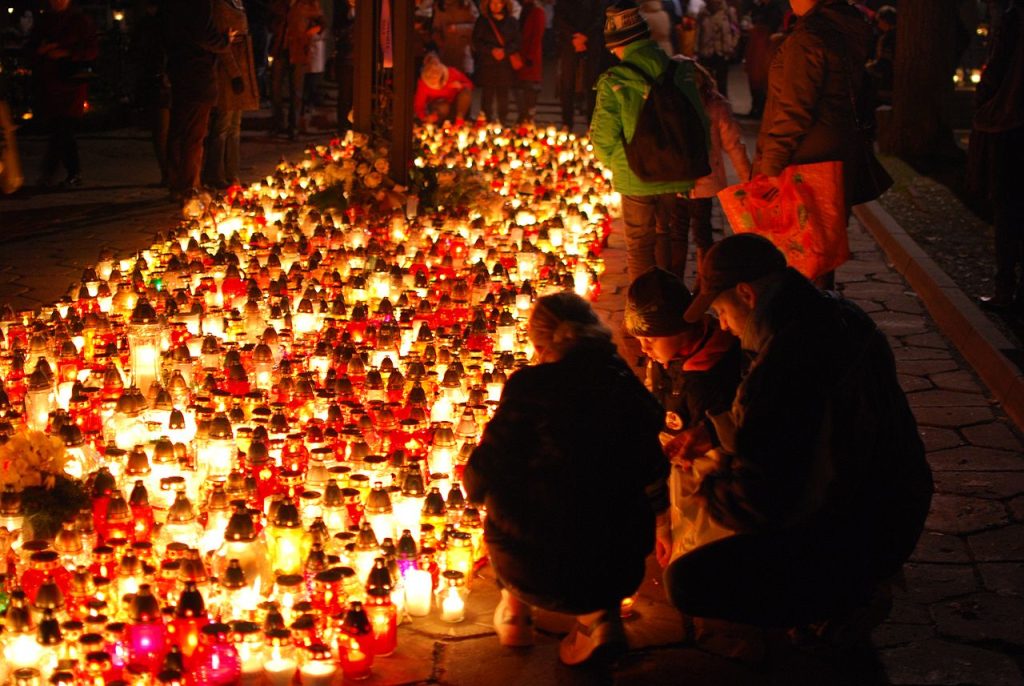
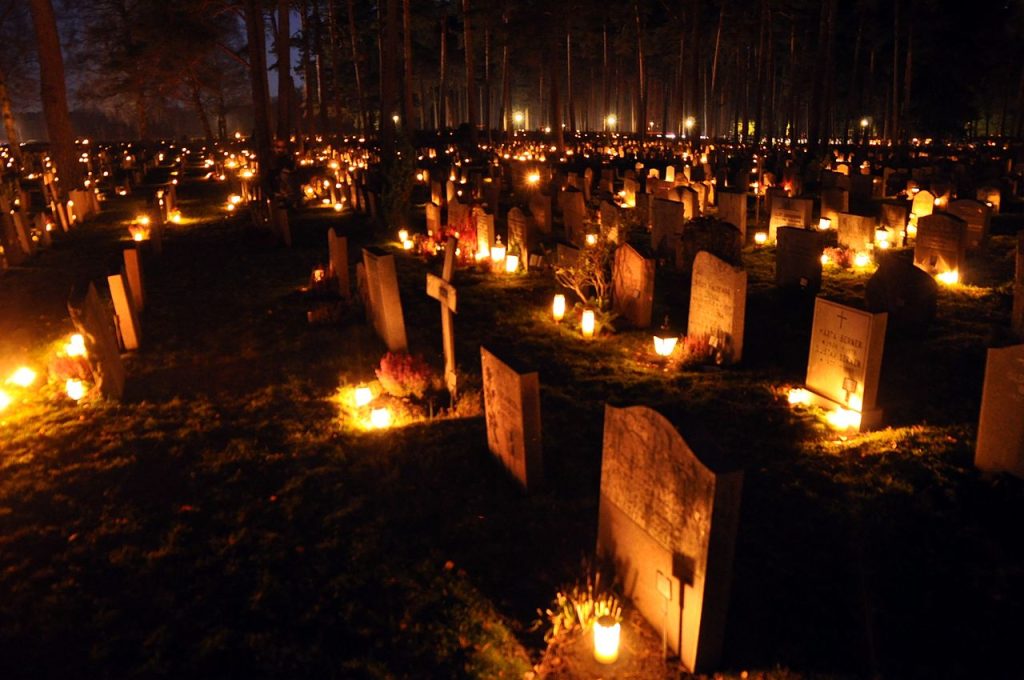
The holiday is considered to be a Holy Day of Obligation for Catholics in which they must attend mass, pray and honor the saints. Catholics celebrating All Saints Day in the Caribbean are also expected to think of the holiday as a day of remembrance for the dead, bringing candle-lit offerings and flowers to family or friends’ grave sites. All Saints Day, or “La Toussaint” in the French-speaking Caribbean, is also a yearly reminder to beautify your loved one’s resting places, removing cobwebs, dusting off mausoleums and decorating with fresh coats of paint, flowers, photos and other mementos.
Photo: Holger Motzkau, 2010
Though celebrated in some of the smaller islands like Martinique, Saint Barts and Saint Lucia, All Saints Day is a major holiday in Haiti, where an estimated 80% of the population is believed to be Roman Catholic. There, many flock to the Grand Cemetery in Port-au-Prince, with most Catholics bearing candles and food, and offering prayers for their loved ones. Others come to honor their ancestors by practicing Vodou with rituals and sacrifices.
In Martinique, All Saints Day is a time for extended family to visit and catch up, remembering departed loved ones together. It is often celebrated with family church outings in the morning, feasts later on, and bringing life and happiness to cemeteries, remembering the departed in a joyful and loving way rather than with sadness. Everyone wears white for mass and when going to pay their respects at the cemetery. White is symbolic as it references the color the formerly enslaved wore to funerals for relatives reported missing.
In this age of an abundance of information, the ability to tell fact from fiction can result in vast differences in quality of life. Caribbean women, who succumb to breast cancer more than any other cancer illness, so it’s important we know the truth from trusted sources, such as The National Breast Cancer Foundation, Breastcancer.org and Getdoc.com. We identified ten of the most popular breast cancer myths floating around on Facebook, WhatsApp and elsewhere, and went to work determining fact from fiction.
Myth 1: Only women can get breast cancer
Quiet as kept, thousands of men are diagnosed annually with breast cancer, which usually presents itself as a hard lump underneath the nipple and areola. Breast cancer amongst men is not as widely publicized as it is with women and men are less likely to equate abnormalities in their chest area with the possibility of cancer. As a result, men have higher mortality than women when it comes to breast cancer due to delayed action in seeking out treatment.
Myth 2: You only get breast cancer if you have a family history of it
Statistically, only about 5-10% of diagnosed cases of breast cancer occur in people with a family history of this disease. The majority of diagnosed people have no known family history.
Myth 3: Sleeping with a bra on can cause breast cancer
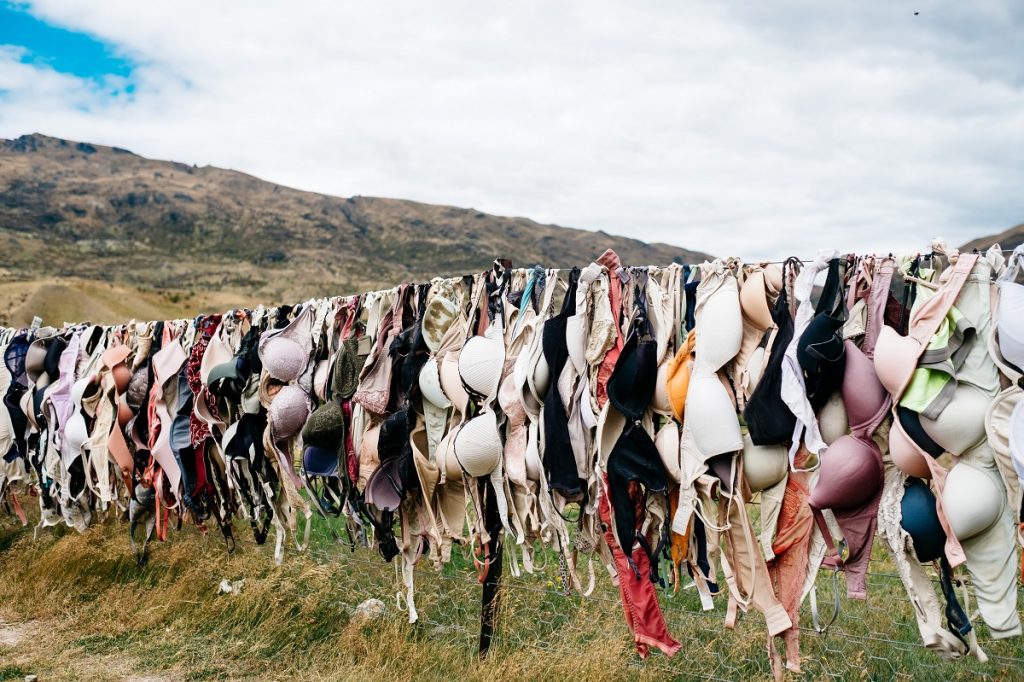
Here’s the theory: wearing an underwire-style bra restricts the flow of lymph fluid out of the breast, resulting in a build-up of toxic substances in the tissue. It is easy to see why this is a popular belief. The compression and discomfort felt from wearing a badly fitting or tight underwire bra breasts make for a good urban legend. To date, however, evidence supporting that claim has not surfaced.
Myth 4: Breast cancer only affects older women
Yes, growing older does increase the risk factors for developing breast cancer but unfortunately, young women have been diagnosed as well. All women should take care of their breasts no matter their age. A simple monthly self-examination is a great way to start.
Myth 5: Cell phones give you breast cancer
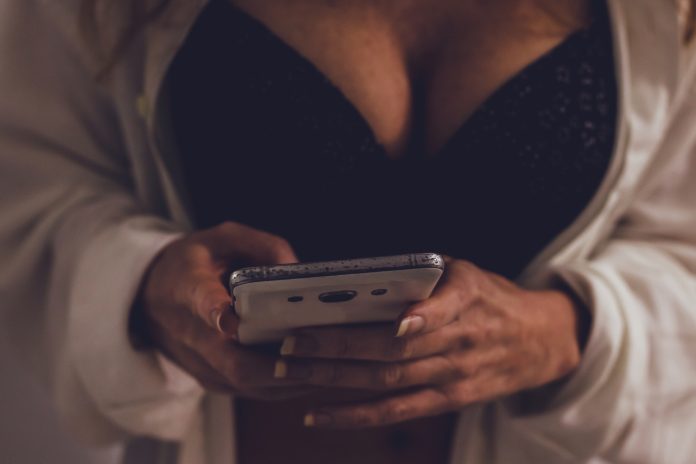
The general safety of cell phones is still being studied and there have been a handful of reported cases of young women who habitually carried their phones in their bras developing breast cancer. Is there a correlation between the two? As yet, no evidence supports a connection. What is known is that cellphones do emit low-energy radiation. When in doubt err on the side of caution. Instead, place your cellphone in a purse or a bag just in case.
Myth 6: You don’t need to get a mammogram every year
A mammogram is an early detection tool. While it is not always the best at detecting the early stages of breast cancer, it doesn’t hurt to stay vigilant with yearly exams and monthly breast self-exams.
Myth 7: Caffeine causes breast cancer
No need to ditch your daily cup of Joe for breast health. Research shows the opposite in fact. Taken in moderation, caffeine can reduce the risk of developing breast cancer.
Myth 8: Antiperspirant causes breast cancer
This is a longstanding and classic myth, one that involves toxins like aluminum in antiperspirants being absorbed into the lymph nodes as a precursor to developing breast cancer. While evidence that confirms this has not emerged, recently, many popular brands of deodorants and antiperspirants have proactively removed aluminum from their formulas.
Myth 9: A lump on your breast always means cancer
The presence of a lump does not always mean cancer, just as the absence of a lump is not an indicator that one is cancer-free. Lumps may indicate benign cysts or abscesses. However, since you can’t tell from the surface, if you feel a lump, you should definitely reach out to your doctor.
Myth 10: Stress can cause breast cancer
Don’t stress. Studies have not found conclusive evidence that stress increases your risk of breast cancer.
When thinking about a Halloween costume, the first and most obvious option might be to transform into your favorite celebrity, remaking one of their album cover looks or an iconic red carpet moment. We can’t wait to see what 2021’s costumes have to offer, but until then, we took a look through some of the world’s greatest Caribbean American music artists’ Instagrams and came up with the top three ladies who know how to stand out on October 31st. Here’s are some of our favorite celebrity Halloween costumes from Nicki Minaj, Cardi B and Beyoncé from years past.
Nicki Minaj
Though Trini gyal Nicki Minaj’s outlandish stage outfits have become the basis for others celebrity Halloween costumes (cut to Lil Nas X dressed in full Harajuku Barbie drag), the singer herself has been known to indulge in the holiday’s fancy. After announcing her marriage to former flame Kenneth Petty, the couple decked out in not one, but two sets of Halloween costumes.
First, a DC Comics inspired couples’ costume with Petty as the Joker and Minaj as Harley Quinn. Petty was decked out in the Joker’s signature white face makeup with and painted on smile while Minaj played badass sidekick with Harley Quinn’s iconic dual colored hair and red, white and blue outfit.
The same year, the duo dressed as legendary Halloween horror Chucky and the Bride of Chucky. No doubt playing into the just married role, Minaj is in a blood stained wedding dress and Petty can be seen proposing with a ring attached to a cut off finger.
Cardi B
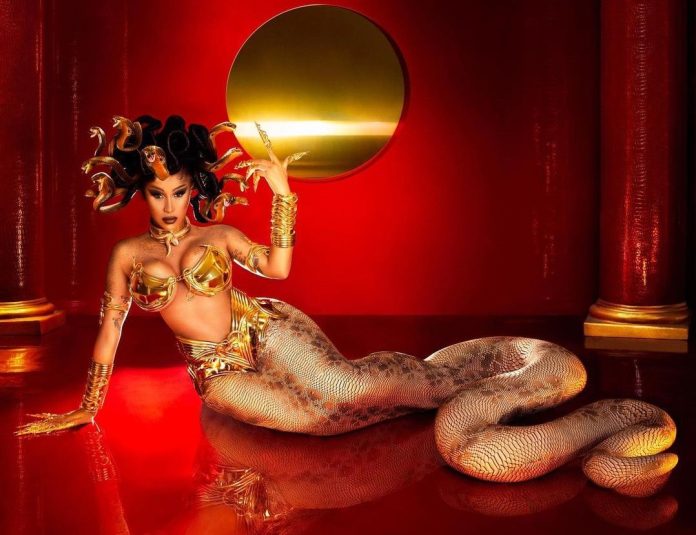
Cardi B always goes all out for her Halloween costumes, so naturally we have to show you two of our fav looks. Last year the Latin Caribbean superstar shocked with a gold Medusa outfit complete with a full snake body, gold cuffs, gold claw talons on her fingers and a crown of gold serpents. The costume not only showed off the singer’s amazing body but her dedication to the holiday. The same year, Cardi B also dressed her daughter, Kulture Kiari Cephus, as a little Wonder Woman mini-me and we are living for the cuteness.
Back in 2019, Cardi B shimmied into a skimpy version of Uma Thurman’s Poison Ivy costume with thigh high green stilettos, a barely there green leaf bodice and underwear set and a long red wig. Enough said! We declare her the Queen of Halloween.
Beyonce
Bahamian-American beauty Beyoncé and husband Jay-Z dressed up as Olympic medalists and record-setters Florence Griffith Joyner and Tommie Smith for Halloween 2018. Ms. Knowles’ outfit included a purple one-legged leotard with white cleats and FloJo number, nearly identical to what Joyner was wearing at the 1988 Olympic trials. Like Beyoncé, hubby Jay-Z’s outfit was virtually identical to Smith’s vintage team USA jacket, pants, black glove and gold medal. Jay-Z even recreated the legend’s iconic 1968 Olympics Black Power Protest photo on the medal stand.
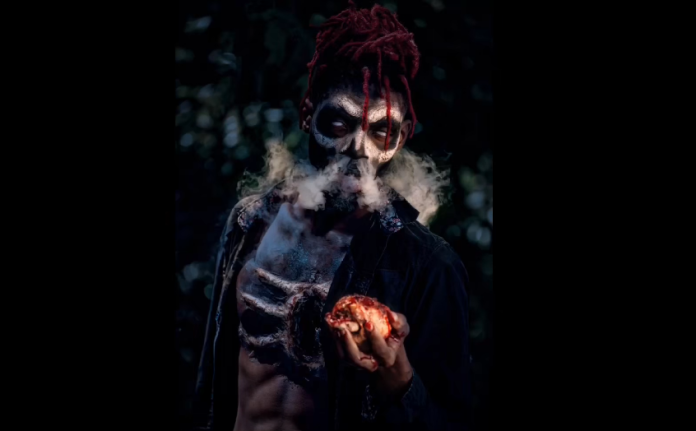
Heartman (Mandy Cummins make-up, Kiru actor) Photo by Risee Chaderton-Charles
Every Caribbean island has its own cultural folklore featuring ghosts, ghouls and scary creatures that allegedly roam the island — scary urban (and country) legends that locals still swear by to this day. You’d be surprised at how many Caribbean folklore stories share similar qualities, story lines or creatures to Western myths of zombies, vampires and spirits. Learn a little bit more about some of the creepiest Caribbean urban legends from Jamaica, Trinidad, the Dominican Republic, Haiti and Guyana.
Duppy
You’ll hear talk of duppies in any Jamaican home. Originating in Africa and later brought to the islands, duppies’ existence stems from the Bantu religion that had a heavy focus on worshipping ancestors. Comparable to a common ghost or spirit, duppies are generally departed loved ones who appear to you when you are in need of advice, cheering up or a good scare.
Evil duppies set out to haunt the living and can even hurt or kill people if controlled by Obeah-men, practitioners of a dark spritiual craft. A duppy can appear in the form of the departed person, an animal, a puff of smoke, a shadow or even a cold breeze. Evil duppies generally take on larger, more sinister looking forms like the sadistic Rolling Calf (read more below).
Most Jamaicans living on the island, and even those residing in other parts of the world, believe in duppies’ existence, taking no chances to come into contact with them. Many locals even have tales of personal experiences with duppies or of seeing a “good duppy” in their dreams.
The Soucouyant
https://www.youtube.com/watch?v=Y5GCZ2OzYIc
One of the most popular Caribbean urban legends is the Soucouyant, sometimes referred to as Ole Higue. Native to Dominica, St. Lucia, Haiti and Trinidad, the creature takes on the form of an unassuming elderly woman in daylight and a shapeshifting fireball demon once the sun goes down. The Soucouyant sheds her skin at night, turns into a fiery skeleton and, similar to a vampire, sucks the blood of her victims. She can allegedly be stopped by throwing rice, sand or salt because she is compelled to count the individual grains.
In a twist of fate, the Soucouyant or Ole Higue will die if she consumes too much and kills her victim, who will then transform into a new Soucouyant, ill fated to live out the rest of its days as a bloodsucking creature of the night. The appearance of a black and blue circular mark is the tell-tale sign someone has been visited by and victim to a Soucouyant. While the legend has faded in some islands, Haiti and Trinidad still find the Soucouyant to be an elusive but persistent creature. Some even believe the shed skin of one is a valuable asset for Voodoo and black magic rituals.
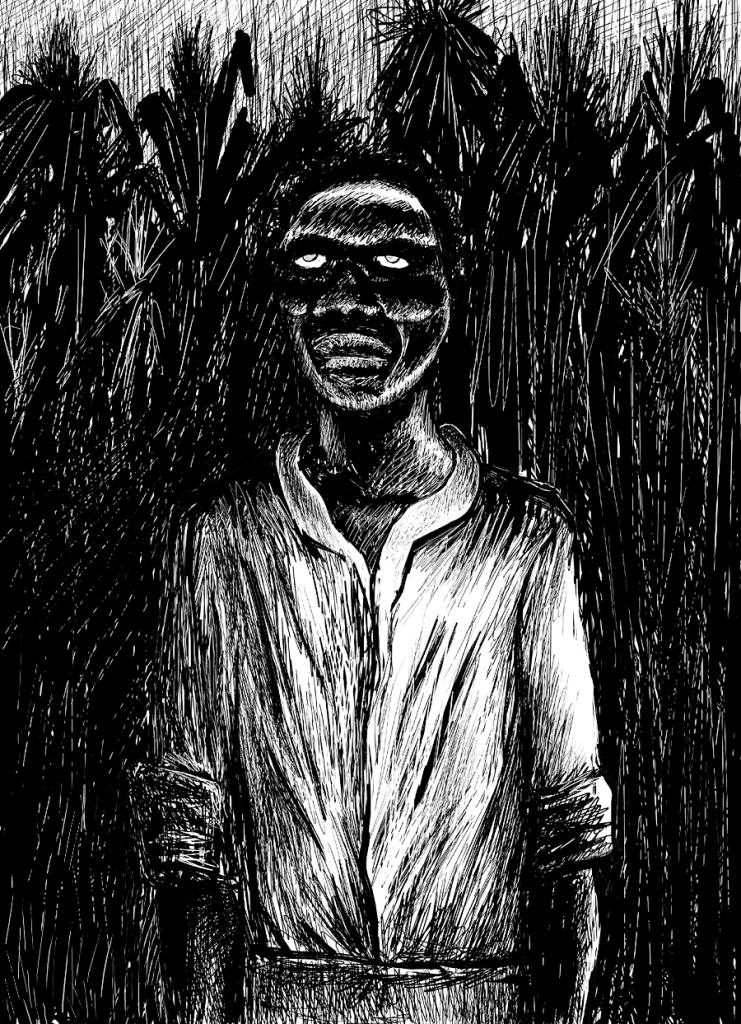
The first mention of Haitian zombies was in the early 1600s and mirrored the belief of enslaved Africans that death would bring them back to a heaven-like afterlife in Africa where they could be free, but that suicide would force them to “live” in the plantations forever, condemned to become soulless zombies that could be brought back by Vodou priests. In traditional Caribbean urban legends, Haitian zombies are actually just depicted as undead enslaved Africans, not as rotting corpses trying to eat human brains.
Rolling Calf
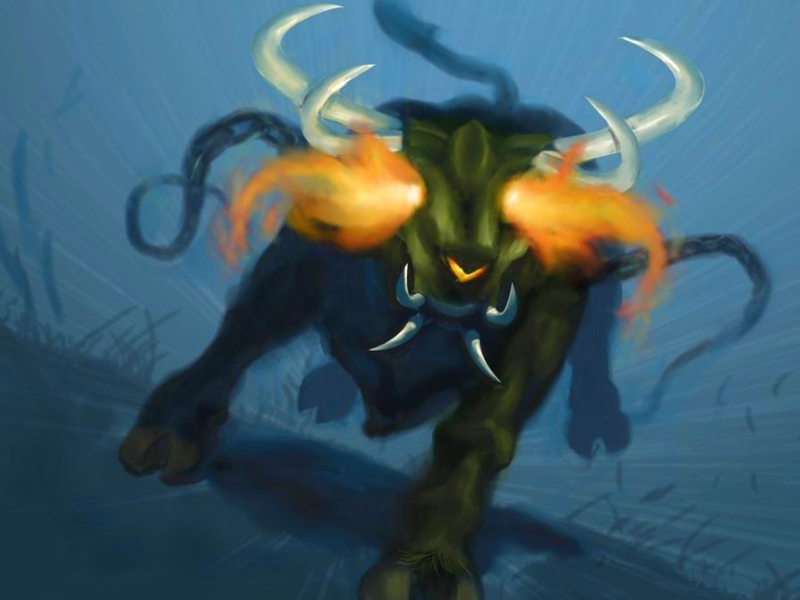
The Rolling Calf myth revolves around a specific evil duppy who terrifies and tortures people, sometimes killing them with fiery breath or sharp horns. Originating in Jamaica during the 1800s, this Caribbean folklore became popular as there was little electricity, making evenings extra dark and spooky and the perfect setting to share spine chilling stories of creatures who roam nearby at night. The half man half cow creature, often depicted as a large, sinister bull, has blood red eyes and wears a thick chain around its neck. It is said that when a person hears this ominous rattle, they know the Rolling Calf is coming for them, immediately instilling fear and panic.
Various Caribbean urban legends suggest that the Rolling Calf is said to be the spirit of someone who was dishonest, evil and wicked during their life on earth. However, occasionally a Rolling Calf is a lost soul who seeks out evil people among the living, punishing them for their wrongdoings. The myth states that there are ways to escape an attack from a Rolling Calf, such as throwing various objects on the ground as it is compelled to count just as all duppies are. Other methods are to continuously make the sign of the cross or threaten it with a whip.
La Ciguapa
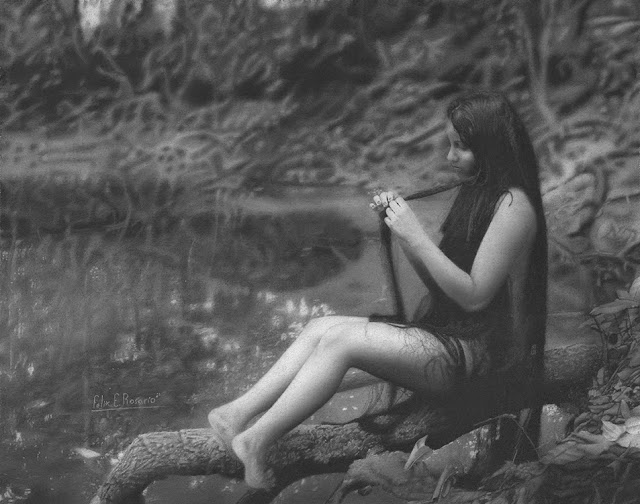
Ciguapa by Felix Esteban Rosario. Pastels on paper.
The siren-like demon, La Ciguapa is part of ancient Dominican folklore. Disguised as a beautiful, sultry woman with long black hair and striking features, La Ciguapa lures lonely men and boys out into the woods to feast on their bodies and trap their souls forever. It is said that once a man lays eyes on La Ciguapa, he is entranced and will follow her deep into the woods and back to her lair. The Caribbean creature’s feet face backward, making her hard to track.
La Ciguapa typically comes out at night and, for many, is considered an omen of death if heard or seen. One is never to look into her eyes as she will immediately enslave you. This urban legend is still told to children today, warning them to never go into the woods at night. Many Dominican locals have even claimed to see La Ciguapa in the flesh, others weren’t lucky enough to escape her.
The Bacoo
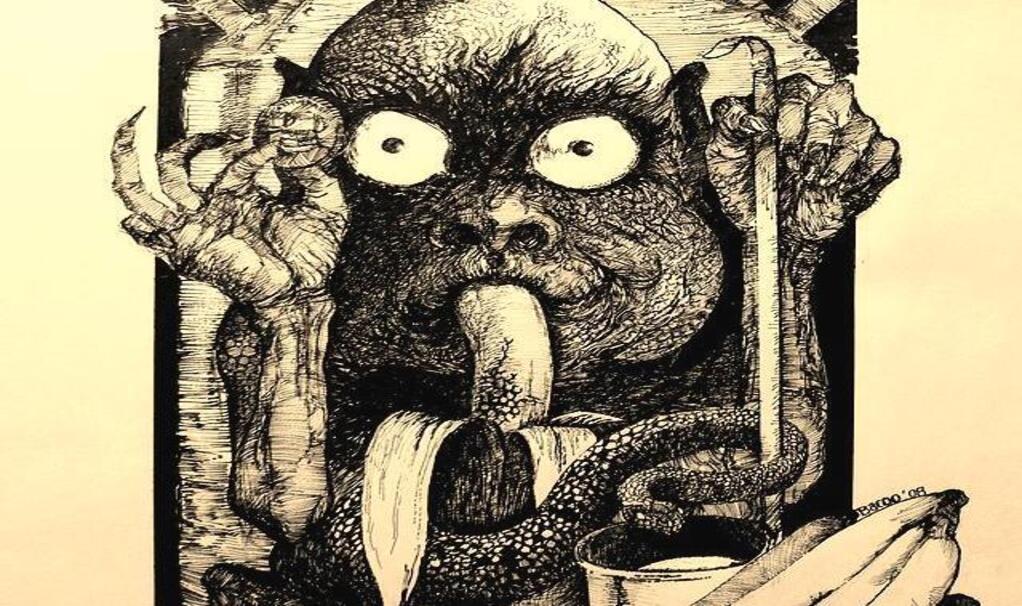
The Bacoo is a mischievous spirit that resides in a corked bottle.
Hailing from Guyana is the Bacoo, a spirit in the form of a mischievous little man that resides in a corked bottle. Though not inherently evil, the Bacoo is controlled by evil dwellers and requires a lot of milk and bananas to keep him happy. If well fed, the Bacoo will reward his owner with wealth and good tidings, but if he is undernourished, he will wreak havoc and attempt to harm whoever keeps him. Though many now believe that the Bacoo is a myth, Guyanese locals will still occasionally throw an empty wine bottle with a cork into the river just in case a Bacoo is living in it.
The Heartman
Hailing from Barbados, this Caribbean folklore has been passed on from generation to generation as one of the creepiest, most menacing creatures around. The Heartman is often used to scare children into behaving, because the legend states that the creature comes after disobedient kids, carving out their hearts and feeding them to the devil. He is pictured as a skeletal man with cow legs, dressed in all black with chains, weapons and a huge black hat. The Heartman’s signature is a black hearse he drives around in, frequenting churches and parishes, sometimes giving candy to children to trick them into getting close enough for him to attack.
Douen
https://www.youtube.com/watch?v=xsiEXO-7vfA
One of the most popular Caribbean urban legends is the douen from Trinidad and Tobago. Originating from West African storytelling, the douen is a small creature embodying the soul of an unbaptized child who has died and now eternally wanders around in the forest. The child wears large straw hats to hide his featureless faces and his feet face backwards, so tracking where he’s been and where he is going next is nearly impossible.
While their 2-foot frame is not threatening by appearance, the douen’s intentions are. They attempt to lure other unbaptized living children into the forest to become lost forever, eventually dying and becoming douen as well. It is said that you should never call your child’s name in an open area or near a forest, for the douen will call them as well, leading them astray to never be found again.
Mami Wata
Mami Wata is a water spirit widely revered in West Africa but also deeply embedded in Caribbean folklore, particularly in regions like Haiti, Trinidad, and Jamaica. She is often depicted as a beautiful, seductive woman with a fishtail, embodying the duality of life — both nurturing and destructive. Brought to the Caribbean through the transatlantic slave trade, Mami Wata is said to control the seas, bestowing wealth and protection to those who honor her, but bringing disaster to those who offend her. In various legends, she lures men into the water, where they may receive mystical gifts or vanish forever.
Loup Garou
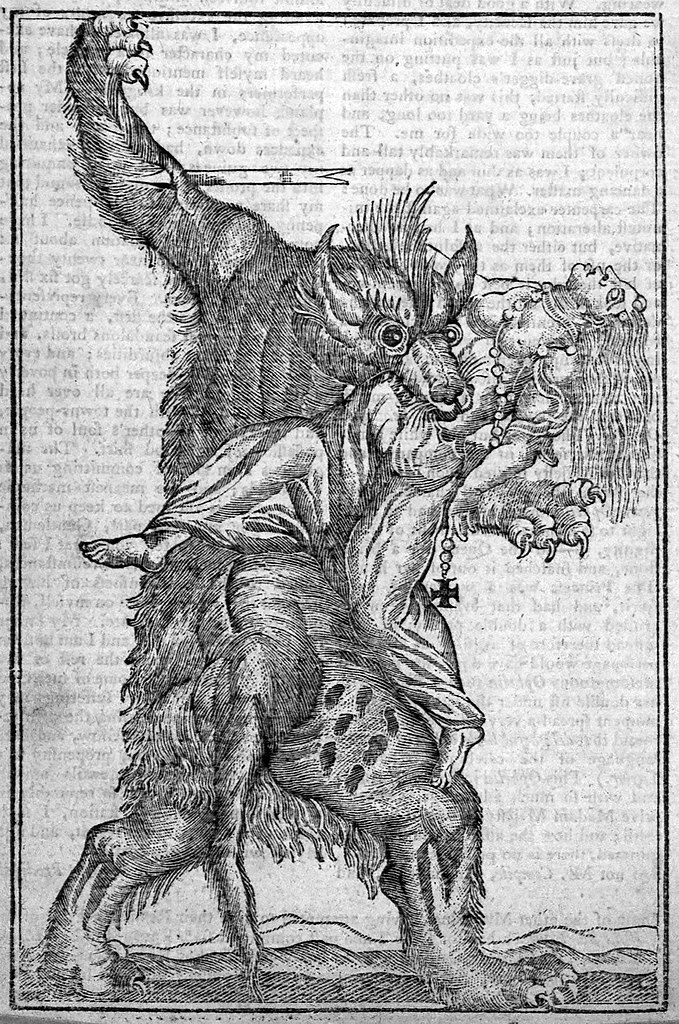
Photo: Public domain
The Loup Garou, or werewolf, is a shapeshifter legend that originated in France but took root in the French Caribbean, particularly Haiti and Martinique. The term “loup garou” translates to “wolf-man,” and the creature is said to transform at night, feeding on human blood, much like a vampire. This legend merged with local superstitions, becoming a feared figure in rural communities. Some versions of the legend say that the Loup Garou is cursed and must pass its condition to another to be freed, while others suggest it is the result of dabbling in dark magic or making pacts with the devil.
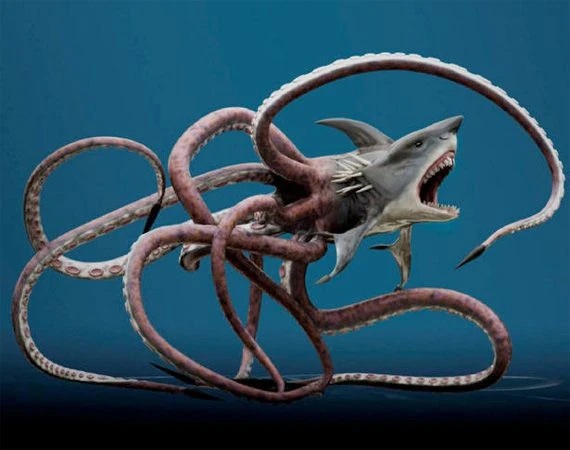
The Lusca is a terrifying sea monster said to inhabit the blue holes of the Bahamas, particularly around Andros Island. Described as part octopus, part shark, the Lusca is believed to be responsible for unexplained drownings and disappearances in the deep underwater caves. The Lusca is often seen as a protector of the sea, punishing those who exploit its resources or disturb its underwater domain. Despite modern scientific exploration, the blue holes’ mystery continues to fuel the belief in this monstrous creature.
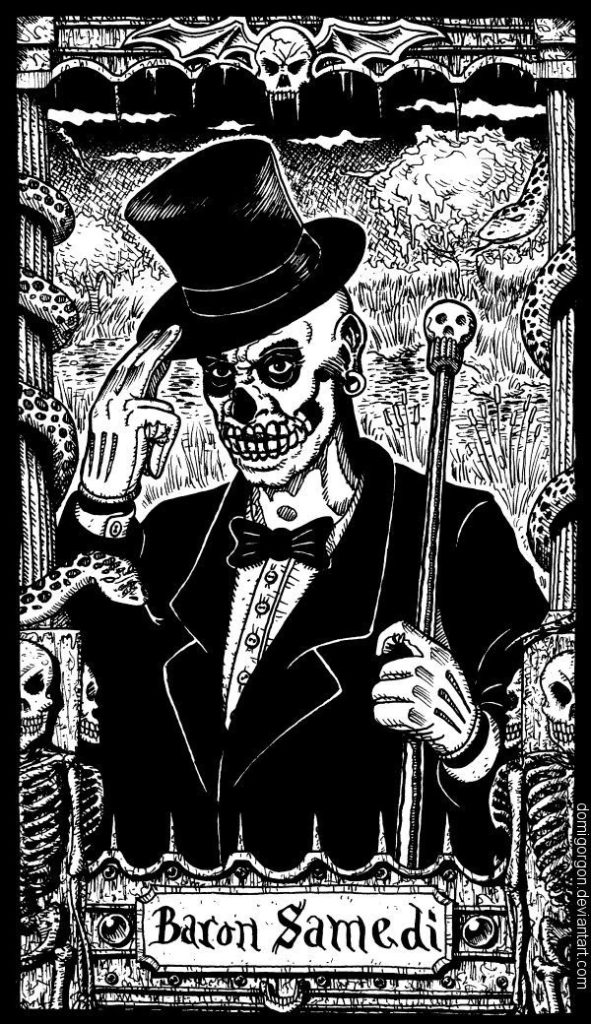
Baron Samedi is one of the most iconic figures in Haitian Vodou, the loa (spirit) of death, resurrection, and the afterlife. Dressed in a black tuxedo, with a top hat and dark glasses, he is often portrayed as a skeletal figure with a sense of humor and a love for rum and tobacco. Baron Samedi is the gatekeeper of the cemetery and is responsible for guiding souls into the afterlife. His roots trace back to West African spiritual traditions, blending with Catholicism in the Caribbean. As a mediator between the living and the dead, he is both revered and feared, particularly in Haitian Vodou ceremonies.
Lagahoo
The Lagahoo, also known as the soucouyant’s male counterpart, is a shapeshifting creature that roams the night in Trinidad and Tobago. Similar to the Loup Garou, the Lagahoo can take on the form of a large dog, horse, or even a man, with glowing eyes and the ability to transform at will. This creature is said to have a penchant for wreaking havoc, sometimes sucking the blood of its victims or causing general mischief in rural areas. The legend of the Lagahoo was brought to the Caribbean by French settlers and evolved with African and indigenous influences. It’s often used as a cautionary tale, particularly for children, to encourage good behavior and keep them from wandering at night.
Other Characters From Caribbean Folklore
Some notable mentions of Caribbean folklore left off of this list due to their lack of fright are Anansi, a little spider man known for being a trickster and Jamaican River Mummas, or mermaids, which have actually been reported under the Flat Bridge that goes across the Rio Cobre.