












Home Blog Page 72

Why we’re dreaming of these Caribbean Food Festivals Post-COVID-19

0
essential Caribbean food festivals
Photo: Kelly Greer Photography, kellygreerphotographer.com

The diversity of ethnic and cultural backgrounds in the Caribbean islands has arisen what just might be the world’s most dynamic culinary scene. It’s only natural that food and fun should come together so beautifully in the region’s many annual culinary festivals. From the savoury to the sweet and beyond, there’s a Caribbean food festival to suit every taste. Here, we explore a few favourites.

St. Croix Food and Wine Experience
Caribbean Food Festivals
Kelly Greer Photography

St. Croix has recently risen to the upper echelons of the Caribbean culinary scene. Exciting restaurants, helmed by a new generation of local and international chefs, have earned praise from the likes of Food & Wine Magazine, The New York Times, and Saveur. The best time to visit the island to see, taste, and experience it all is during the St. Croix Food and Wine Experience.

Each year, for one week in mid-April, the festival encompasses a series of immersive events throughout the island. Celebrity chefs from all over the world come to exchange ideas and techniques, compete in the kitchen, and raise money for worthy local charities.

Caribbean Food Festivals
Kelly Greer Photography

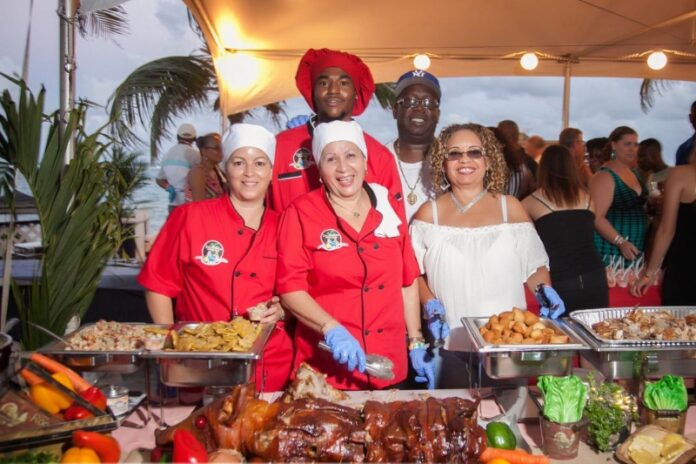
Festival goers are invited to rub elbows with this gastronomic glitterati, especially during the Taste of St. Croix main event. This elegant showcase of the island’s best culinary offerings allows guests to sample dishes from more than 40 local restaurants, catering companies, and private chefs. Live music, wine, and spirits tastings, and a fabulous after-party presented by Moet Chandon and Hennessy make this the social event of the year.

Jade Mountain Discover Chocolate Festival
Caribbean Food Festivals
Photo: Courtesy Jade Mountain Resort, Saint Lucia

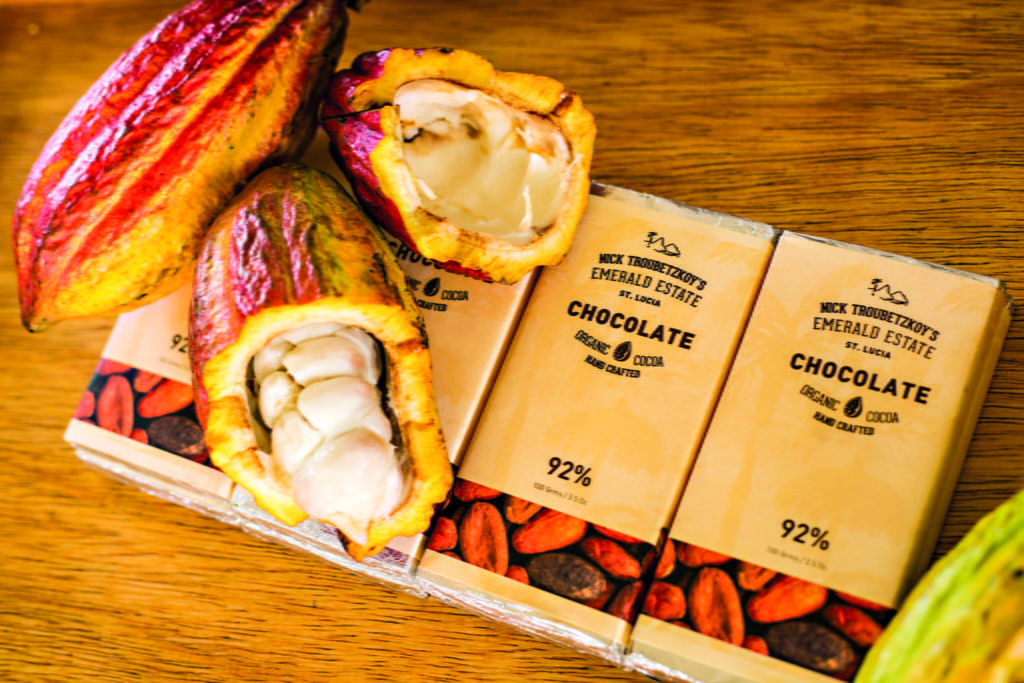
Known as the “Helen of the West Indies,” the lush island of St Lucia is home to the Jade Mountain Discover Chocolate Festival hosted every December in the shadows of the iconic Piton Mountains.

The decadent celebration is anything but typical. At various events, participants are invited to sample selections of chocolates and cocoa-infused dishes. And guests can enjoy many opportunities for sweet tooth indulgence at the popular chocolate cocktail party and wine-and-chocolate tasting sessions.

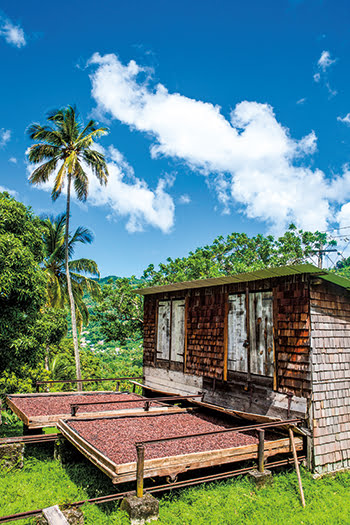
True to its name, the Jade Mountain Discover Chocolate Festival takes a more investigative approach when creating your immersive cocoa experience. Guests can explore the history and alchemy of the world’s favourite dessert on an exclusive tour through their organic Anse Mamin cocoa plantation. Here, participants can witness the full journey of chocolate—from cacao seed to truffle—amid lush, tropical farmland where the plant has been cultivated since the 1700s. Plus, attendees can try their own hand at chocolate making at the truffle workshop.
Caribbean Food Festivals
Photo Credit: Jade Mountain Resort, Saint Lucia

Le Burger Week Haiti

When thinking of Haitian cuisine, hamburgers aren’t likely to be top of mind. Haiti’s rich culinary traditions are flavoured with items like savoury djon djon seasoning, red creole sauce, and soup joumou. The notion of the Caribbean’s premier hamburger festival on the French West Indian island must seem improbable… yet that’s where it is.
Caribbean Food Festivals

Its capital, Port-au-Prince, has the distinction of being the sole city in the Caribbean to participate in Le Burger Week—a global culinary festival dedicated to the world’s favorite sandwich. Paris, Montreal, Toronto, and Vancouver are among the other annual Burger Week destinations, putting Haiti in the great culinary company.

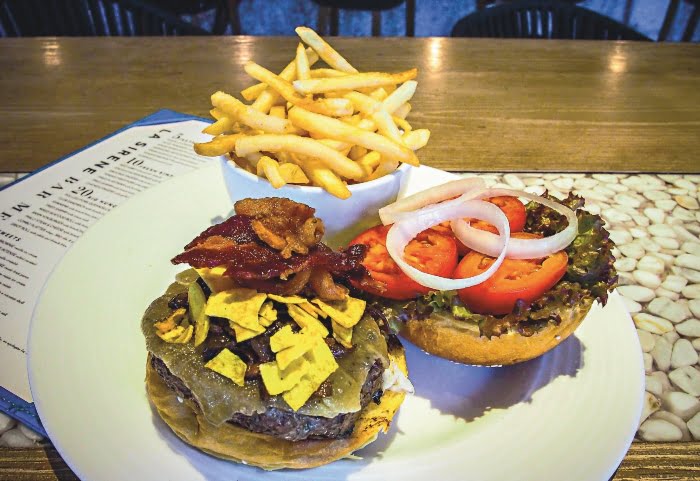
In early September each year, the event challenges local Haitian chefs to create ever more inventive hamburgers. And they embrace the tasty task head-on. Standard fixings get a major makeover with Kreyol-style ingredients like plantain chips, roasted corn aioli, rum-caramelized bacon, and peppery pikliz. Chefs also get creative with cuts, featuring locally-sourced beef, veal, turkey, and even pâté. Attendees are invited to sample these festive burgers by visiting participating restaurants around Port-au-Prince and Pétion-Ville over the course of several days.

Taste of Jamaica Culinary Competition and Expo

Jerk chicken. Beef patties. Ackee and saltfish. Ting. Pickapeppa sauce. Jamaica’s culinary gifts are beloved all over the world. Foodies keen on discovering Jamaica’s latest and greatest creations will want to head down to Montego Bay in October for the annual Taste of Jamaica Culinary Competition and Expo.
Caribbean Food Festivals
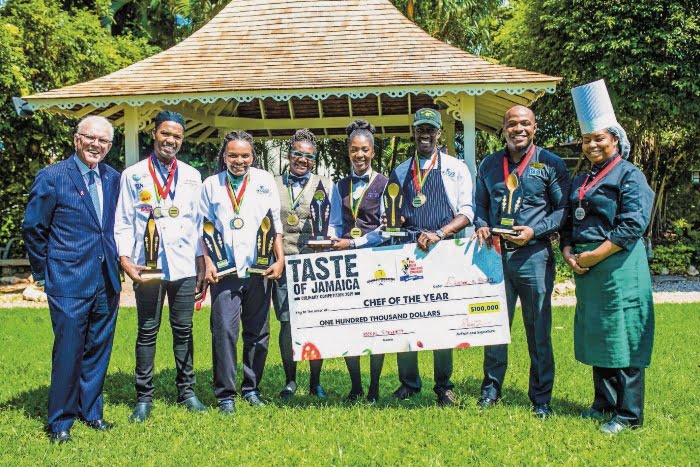
Photo Caption: The 2019 Taste of Jamaica award-winning chefs from The Jamaica Pegasus Hotel.

The event is a showcase of the very best in Jamaican cuisine. More than 300 chefs representing the finest restaurants and hotels across the island participate. Each submits entries in 25 different award categories with the goal of being hailed among the top chefs in the country. Expect towering show cakes, inventive rum concoctions, and a bounty of savoury bites. If you love Jamaican food, there’s no better singular place to enjoy it.

In 2019, the Jamaica Pegasus Hotel in Kingston walked away with virtually all of the top awards (Chef of The Year, Pastry Chef of The Year, and Bartender of the Year)—definitely, something to consider when next your travel plans take you to the island’s capital city.

More on Caribbean Food Festivals:
west indian festival food fabulous caribbean food festivals Why we're dreaming of these Caribbean Food Festivals Post-COVID-19 islands experiences

The Secret History Behind the Essential flavors of Caribbean Cuisine

1

In the Caribbean, a plate of traditional home-cooked food can teach volumes, more than any history book. The history of Caribbean cuisine emerged from a confluence of cultural influences, and centuries of global trading. West Africans brought callaloo, okra, and ackee to complement the tomatoes, potatoes, corn, and beans cultivated by indigenous civilizations across the Americas. Colonial powers brought meats like beef, pork, and chicken, plus staples like oranges, garlic, and onions.

They say too many cooks spoil the broth, but it’s clear our food traditions wouldn’t be the same today without this legacy. Exploring the past and present through the essential flavours and ingredients of the Caribbean eats is a delicious way to learn more about the region.

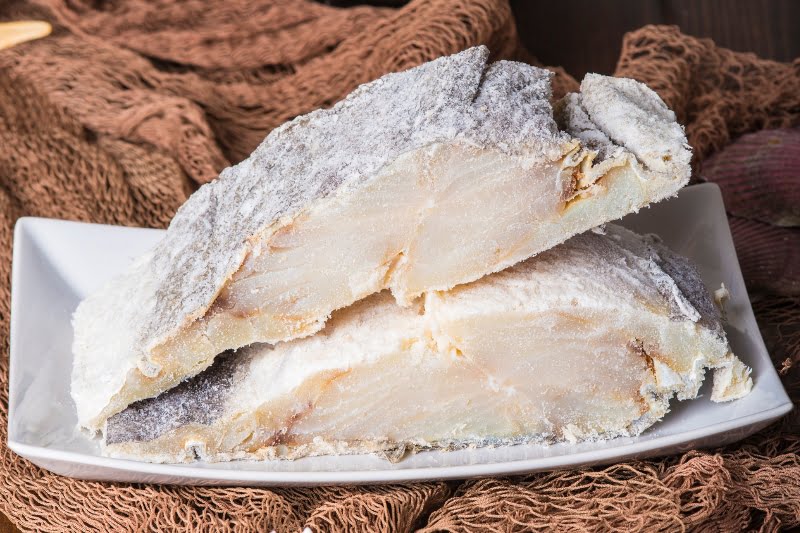
Salty: Salted Fish

Caribbean Cuisine History

For a boost of protein and flavour, Caribbean cooks have long turned to humble salted fish to create some of the region’s most iconic dishes. Think Trinidadian bull, St Lucian green fig salad, and Jamaica’s national dish, ackee, and saltfish. Salt naturally draws out moisture from meats, making them resistant to mould and bacteria. To “salt cure,” fish would be coated in salt for days and then hung to dry with the help of the wind and the sun. This process dramatically increased its shelf-life, while imparting an intensely salty flavour. For centuries, fishermen around the world have used salt curing methods to preserve their fresh catch.

The ingredient became a staple when it was brought to the region through the Triangular Slave Trade between Europe, West Africa, and the Americas. Vessels from Canada, in particular, would supply salted cod, a fish then plentiful off that country’s coast. Plantations relied on the then cheap source of protein as a staple provision for their enslaved populations. It remains an important part of the Caribbean diet. Today, due to cod’s growing scarcity, other types of white fish like pollock and snapper are used instead.

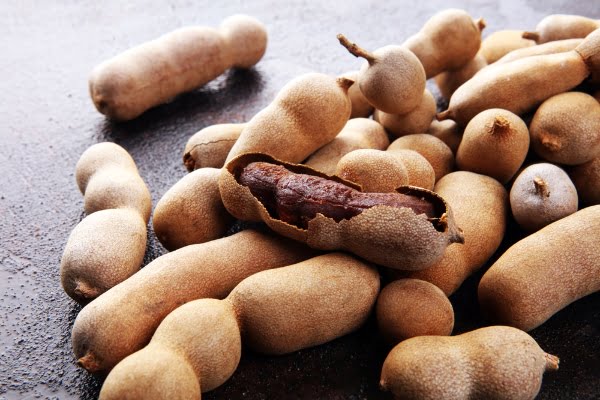
Sour: Tamarind

Caribbean Cuisine HistoryThe most vivid flavour characteristic of the tamarind fruit is its sharp tartness. Indigenous to Africa’s tropical belt, it was introduced to the Caribbean by the Spaniards and Portuguese sometime in the 16th century. Massive tamarind trees now dot landscapes across the region and have attracted a mystique of their own. In the U.S. Virgin Islands, folk tales advise locals to not sleep under their branches. The trees are believed to be haunted, so you shouldn’t sit under their shade after sunset lest spirits follow you home.
These superstitions haven’t stopped cooks from harvesting the fruit’s culinary potential. Encased in a hard and brittle shell shaped like a bean, the flesh of the fruit adds a welcome complexity to both sweet and savoury dishes. Due to its high acidity, tamarind is a great tenderizing marinade for chicken, beef, and pork. The pulp of the pod is an essential, tangy addition to many popular Caribbean sauces, salsas, and chutneys, and the British adopted it as a key ingredient for their Worcestershire Sauce. To create tamarind balls, a tart candy with an intense combination of sour and sweet flavours, beloved by Caribbean children, the tamarind fruit is rolled into balls and tossed in sugar crystals.

Spicy: Scotch Bonnet

Caribbean Cuisine History

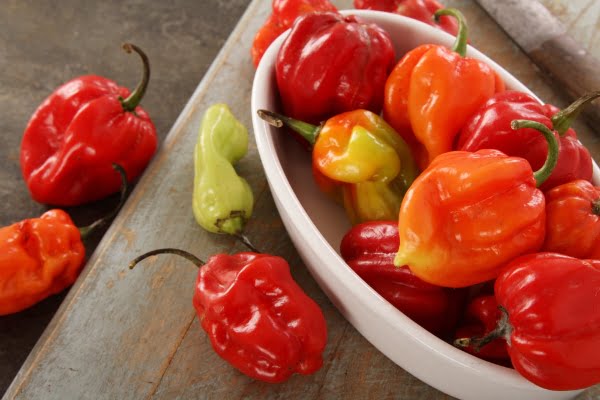
Of all the chilis spicing up island meals, scotch bonnet remains the king of heat in Caribbean cuisine. The popular pepper is used in a variety of Caribbean dishes, adding searing spice to jerk chicken and a low key kick to everyday rice and peas. And this little nugget packs a punch as one of the hottest chilli peppers in the world, up to 140 times spicier than a jalapeño. Available in shades of green, yellow, orange, and red, the scotch bonnet can be finely minced for maximum heat, or it can be added whole for a gentle sizzle.

The name is derived from a Scotsman’s bonnet (also known as tam o’shanter hat) because of its distinctive squashed appearance. The origin of the scotch bonnet is not well known, but most historians trace its roots to varieties from Central and South America, and it is closely related to the habanero variety. Commercially, Jamaica remains the leading exporter of scotch bonnet pepper mash, which is used in hot sauces around the world.

Other, less popular Caribbean chilis with five-alarm fieriness include Trinidad and Tobago’s vibrant red Scorpion Butch T Pepper, and the 7 Pot Douglash known for its chocolate brown colouring.

Sweet: Coconut

Caribbean Cuisine History

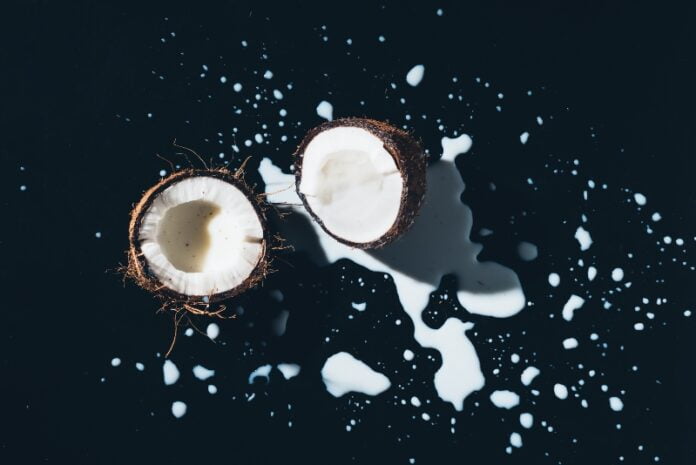
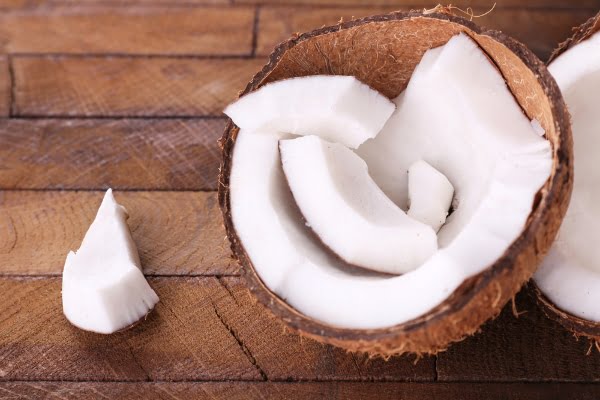
Picture a breathtaking Caribbean coastal vista, and odds are a coconut tree that will be part of that scenic view. The tree, however, is equally treasured for its gastronomic bounty. When young, the fruit has soft, gelatinous flesh and is full of refreshing water packed with electrolytes. When the coconut has aged and dried, the flesh becomes hard.

Caribbean foodies take pride in using coconuts at every stage of maturity. But it is perhaps most beloved for its sweet applications. Made from the grated dried flesh, coconut milk adds dairy-free creaminess to desserts like a blancmange, a lush custard particularly popular in Haiti. It’s also an essential ingredient in drinks like Puerto Rico’s pina colada. When dried and shredded, the meat of the coconut infuses a nutty sweetness to other traditional delights like Jamaican gizzadas, tarts filled with a spiced, sticky coconut filling. And it is an essential ingredient in Bajan cookies, a popular savoury dessert steamed in banana leaves. Once made to commemorate the old British colonial celebration of Guy Fawkes Day on November 5, the treat is now popular during the island’s independence celebrations on November 30.

Native to Indonesia, coconuts stand out among common island ingredients for their reputed unique arrival to the region. Scientists believe coconuts came to the Caribbean by riding ocean currents hundreds of years ago.

More on Caribbean Cuisine:

authentic caribbean food caribbean festival food caribbean food during covid

Island Origins Live – Interview with Alex Penelas

0

Miami-Dade candidate for Mayor, Alex Penelas, held this job before leaving political life 16 years ago. During his last term he was a champion of diversity and equality.

On this episode of Island Origins Live he speaks with publisher Calibe Thompson about his plans for bringing these core principles, important to the Caribbean, Black and general communities, back to Miami-Dade.

Learn more at www.alexpenelasformayor.com.

Bajan singer Krisirie searches for hope in new track “Return to Love”

0
Bajan singer Krisirie

As the global COVID-19 pandemic continues, it’s difficult for even the most optimistic to keep their hopes up. At times, singer Krisirie finds herself among the despondent. The Bajan artist lets her feelings flow a heartfelt ballad, “Return to Love.” In it, she speaks to a world in tumult with a sound that recalls Sinead O’Connor and Alysia Keys.

“I want this song to spark self-reflection and I hope that it brings peace, healing, and inspiration to people’s hearts and minds,” says Krisirie. “I truly don’t know if it’s the one that gives me the big break but I really believe that Return to Love will resonate with many people from all over the world.”

The initial draft was written by Krisirie five years ago after watching a particularly depressing newscast at home in Barbados. She later co-wrote the sone with veteran Jamaican musicians Willie Stewart and Handel Tucker.

Through Barbadian saxophonist, Arturo Tappin, she was introduced to Stewart, best known as the drummer of the classic Third World lineup from the 1970s and 1980s. The song was recorded at his South Florida studio with Tucker, another veteran, on piano.

According to Krisirie, things clicked the first time she met Stewart and Tucker. That chemistry manifests on “Return to Love.”

We didn’t plan to create when we met, but Handel was playing the keyboard at the time and I expressed that I had an idea we could work on. From that moment, the song wrote itself; we surrendered to the divine process in the studio,” she said.

From the parish of Christ Church in southern Barbados, Krisirie has been recording for the past three years. Pointing to Bob Marley, Sade, Ella Fitzgerald, and Chronixx among her influences, she has opened shows for Tappin and Third World.

A proud Bajan, Krisirie wouldn’t swap being an island girl for all the fame in the world. “I think growing up on a small island has allowed me to appreciate the little things in life from early,” she shares. “There is something extra-special and healing about the springs and seawater here in Barbados. It’s a blessing that we have access to any beach on the island at any time. There is this ‘feel good’ energy that flows through the people and the country.”

Jamaican Gospel Star Carlene Davis shares her favorite Jamaican Take-out Spots

0
Jamaican Gospel Carlene Davis

Music and food are two of the Caribbean’s most sought-after exports. And perhaps no other regions loves both so much in equal measure. With this in mind, we tapped some of the Caribbean’s most beloved music stars to talk about the foods that excite their palates. Jamaican Gospel Carlene Davis is one of Jamaica’s most versatile artists, accomplished in both secular and gospel music. Her classic hits include “Like Old Friends Do” and the yuletide anthem “Santa Claus (Do You Ever Come to The Ghetto).” In the kitchen, she loves to prepare food the old-school way she learned from her family in rural Clarendon.

Currently Craving: I love escovitch snapper on the beach, and I emphasize on the beach. The aroma of fish roasting and frying fills the air. With a little scotch bonnet, onions and vinegar, it just tastes better when we’re lazing in the shade.

Favourite Caribbean Dish To Cook At Home: I love freshly picked ackee, with or without saltfish. My grandmother taught me how to prepare it with saltfish, and I’ve taught my children and my husband how to prepare ackee vegetarian style with bok choy.

Go-to Caribbean Spot: In this season of physical distancing, a quick pickup spot for lunch is Ziggy’s Restaurant in Kingston or takeout from Island Grill. When I’m on tour, The Door Restaurant in New York is a great place for a sit-down meal. For takeout, I head to Golden Krust.

Your Caribbean Essentials: I like to go to wherever there is a farmer’s market, where I can get fresh farm produce like fruits, vegetables, and ground provisions. We’re also lucky to get stuff straight from our own family farm.

One Dish Every Visitor Should Try: One dish everyone should try is a leg of roasted Jamaican-bred goat or mutton. The meat is sweet and tasty and served best with gungo peas and rice. For a drink, they should try some homemade sorrel. And, of course, Twyman’s Old Tavern Blue Mountain Coffee is the best ever.

Meet Linda Julien of Miami Gardens: A Haitian-American Story

0
Linda Julien Miami Gardens

Miami Gardens City County candidate Linda Julien has a uniquely Haitian-American history. “My mother came here on a boat,” she explains. “It was a life-threatening trip that took nearly three weeks.” Her mother found safe harbour in the Magic City. Later, Julien recalls observing her mother’s long path to citizenship, then sharing in the pride of her first trip to the polls in 1996.

Julien grew up in “Little Haiti” where resources were scarce and life was challenging. Her parents each worked two jobs to put her and her brother through private school and then college.

Now a Miami Gardens resident and homeowner, Linda Julien is running for City Council, Seat 5. For her, it’s a step toward ensuring her home city provides a voice and safe harbour for all its residents. “Miami Gardens is a gem, a beautiful city, 17 years-old… we celebrated in May,” she said. “It’s time for some new energy and experienced leadership. It’s time that we have our city work for us and we work for our city.”

Her priorities while in office will include economic development, job security, public safety, and community development, particularly in the aftermath of COVID-19. She’ll offer support to small and medium-sized businesses, and will create opportunities for new businesses to thrive. In fact, during the pandemic, Julien was able to help one small business find the funding support that kept its doors open.

To address public safety, another issue of concern, she’ll push for greater collaboration between the police and local residents. More programs will be geared toward senior citizens, keeping them active and healthy. And for the youth of the city, programs will prioritize education and activities.

Julien has a Master’s in Public Administration, has nearly a decade of experience as a civil servant, and is currently serving as the Economic Development Manager for North Miami, with a focus on procurement and workforce development.

“I’m living the American dream,” Julien reflects. “I am giving it my all because of the sacrifices my parents made.”

By stepping up to the challenge of Council membership, she hopes to help fellow Miami Gardens residents chart their own American journeys to success.

Exploring Santiago de Cuba Through Stunning Snapshots

1
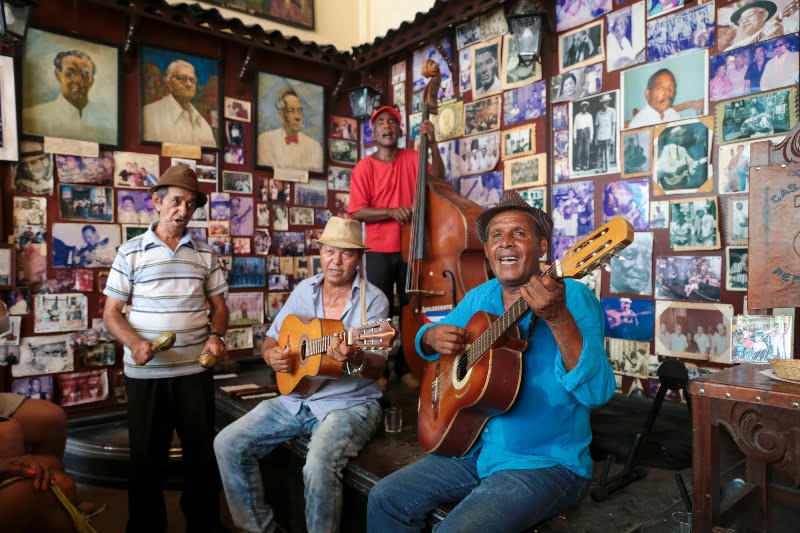
Four Caribbean playing musical instruments.
Photo by David I Muir

In lieu of travel, there’s nothing like photography to take us to new, exciting places, exploring the rich cultural corners of the Caribbean. For those craving to explore the iconic city of Santiago de Cuba Snapshot David I. Muir captured images of the people and landmarks that make this place so special.

El Titan de Bronze

Santiago de Cuba Snapshots
Photo by David I Muir

“El Titan de Bronze” was created by local artist Alberto Lescay to honour Antonio Maceo Grajales, general of the Cuban War of Independence. The stunning monument towers over the Plaza de la Revolución.

Casa de La Trova

Santiago de Cuba Snapshots
Photo by David I Muir

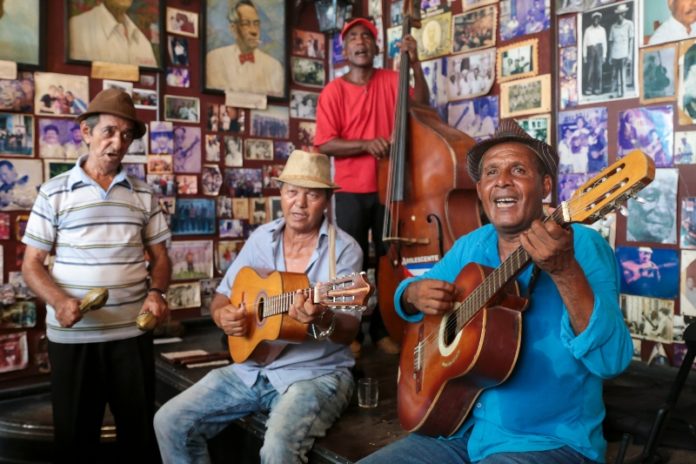
At Casa de La Trova, top musicians supported by the government entertain locals and guests on an ad hoc basic. The walls are lined with images of past performers.

Enramada

Santiago de Cuba Snapshots
Photo by David I Muir

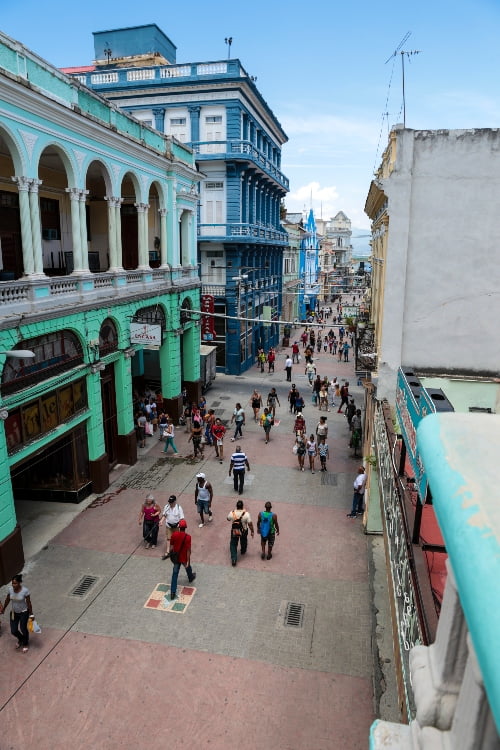
José Antonio Saco, called “Enramada” by locals, is the major thoroughfare in Santiago, running between the ocean and the Plaza de Marte park. The pedestrian street is home to stores, restaurants, and other major places of commerce.

Sounds of Rumba

Santiago de Cuba Snapshots
Photo by David I Muir

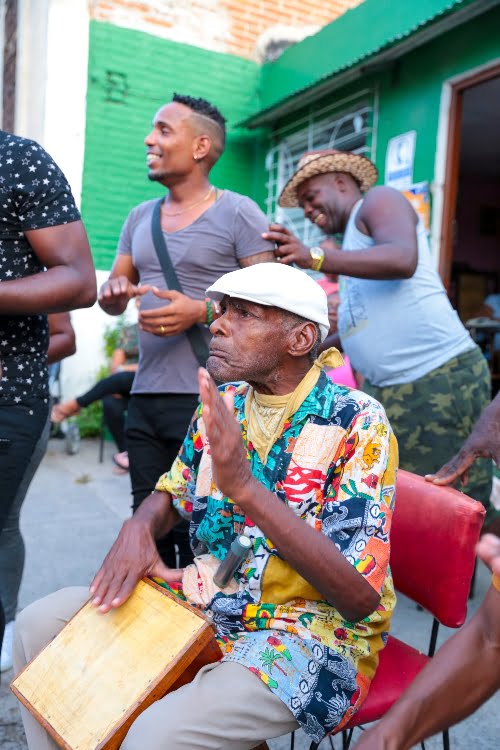
The African-influenced music and dance of Cuba’s rumba are enjoyed daily on the streets. Popular musicians Milian Gali Riveri (center), Einar “Tito” Leliebre Nuñez (left), Bladys Pujols Boubaire (right) are caught up in the music.

Santa Ifigenia Cemetery

Santiago de Cuba Snapshots
Photo by David I Muir

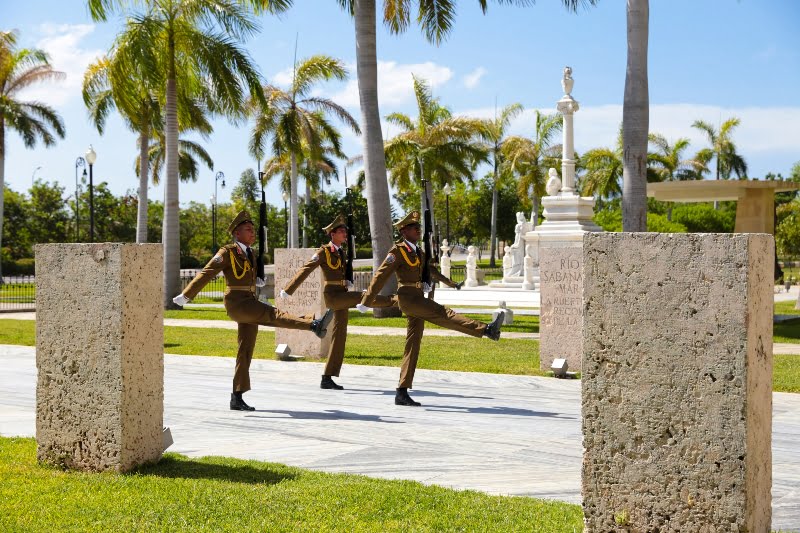
Soldiers during changing of the guard at Santa Ifigenia Cemetery where the remains of revolutionary philosopher José Marti rest in a mausoleum.

Comparsas

Santiago de Cuba Snapshots
Photo by David I Muir

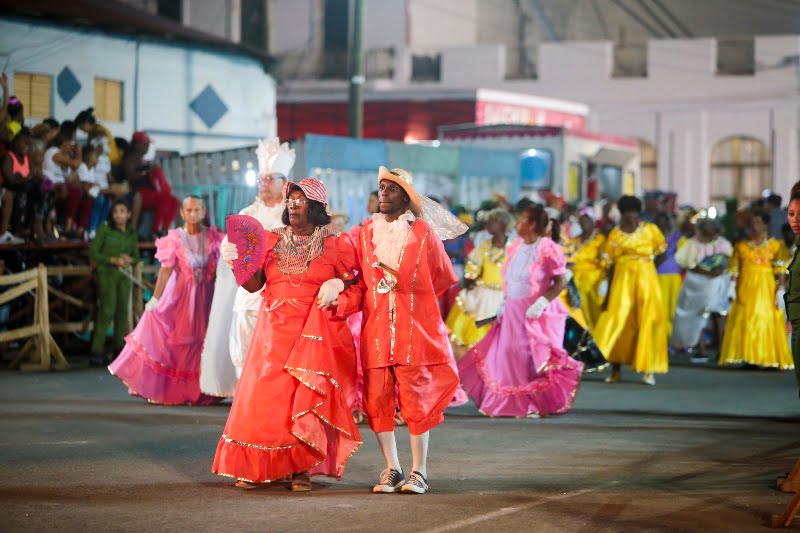
While some elements of Cuban carnival reflect the typical revelry of the occasion, here’s a day when the elder comparsas wear Old World clothing in celebration of the island’s history.

Day Trip

Santiago de Cuba Snapshots
Photo by David I Muir

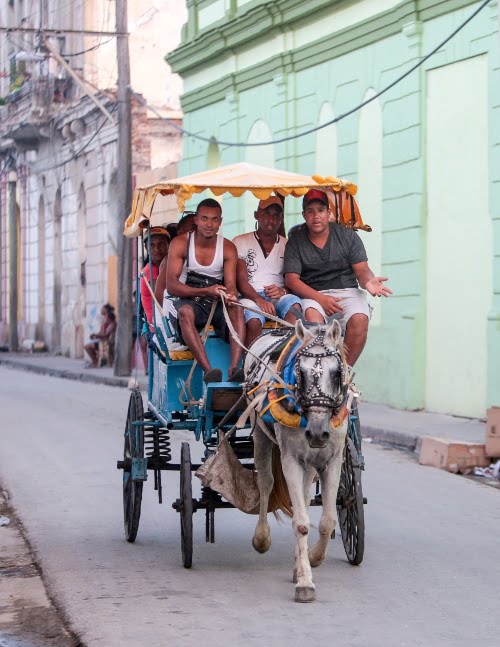
Horse and Buggy, a local mode of transport when you don’t have a car.

More on Cuba Travel:

iconic caribbean destinations

Dancehall Star Jahmiel’s Go-To Quarantine Dishes

0
Jahmiel Dancehall

Music and food are two of the Caribbean’s most sought-after exports. And perhaps no other regions loves both so much in equal measure. With this in mind, we tapped some of the Caribbean’s most beloved music stars to talk about the foods that excite their palates. Jamaican Dancehall Star Jahmiel (given name Jamiel Foster) has been a fan favourite since 2015 when he broke out with his hit tune “Gain di World.” Since then, he has maintained a presence on dancehall/reggae charts with songs like “Strongest Soldier” and “A Better Tomorrow.” Jahmiel considers himself a real foodie.

Currently Craving: Brown stew salmon with rice and peas. It’s a dish I love, and luckily because I am quarantined in Jamaica, I’ve been able to get it a little more often than usual. When I was travelling prior to the COVID-19 outbreak, I’ve often been unable to get some of my favourite dishes because I was always in another country.

Favourite Caribbean Dish To Cook At Home: Curry coconut shrimp with rice and peas. My mom taught me how to make it, and most of what I know when it comes to Jamaican cooking in general. I’ve also taught a friend from overseas how to prepare it.

Go-to Caribbean Spot: There are so many good restaurants in Jamaica. But I really like a place called the Ultimate Ultra Lounge. When I’m travelling, I’m always hunting for a Jamaican restaurant. If I can’t find one, I’ll get the closest food to it.

Your Caribbean Essentials: Seafood, vegetables, ground provisions, rice, natural seasonings, and my all-purpose seasoning. The all-purpose is like the icing on the cake for me. The perfect finishing touch.

One Dish Every Visitor Should Try: Coconut curry shrimp because it’s the best. The seasoning mixed with the coconut flavour is really special. And they should pick up a bottle of scotch bonnet pepper sauce to go.

More Food Favorites from Caribbean Stars:

nadine sutherland bahamian padrino

Death Of Caribbean-Born activist spurs calls for Windrush Compensation

0
Windrush compensation
Windrush activist Paulette Wilson

The death of Caribbean-born British activist Paulette Wilson has intensified calls for the acceleration of the payment of reparations by the British government to the Windrush generation of Caribbean immigrants who were wrongfully classified as illegal aliens.

Thousands of Caribbean migrants entered Britain between 1948 and 1973 to fill a post-war workforce shortage. People born in the British Empire and its former colonies were granted the right to live and work in Britain.

Death Of Caribbean-Born activist

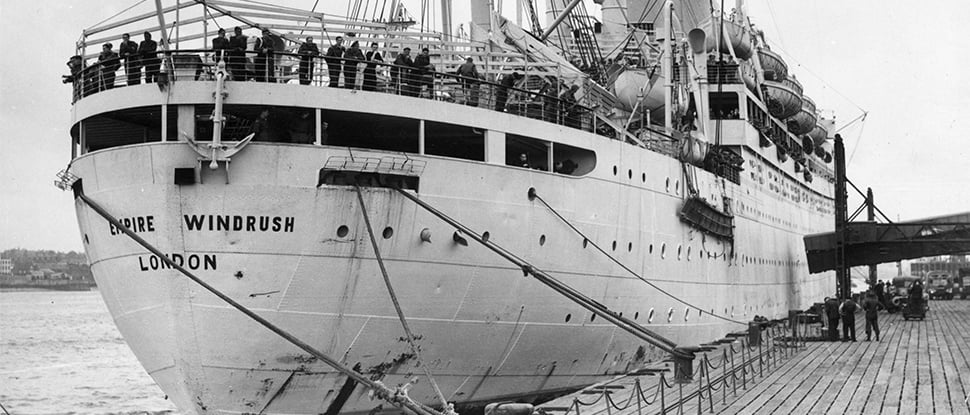
These people were called the “Windrush generation” after the Empire Windrush, a ship that brought the first large group of Caribbean migrants into Britain after the Second World War.

Paulette Wilson died at 64, only weeks after she and other Windrush campaigners presented a petition with over 130,000 signatures to parliament, urging the government to speed up the compensations.

When Wilson entered Britain from Jamaica in the late 1960s, she was ten years old. Her grandparents raised her in Wolverhampton, and she later worked as a cook for the House of Commons. She was threatened with deportation and sent to the Yarls Wood Correctional Center after she failed to persuade authorities that she was a rightful resident of Britain.

She recently emerged as one of the most notable faces of the Windrush compensation campaign, demanding recompense for the legal residents from the Caribbean and other Commonwealth nations who were intimidated by the immigration rules laid out in 1992 to create a “hostile environment″ for unlawful migrants.

“I have to say her spirit was broken by the government,” said Patrick Vernon, a friend of hers.

According to the director of the Windrush Foundation, Arthur Torrington, “Paulette will be sadly missed. She campaigned for justice… to address government failings that caused misery to thousands of Caribbean men and women.

The British government issued apologies in 2018 for the “appalling” handling of the thousands of migrants that were refused their fundamental rights owing to the constriction of immigration laws. However, they had entered Britain legally for several years.

The Windrush Compensation Scheme was initiated in 2019 to pay damages to the affected migrants. Still, activists are dissatisfied as only very few people have received compensations owing to the complexity of the officious procedures and lengthy waiting times involved.

None of us envisioned that two years on people would still be waiting,” said Jacqueline McKenzie, an attorney for several Windrush victims, adding that, “People are waiting an inordinate length of time and the request for more and more information is really problematic, people can’t cope with it.

According to McKenzie, several of her aged clients are required to present documentation concerning happenings from about five decades ago, to back up their claims. A lot of people have died waiting for a settlement.

According to a report authorized by the British government on the Windrush scandal and released in March 2020, “institutional ignorance and thoughtlessness towards the issue of race” was a crucial factor in the reaction of the government. McKenzie strongly believes that the Windrush scandal is linked to racism.

Shortly before Paulette Wilson passed, the British Minister of Interior, Priti Patel, had described it as “absolutely unacceptable that people have died” while awaiting pay-outs. She further promised to effect “whatever measures are required”.

Meanwhile, those who do succeed in getting the pay-outs often get what McKenzie refers to as “ridiculous” sums. Those who couldn’t go to university due to their wrong immigration status get £500 (just over $600), while the same amount is paid to cover legal fees that can run into thousands.

A spokesman for the government stated that “The Home Secretary (interior minister) has been clear that the mistreatment of the Windrush generation by successive governments was completely unacceptable and that she is determined to right those wrongs.”

Out of over a thousand applicants to the Windrush Compensation Scheme, only 154 people have gotten payments. According to the government spokesman, the first pay-out was made four months after the initiation of the scheme, and a total of £1.5 million has been paid so far.

Island Origins Live – Jamaica Leads as a Model for Safe Tourism

0

Donovan White is the current Director of Tourism for the Jamaica Tourist Board (JTB). His job is to oversee the marketing of Jamaica to the world. On this episode of Island Origins Live, he speaks with publisher Calibe Thompson about how Jamaica is leading as a model for safe tourism, inviting the diaspora to “Rediscover Jamaica,” and keeping the island top of mind with future visitors around the world.

Learn more at www.rediscoverjamaica.com and www.visitjamaica.com.

Latest