In December 2017, Prinston Jean-Glaude, CEO of Primary Medical Care Centers, was in his mid-forties and in relatively good health. However, he weighed 212 pounds. this began to affect his energy levels and general mobility. So he challenged himself to lose weight with a new health routine.
“Consistency is the key to weight loss success,” says Prinston regarding developing a health routine. He began his journey by setting a weight loss goal of 195 pounds for 2018, which he achieved by December. He created an exercise regimen and based his diet on the biblical Daniel Fast—eliminating meat, sugar, and rice. For 2019, he set a weight loss goal of 180 pounds and has already lost 10.
Over 70 percent of U.S. adults aged 20 and over are overweight, according to the Centers for Disease Control and Prevention (CDC). This presents a serious public health crisis that has become an epidemic. These issues connect to a number of health problems. This includes Type 2 diabetes, high blood pressure, sleep apnea, heart disease, stroke, and certain types of cancer. However, losing a small percentage of total body weight can positively impact blood sugar, cholesterol, and blood pressure. This can also decrease certain risk factors for some chronic diseases.
Primary Medical Care Centers invites you to make an appointment or walk-in to either their Miami or Lauderdale Lakes location to have one of their friendly healthcare providers assist you in getting started on your weight loss journey. Are you up for the challenge?
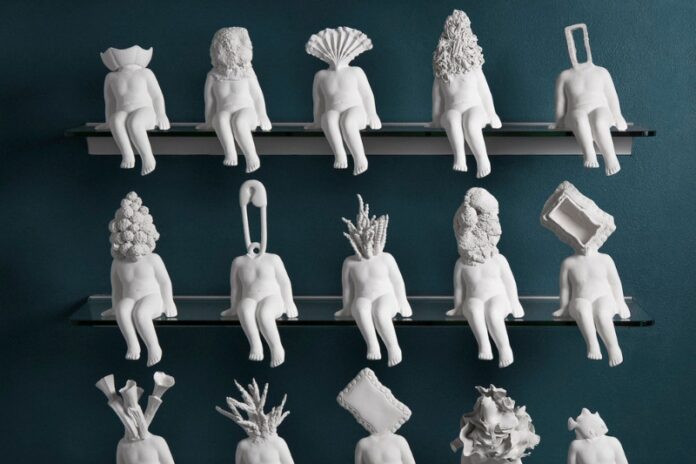
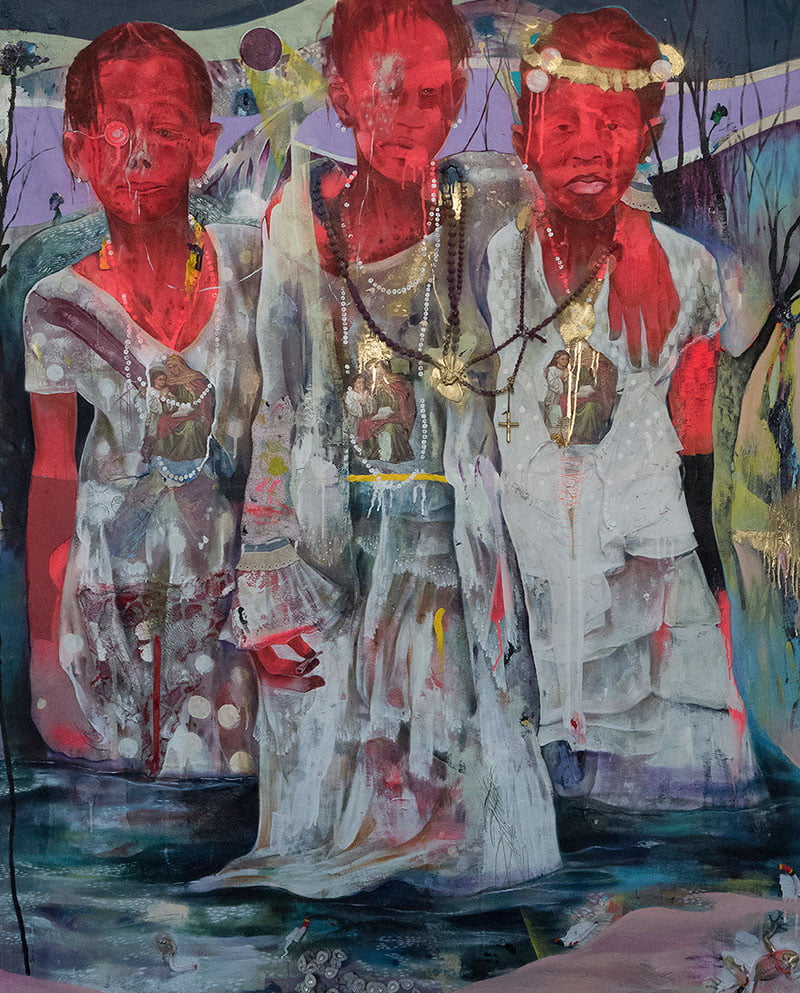
"White Noise, Let the choir sing a magnified silence (25 Affirmation)" by Morel Doucet
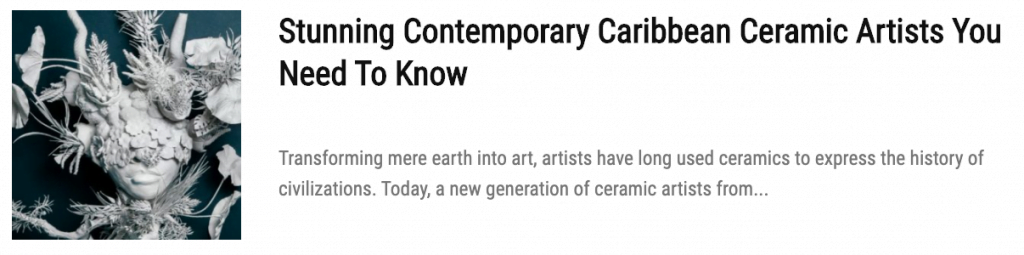
The ancient art of ceramics finds contemporary resonance in the work of groundbreaking young Haitian-American artist Morel Doucet. Now see his latest show premiering Oct. 1, 2019 at the African Heritage Cultural Arts Center (AHCAC).
Titled “White Noise: When Raindrops Whisper and Moonlight Screams in Silence,” the new exhibition shows Doucet’s signature exploration of organic forms from land and sea. His sculptures, teapots and figurines become consumed in oceanic rust and overground flora.
This show dives deep into the intersection of racial identity and today’s climate crisis. In addition, the artist explores in particular the coral bleaching epidemic throughout South Florida and the Caribbean. The show also seeks to explore how communities of color become the most vulnerable to climate change.
“Morel’s visual narrative, while beautiful, simultaneously serves as a haunting metaphor for humanity’s ostensibly cyclical and never-ending collision with itself,” explains the gallery’s statement on his latest work. “Doucet’s exhibition is simultaneously an archeological dive beneath the ocean’s surface cataloging artifacts that reference a colonial past, a difficult present and an uncertain future whilst offering moments for sociopolitical critique and discourse.”
Born in Haiti and raised in Miami, Doucet is a graduate of Maryland Institute College of Art. His work has been exhibited across America at the National Council on Education for Ceramic Arts in Pittsburgh, PA; the American Museum of Ceramic Art in Pomona, CA and the Museum of Contemporary Art in North Miami, FL. His pieces have also featured at the Flaten Art Museum in São Tomé et Príncipe and at the Havanna Biennial.
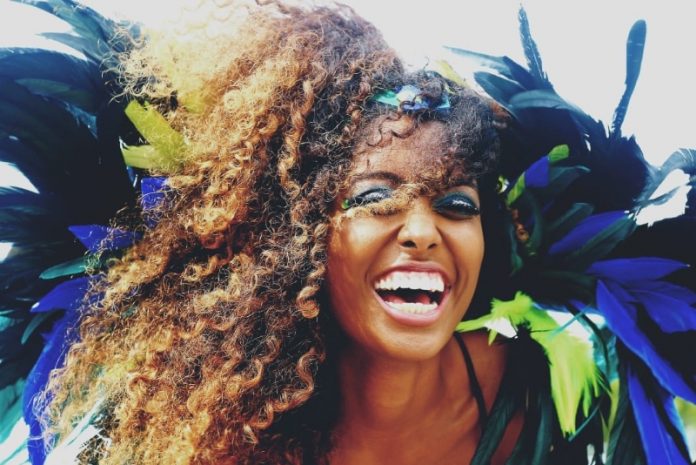
Miami Carnival 2019 provides a taste of the diverse and unique flavors of Caribbean culture to all those who attend.
Carnival fans from around the world will descend on Magic City for Miami Carnival Week 2019. Celebrating the 35th anniversary, this year’s stellar line-up includes a host of marque events. All lead up to the main parade on Sunday, Oct. 13, set for 11 a.m. to 11 p.m. at the Miami-Dade County Fairgrounds.
Miami Carnival continues its long-standing tradition of providing a kaleidoscope of Caribbean cultures under one umbrella.
“For over 35 years, Miami Carnival has endeavored to be the nucleus of Caribbean culture in South Florida,” says Joan Hinkson, Board Chair, Miami Broward One Carnival Host Committee. “All community members are encouraged to support the Carnival’s core programming in every way possible.”
So explore the breakdown of this year’s jam-packed calendar.
Miami Junior Carnival 2019
Revelers young and young and heart will officially launch the celebrations with Junior Carnival on Saturday, Oct. 5, 2019. This traditional event seeks to pass the baton of Carnival culture and tradition to the next generation.
Miami Panorama Showdown 2019
On Friday, Oct. 11, the annual Panorama brings the rhythms of sweet steel pan music to Miami. This year’s showdown features five competing bands. The show also includes a highly anticipated performance by the Trinidad Massy All Stars Steel Orchestra, and a appearance by Gypsy & Poser.
Miami J’Ouvert 2019
Get ready to make a mess in a cloud of color at this iconic event, set for Saturday, Oct. 12. Instead of feather and sequins, Miami Carnival Official J’Ouvert celebrates with colorful explosions of paint and powder.
Miami Carnival Parade 2019
The culmination of Miami Carnival 2019 kicks off at noon on Sunday, Oct. 13, with a mega soca concert at 3 p.m. This year’s line-up of performers promises to be bigger and better than ever, led by soca superstars Kes the Band, as well as Nailah Blackman, Nadia Batson and Mr Killa.
This year’s Parade of Bands will feature colorful costumes from over 15,000 masqueraders. The revelers capture the spirit, passion, and the essence of Caribbean culture.
Deborah Jack. water between us remembers, so we wear our history on our skin, long for a sea-bath and hope the salt will cure what ails us, 2016. Digital color video, 15 min. 42 sec. Courtesy the artist.
This December, art aficionados will descend on the Magic City for Miami Art Week—a collection of art fairs, museum exhibitions, gallery shows and cultural events surrounding Art Basel Miami (December 5-8). The event has become fertile ground for a new generation of influential curators celebrating Caribbean art. These curators are breaking up the old guard of institutional gatekeepers.
Now art lovers can discover a plethora of Caribbean voices from several exhibitions. Many of these are nurtured under the Art of Black Miami umbrella—a city initiative celebrating diverse artistic viewpoints from across the black diaspora. By promoting these groundbreaking showcases, the program also seeks to highlight the diverse creative communities thriving in Miami’s heritage neighborhoods, from Little Havana to Little Haiti.
Before the shows begin, meet some of the curators broadening the Caribbean art landscape, and learn what they have in store this year in Miami. Whether academics, gallerists, or artists in their own right, these voices are reframing conversations about art, celebrating more inclusive and diverse viewpoints.
Perez Art Museum Miami: Maria Elena Ortiz and Marsha Pearce
Maria Elena Ortiz and Marsha Pearce Curators of The Other Side of Now: Foresight in Contemporary Caribbean Art, Perez Art Museum Miami (PAMM). Photo credit: Lazaro Llanes and Alexander Elias respectively.
Hailing from Puerto Rico and Trinidad respectively, both aim to reframe Caribbean art beyond the colonial histories that have traditionally divided national identities. “Right now, there is a very strong longing among artists from different Islands to connect with one another,” notes Ortiz. In response, they moved away from the conventional curatorial use “of predetermined categories,” explains Pearce. “We instead posed questions to the artists, and allowed themes to emerge from their work. We then found shared concerns that cut across linguistic and physical boundaries.” Both curators also seek to challenge stereotypical ideas surrounding Caribbean art, highlighting more abstract and experimental works. “We’re still fighting existing expectations of what the Caribbean aesthetic should look like,” says Pearce. “So we’re always thinking about how we can expand these perspectives.”
LAVAR MONROE, Church in the Wild. Courtesy of PAMM.
ON DISPLAY IN MIAMI:
For The Other Side of Now (running through June 7, 2020), the curators invited 14 artists from across the Caribbean to produce work imagining the region’s future. “So much Caribbean art feels entangled with questions about the past, in ideas of trauma and catastrophe,” says Ortiz. “We wanted to explore how contemporary art in the region is moving beyond these tropes.”
Futurama 1637: Pati Vargas
Pati Vargas Curator, Futurama Art Galleries
Long after the doors close on Miami Art Week 2019, the local art scene will continue to thrive, sustained by a vibrant community of creators. This is the driving inspirational force for Pati Vargas, curator at Futurama 1637 Art Galleries. Founded in 2011, the institution is dedicated to celebrating and advancing Little Havana’s cultural legacy. The organization runs educational outreach programs, and also provides affordable studio space and curating shows for local artists. “We’re grateful to be able to give these opportunities to young artists, who all become part of our family as they grow,” says Vargas. “We are here to help and guide.”
Honing her skills for years promoting musicians at Miami Records, she brings this same passion for promoting new voices to the visual realm. At Futurama 1637, celebrating Caribbean artists has become a central theme. This environment is a familiar stomping ground for the Ecuadorian native, who grew up among Caribbean communities in Brooklyn, New York. “My youth was filled with so much Brooklyn fun, rooted in Caribbean culture,” she recalls.
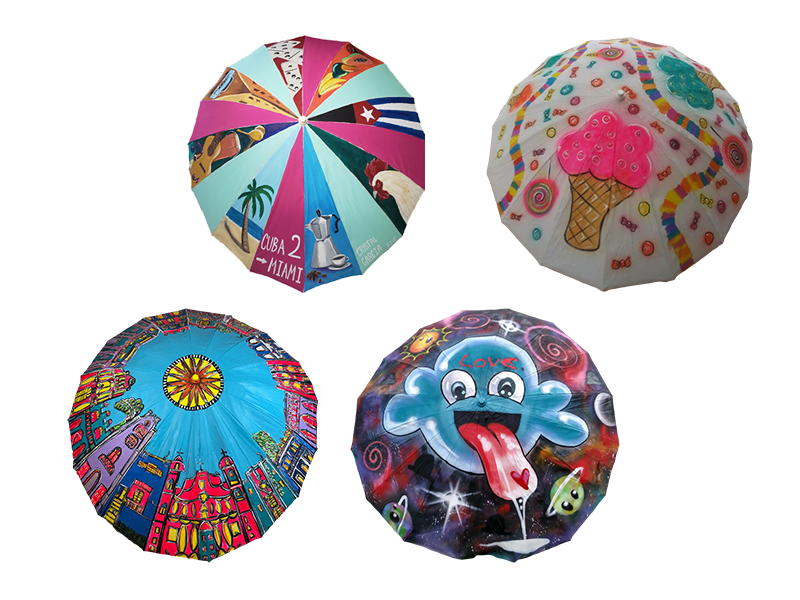
Commissioned pieced for show Umbrellas of Little Havana. Photo courtesy of Futurama 1637.
ON DISPLAY IN MIAMI:
Vargas’ popular showcase Umbrellas of Little Havana returns December 7-9 at Futurama 1637. The exhibition features 40 commissioned umbrellas painted by local and international artists, many from Cuba, Haiti, the Dominican Republic and Puerto Rico. To honor the neighborhood’s rich history, these artists use the unconventional canvas to poignantly explore themes of homeland, notes Vargas. “For his umbrella, artist J.Roberto painted the buildings he saw when he recently visited Cuba after many years of exile.”
Prizm Art Fair: Mikhaile Solomon
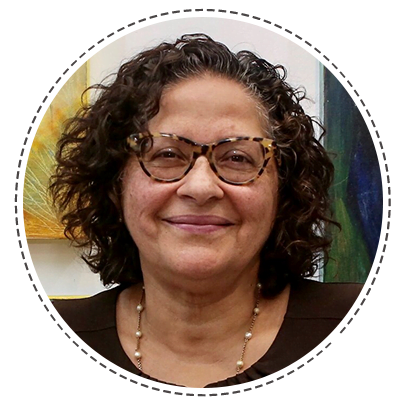
Mikhaile Solomon Founding Director of Prizm Art Fair 2019. Photo Rod Deal.
Prizm Art Fair has become essential viewing during Miami Art Week, highlighting exciting voices throughout the African diaspora and filling the gaps often left by other showcases. This mission to expand the spectrum of artists on Miami’s international stage has been a personal one, says director, Mikhaile Solomon—a Miami local with roots in St. Kitts. “We want Prizm to be a catalyst for Caribbean and Pan African artists, encouraging stronger discourse about their work.”
Since launching in 2013, the event (which runs December 2-9) now features curated exhibitions and presentations by an international selection of galleries. The fair is aesthetically diverse, presenting performance art and film screenings. Its programming also promotes further dialogue through panels; past speakers include Black Lives Matter founder Patrisse Cullors and famed artist/ scholar David C. Driskell.
In a short time, the fair has already helped diversify international art spaces. Many works of past artists are now featured in major museums. “It’s been very humbling to see artists that we’ve worked with gain such recognition,” says Solomon. “People are really starting to pay attention to places like the Caribbean. They are seeing their visual art narratives more critically.”
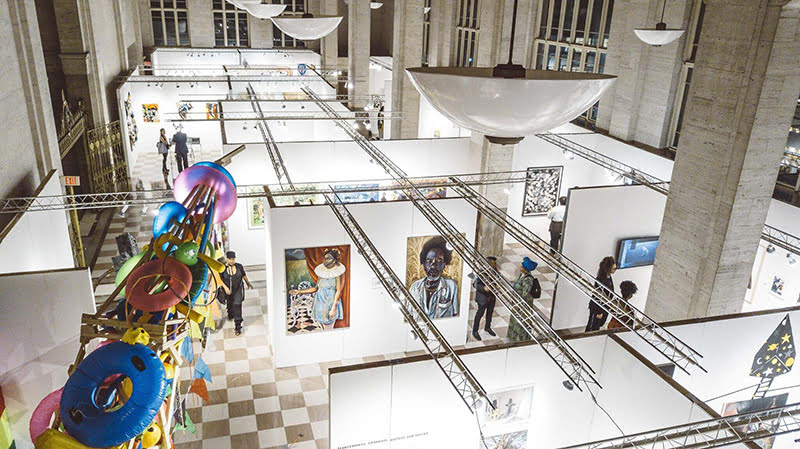
Exhibition floor of Prizm Art Fair. Photo by Ron Deal
ON DISPLAY IN MIAMI:
Responding to today’s political and social upheaval, particularly against marginalized communities, Solomon is co-curating Prizm’s central exhibit under the theme Love in the Time of Hysteria. “We want the show to explore how these divisive dynamics affect our ability to love each other,” explains Solomon. “And we want to explore what movements could rebuild a community rooted in love.”
MUCE: Ashlee Thomas and Bart Mervil
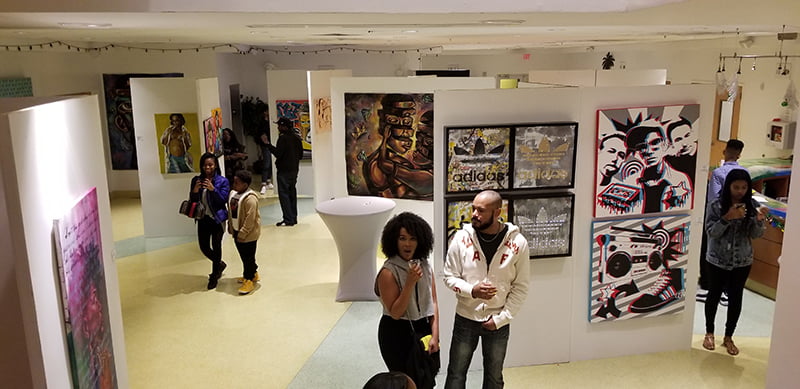
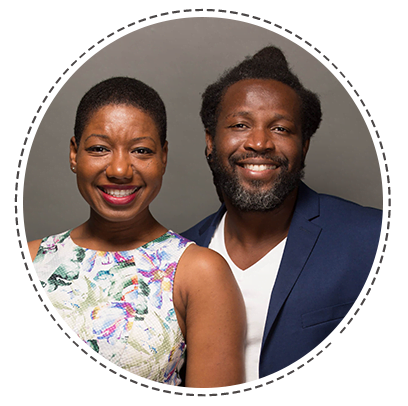
Exhibition floor for Miami Urban Contemporary Experience. Photo by Bart Mervil.Ashlee Thomas and Bart Mervil Co-founders, Miami Urban Contemporary Experience (MUCE)
Historically black communities are always vulnerable to the tides of Miami’s gentrification. Now Miami Urban Contemporary Experience (MUCE), founded by Ashlee Thomas and Bart Mervil, serves as a creative anchor in Little Haiti. Part gallery, part cultural facility, MUCE “is a platform for artists across the African diaspora,” explains Thomas. “We saw very few spaces for the culture, so we decided to build something of our own.”
The partners first launched MUCE in 2015 as pop-up gallery experience. They then opened a permanent space this year in a converted Range Rover shop. Dubbed “the campus,” MUCE rejects the staid atmosphere of conventional galleries. Instead, they favor programming both artist exhibitions and immersive community events, from drum circles to free dance classes. “Luckily our local leaders understand when building neighborhoods, art is the perfect place to start,” notes Mervil.
Thomas and Mervil also seek to complicate monolithic myths about blackness by featuring a global range of artists. This focus is informed by their own diverse heritage; they have roots in Panama and Haiti, respectively. Past shows featured several emerging Caribbean voices, including Jamaican artist Matthew Flash, and Haitian-American artists Brenda Presil and Nate Dee. “We’re really about looking for people who are telling their own narrative,” says Thomas.
ON DISPLAY IN MIAMI:
Returning for its fourth edition, MUCE presents Now Or Neverland: Ode to Hip-Hop Art Festival. The show runs from December 1 to January 30. The show seeks to celebrate the genre’s impact beyond music, and how it became a generation’s introduction to artistic expression. “Everything about hip hop was an art form — the graffiti, the clothes, the breakdancing, the album covers,” explains Mervil. “All those have become elements of art today.”
Discover more exhibits and events celebrating artists from the Caribbean and across the black diaspora by visiting ArtofBlackMiami.com.
Contemporary Caribbean Art has staked its claim on the international art market. At the top end of the multi-billion dollar global art industry, uber-wealthy collectors and investors will spend millions on a single piece from key names. In fact, in 2017, the 1982 untitled painting of a skull by late Caribbean-American artist Jean-Michel Basquiat became the most expensive piece ever sold at auction by a U.S. Artist, at a record-breaking $110.5 million.
“The Caribbean is now becoming more aware of how to promote its creativity in the visual arts. And Miami is becoming somewhat of an epicenter for Caribbean art,” says Bailey, who helped artists like St. Lucia’s Jallim Eudovic to find his way into the global market. Eudovic was later tapped by the Chinese government to create a bronze sculpture for the largest sculpture park in the world, Changchun International.
Recently, the Pérez Art Museum Miami (PAMM) received a $1 million grant from the Andrew W. Mellon Foundation to help fund the museum’s Caribbean Cultural Institute. Bailey and Gordon-Wallace, both Caribbean-Americans, will curate exhibitions this year: Roots of the Spirit in Broward October 12 through December 27 and InterSectionality: Diaspora Art From the Creole City in Miami November 14, 2019 through March 20, 2020, respectively. Then, there’s Miami Art Week in December, where there will be myriad opportunities to buy Caribbean art.
WHY INVEST IN ART
According to recent research by University of London professor Semir Zeki, viewing art can increase dopamine in the brain. The experience even give a feeling similar to being in love. Gordon-Wallace explains that art stimulates conversation, and based on the type of art collected, dictates a certain lifestyle. Of course, with value appreciation, smart buying and careful timing yields financial benefits if an artist becomes more valuable.
“The collector is an investor in the genre [or multiple genres]— an intellectual investor, an economic investor and an investor in the culture—who will do due diligence, and, before even buying the first piece, will have a conversation with the artist,” says Gordon-Wallace. She implores buyers to visit art exhibitions with a collector’s mindset, with “wisdom, experience and knowledge.”
However, she advises you don’t have to be a collector—or have unlimited cash—to start acquiring pieces that you love. Be deliberate, but trust your instincts and buy what you like.
SMART ART BUYING
Acquiring great pieces for reasonable prices also requires a savvy approach, Bailey says. For example, buy work from leading art students, before they come to market. Gordon-Wallace encourages would-be buyers to set a realistic budget. Potential buyers should start visiting public places that have openings, and speaking to the artists, whenever possible. “The repeated practice of learning about the people who created the work moves you from someone who wants ‘a little thing’ on your wall to someone who is collecting work,” she concludes.
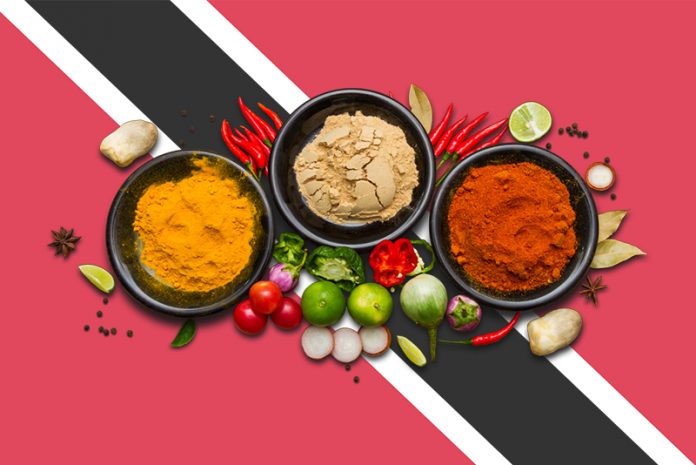
Pulling culinary inspiration from around the world, these Trinidadian recipes will light up your palette with big, bold flavors and home-cooked goodness.
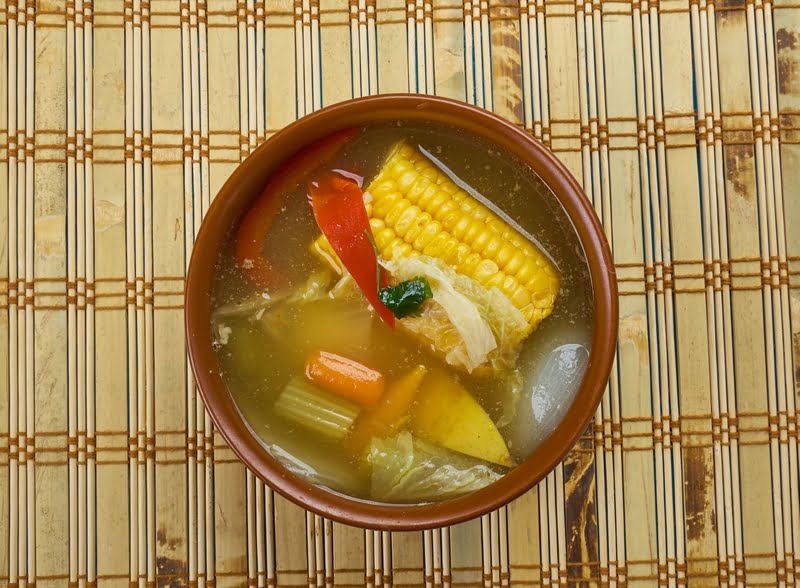
CORN SOUP
Traditional Trinidad Corn Soup – popular Trini street food. Made with split peas, corn and dumplings this soup
INGREDIENTS
4 corn cobs chopped into 1-inch rounds
1 large carrot, chopped
2 large potatoes, diced
¼ cup dried split peas
10 culantro leaves, minced
10 stalks chive, minced
1 stalk celery, minced
6 sprigs thyme, minced
1 medium onion, chopped
1 scotch bonnet pepper (optional)
4 cloves garlic, minced
2 large pimento seeds, minced
½ cup coconut milk
¼ teaspoon salt or to taste
¼ teaspoon black pepper or to taste
INSTRUCTIONS
In a large pot on medium high heat, add oil and saute carrots, potatoes, onion, garlic, pimento, herbs and dried split peas for 3 to 5 minutes.
Reduce heat to medium low, add enough water to cover sauteed vegetables and allow to cook until split peas are soft, about 30 minutes.
Add the cooked mixture to a blender and blend until smooth. Return mixture to pot, add coconut milk and more water until the soup reaches your desired consistency.
Add chopped corn into the pot and allow it to cook for 15 to 20 minutes on medium heat. Serve hot.
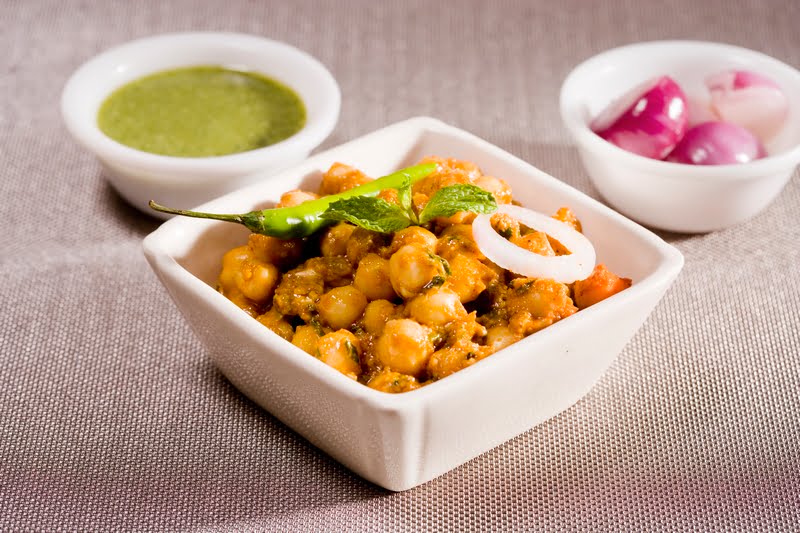
Channa (Curried Chickpeas)
Chana Masala or Spicy Chick Peas with salad, a Traditional North Indian Food Dish
INGREDIENTS
4 cups canned chickpeas, drained and rinsed
1 tablespoon olive oil
1 medium yellow onion, sliced
3 medium garlic cloves, minced
1 small serrano pepper, seeded and minced
3 teaspoons yellow curry powder
½ teaspoon powdered turmeric
½ teaspoon powdered cumin
1¼ cups vegetable broth
½ teaspoon salt
2 tablespoons chopped cilantro
INSTRUCTIONS
Heat olive oil in a large pot over medium-high heat. Toss in the onion and sauté until translucent, about 5 minutes.
Add the garlic and serrano pepper and cook another 2 to 3 minutes, until fragrant.
Add the curry powder, turmeric, and cumin to the pot and stir for about 30 seconds
Pour in ¼ cup of broth to the pot and stir, then add the chickpeas, cover, turn heat to low and simmer for another 5 minutes.
Uncover the pot, add the remaining cup of broth and the salt, and simmer uncovered for another 20 minutes.
6 Stir in the chopped cilantro. Serve hot in doubles or with a side of white rice.
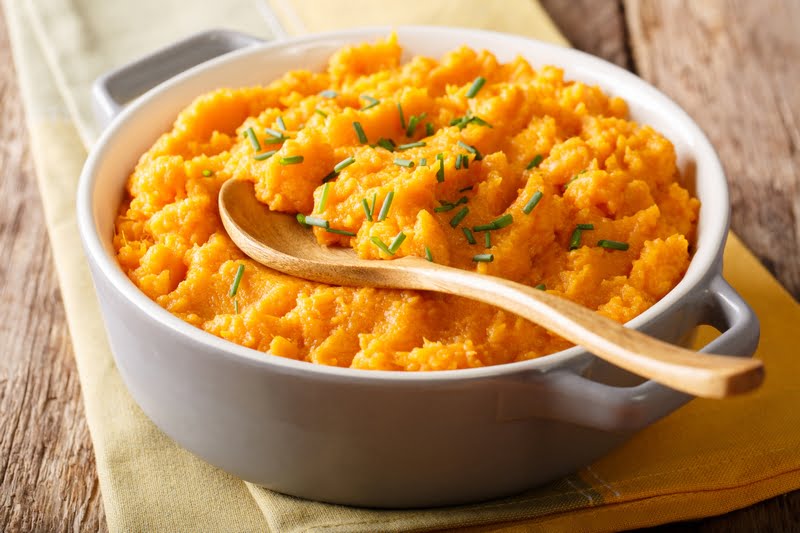
Pumpkin Choka
Vegetarian food: mashed sweet potatoes with herbs close-up in a saucepan on a table.
INGREDIENTS
2 tablespoons olive oil
2 cloves garlic, minced
1 small slice of scotch bonnet pepper
2 pimento seeds, crushed
½ onion, finely diced
1 bouillon cube
½ teaspoon salt
½ teaspoon geera
1 pound calabaza pumpkin or butternut squash, large diced
¼ cup water
INSTRUCTIONS
Bring a medium pot to medium heat. Pour in the oil, then saute garlic until translucent.
Add the hot pepper and the rest of seasonings, bouillon cube and geera. Add the pumpkin and stir.
Pour in the water, reduce heat to medium low, and leave to simmer for about 15 – 20 minutes.
Add salt and allow to reduce to a semi thick consistency.
Typical tropical vacation pursuits centered on sun, sand, and sea were not de rigueur for visitors to the Caribbean in the spring of 1887. That’s when legendary French impressionist painter, Paul Gauguin, settled in Martinique for a four-month residency that would prove to be the turning point both in his career and in Caribbean art.
Today, our islands do more than inspire creative genius. Museums, public art spaces, and even guerilla art installations are widespread throughout the Caribbean. They showcase locally-produced and international works celebrated across the art world.
For the best, most rewarding art travel experiences, these destinations are not to be missed:
Martinique
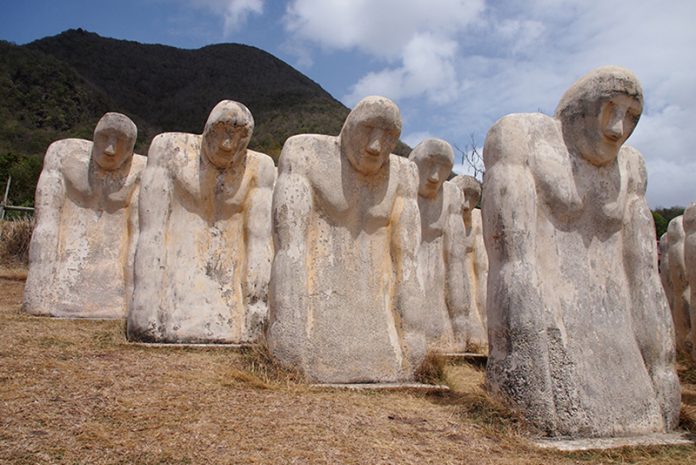
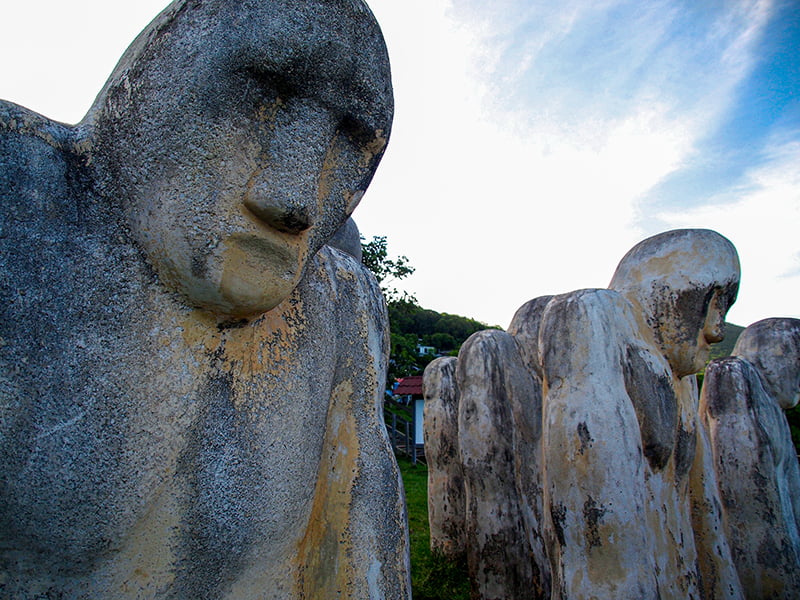
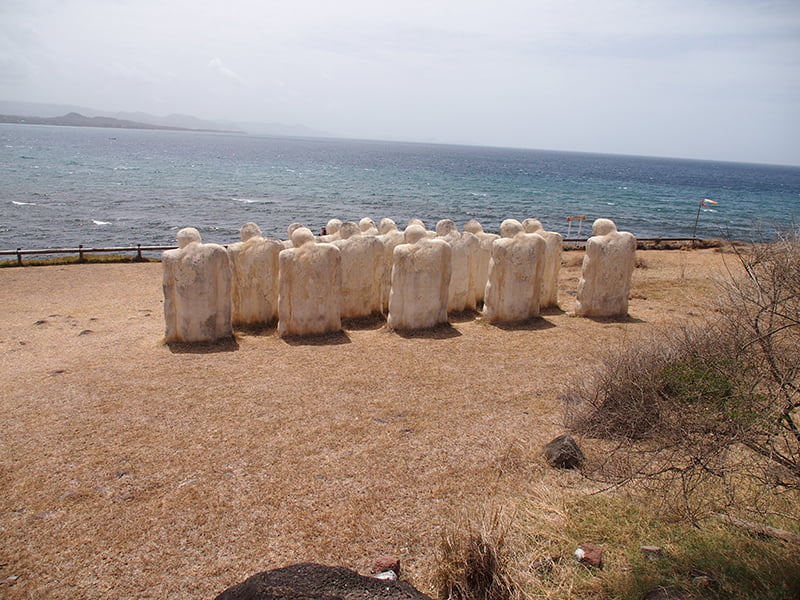
Art in Martinique largely lays bare the scars of slavery, with strikingly poignant expressions produced by local artists. These projects ensure that future generations never forget the darkest chapter in the history of mankind. No Martinican artist better espouses this conscious art movement than Laurent Valere. His most celebrated work, the Anse Cafard Slave Memorial, was completed in 1998 to commemorate the 150th anniversary of Emancipation in the French West Indies.
The Memorial is comprised of 15 large hulking concrete figures, their faces trained out to sea in the town of Diamant. They’re meant to represent slaves who drowned in a shipwreck just offshore here in 1830. The figures also form the shape of a triangle, the apex of which points directly toward the point in West Africa from whence the ill-fated slave ship embarked on its doomed journey to Martinique.
Visiting Anse Cafard is an extremely moving experience in large part because of what you won’t find here. There are no gates, or velvet ropes, or guards. Nothing stands between you and the statues, allowing full access to touch them, stand among them, and channel the powerful emotion of the work.
PHOTOGRAPHY STEVE BENNETT / UNCOMMONCARIBBEAN.COM
More traditional art galleries lay scattered all around Martinique. The newest, largest, and most impressive can be found at the old Habitation Clement rum distillery. Fondation Clément, a 25,400+ square-foot museum showcasing fine modern works produced by artists from all corners of the Caribbean, opened in January 2016.
Puerto Rico
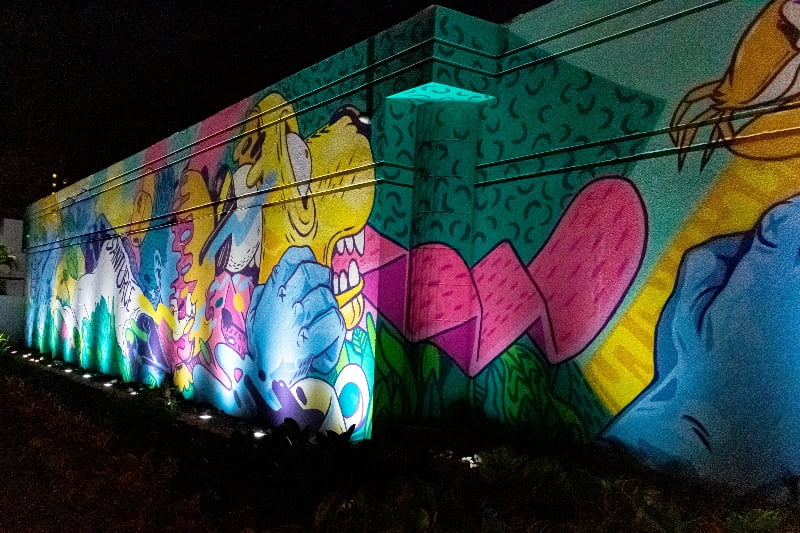
Like everything else in Puerto Rico, the art scene is dynamic, vibrant, and full of sabor! You see and feel this most prominently in Santurce. This formerly seedy suburb of San Juan has emerged in recent years as a hotspot for hipsters and the creative class.
Graffiti art in Santurce, Puerto Rico. PHOTOGRAPHY STEVE BENNETT / UNCOMMONCARIBBEAN.COM
It all started with a project by a group of local artists called Santurce es Ley. The program aimed to revitalize the slum that was Santurce by literally painting a new image of the neighborhood. In short order, bold and colorful murals started gracing the facades of area buildings, and an annual international art festival soon sprung from the project.
PHOTOGRAPHY STEVE BENNETT / UNCOMMONCARIBBEAN.COM
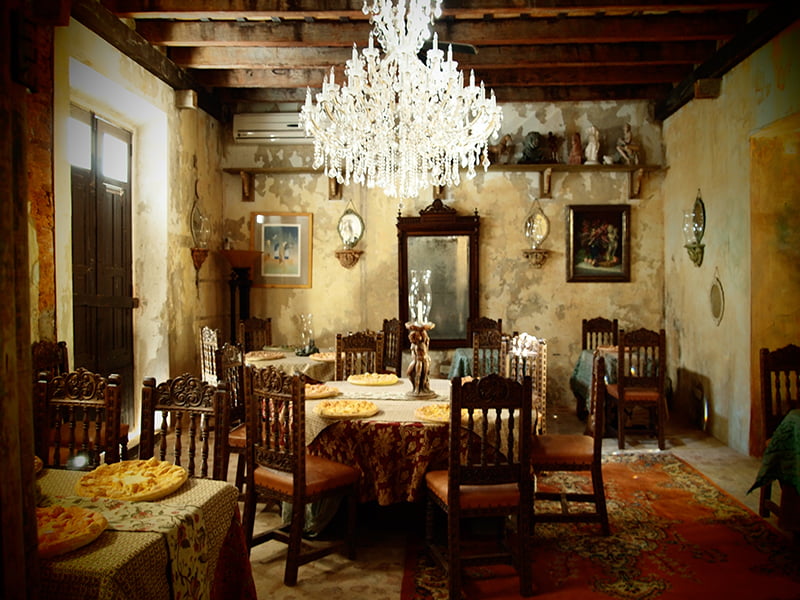
Visitors can enjoy the sensation of sleeping in an art museum at The Gallery Inn. Originally dating back to the 1700s, the six adjoining buildings that comprise the Gallery Inn became the private home and work studio for esteemed local artist, Jan D’Esopo in 1961. Today, you can relax here among a treasure trove of her sculptures and paintings. Unique art pieces fill every corner of the hotel, with Jan and other visiting artists constantly at work creating new works on-site.
Jan Desopo self portrait inside the Gallery Inn. PHOTOGRAPHY STEVE BENNETT / UNCOMMONCARIBBEAN.COM
Though loaded with unique art travel experiences, San Juan does not hold a monopoly on Puerto Rico’s art treasures. In fact, the Museo de Arte de Ponce is not only revered as the finest art gallery in Puerto Rico, it’s also the largest in all of the Caribbean.
Founded in 1959, the Museo de Arte de Ponce houses one of the most significant collections of PreRaphaelite art in the Western Hemisphere. More than 4,500 such pieces are displayed here, spread among 14 galleries. The crowning masterpiece: the acclaimed Flaming June by Sir Frederic Leighton, which dates back to 1895.
Haiti
Art is life in Haiti like few places on earth.
Journey along almost any major thoroughfare in any Haitian city and you will see vibrant paintings and sculptures for sale in makeshift markets along the road. The southern town of Jacmel, in particular, functions as the artistic hub of Haiti. The world-renowned artisans create papier-mache, producing functional pieces like vases and bowls, as well as masks and other decorative pieces cherished by local and international collectors and galleries.
For the best local galleries and museums, head to Port-au-Prince and its tony suburb of Pétion-Ville. Galerie Monnin, in particular, is a must-see.
Contemporary Haitian art inside Galerie Monnin. PHOTOGRAPHY STEVE BENNETT / UNCOMMONCARIBBEAN.COM
Haiti’s oldest art gallery, Galerie Monnin originally opened its doors in downtown Port-au-Prince in 1956. Prior to that, the scores of talented artists in Haiti operated much like a collection of Shakespeares with no Globe Theatre, their works unknown to the world. It took a pair of art promoters from Switzerland—Freda and Roger Monnin—to change all that, exposing expressive, and diverse Haitian art pieces to the world. It’s a tradition the Monnin’s daughter-in-law, Toni, carries on today from the gallery’s new location in Pétion-Ville.
For a behind-the-scenes look at Haitian art in action, plan a visit to the enclave of Noailles. Nestled in a small corner of Croix-des-Bouquets, a northern suburb of Port-au-Prince, Noailles is the Mecca of Haiti’s iconic iron art. The entire village functions as one big artists’ commune; everyone becomes involved in producing all manner of dramatic, expressive iron art from discarded oil drums. The tell-tale pinging of artists hammering shapes and designs into the metal continues around the clock, providing a unique window into one of the Caribbean’s best-known art traditions.
Iron art in Noailles. PHOTOGRAPHY STEVE BENNETT / UNCOMMONCARIBBEAN.COMHaitian artisan in Noailles. PHOTOGRAPHY STEVE BENNETT / UNCOMMONCARIBBEAN.COM
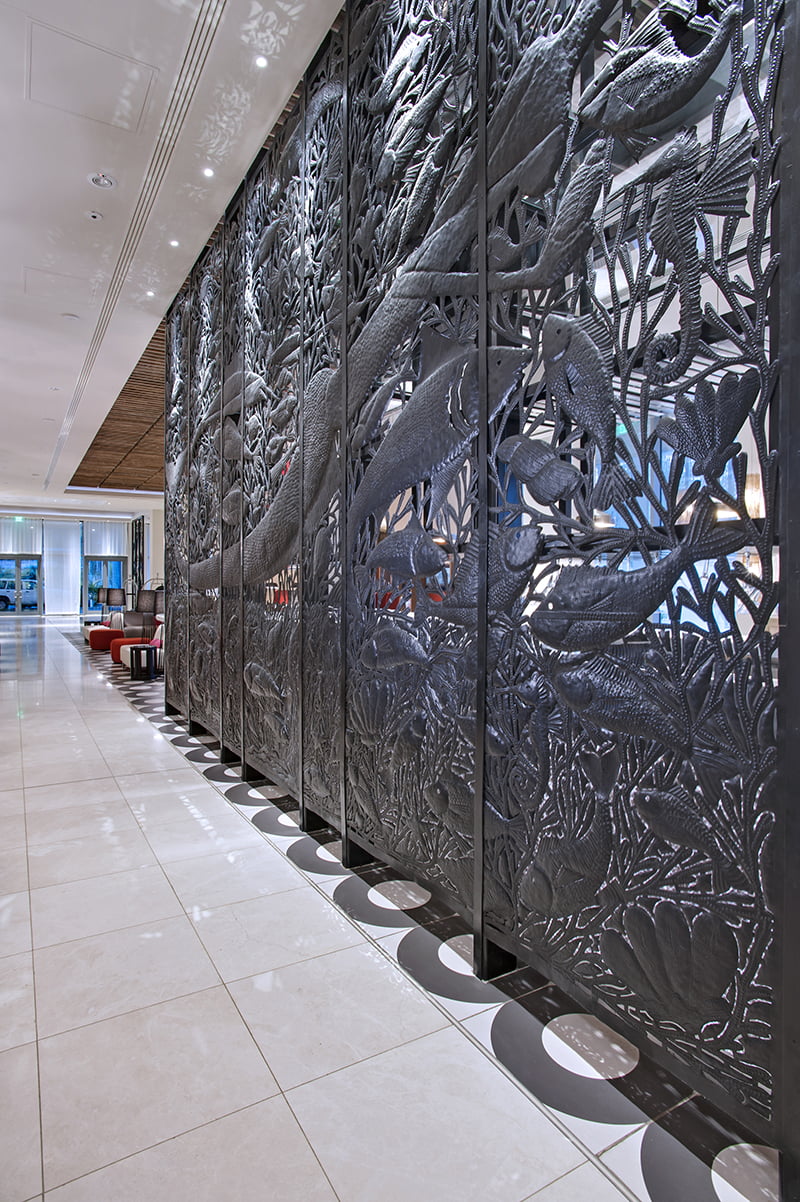
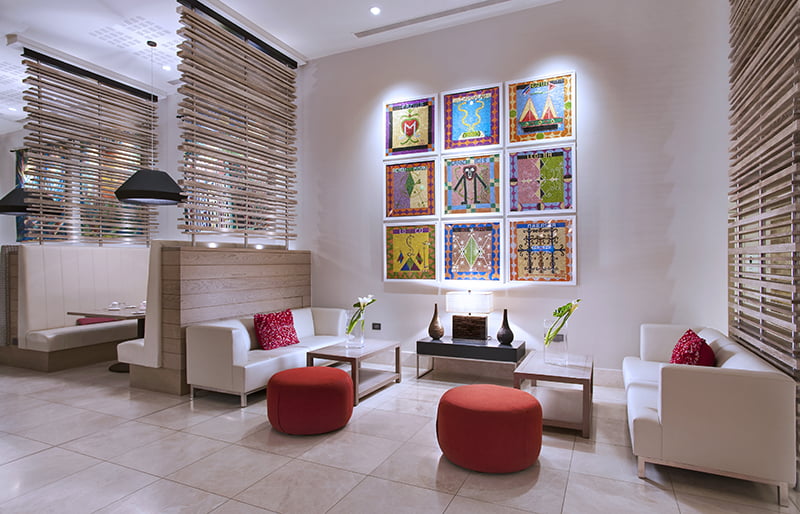
Spectacular Haitian art also weaves into the very fabric of the guest experience at the country’s finest hotels. The Marriott Port-au-Prince stands out in this regard. One of the newest hotels in Haiti, the Marriott Port-au-Prince boasts a collection of more than 1,500 art pieces. Guests room and common areas prominently display paintings, sculptures, papier mache pieces, and one of the largest expressions of Haitian iron art anywhere. Expertly curated by Philippe Dodard, a renowned Haitian artisan whose work inspired Donna Karan’s Spring 2012 collection, the hotel’s treasure trove of art celebrates the works of 22 different local artists, bringing guests closer to the soul of Haiti within the comfort of the country’s most modern hotel.
Great room iron wall at the Marriott Port-au-Prince. PHOTOGRAPHY STEVE BENNETT / UNCOMMONCARIBBEAN.COMGreat room detail at the Marriott Port-au-Prince. PHOTOGRAPHY STEVE BENNETT / UNCOMMONCARIBBEAN.COM
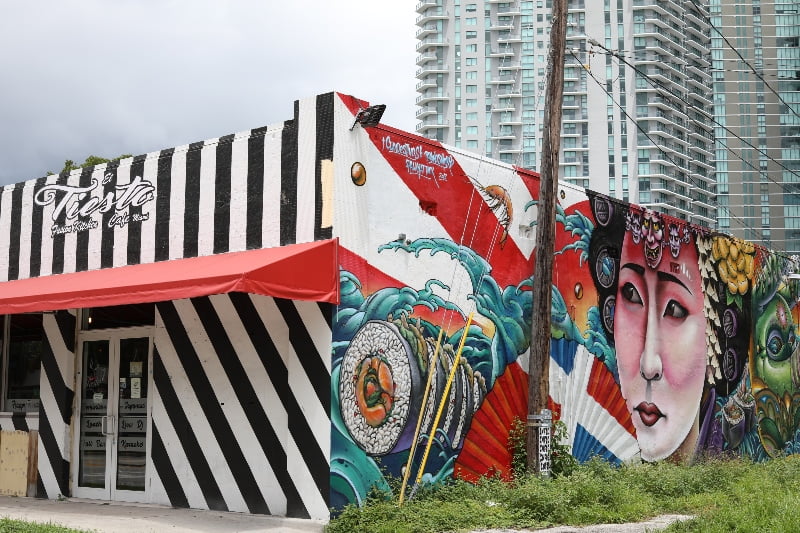
A stand-alone establishment on Biscayne Boulevard, just south of I-195, El Tiesto cafe stands out with artistic flair—from its vibrant wall art-painted exterior to the colorful artwork inside—and its unique Dominican and Japanese fusion cuisine.
As I entered the bistro-style dining room, I was welcomed by the lively sounds of merengue music from the DJ. I also noticed that moments after the eatery opened for business, a large number of patrons quickly filed in—a good sign that the place is either well-loved or the food is insanely delicious, or both. It was time for me to find out!
El Tiesto Cafe. PHOTOGRAPHY DAVID I. MUIR
Dish By Dish at El Tiesto Cafe
I asked my server Daniela to make recommendations for my meal, and she suggested that I start with ‘Chulitos’ and try the ‘3 Mosqueteros’ as my main course. She also insisted that I must also try the ‘Mar y Tierra Roll,’ one of the dishes on their sushi menu. I obliged.
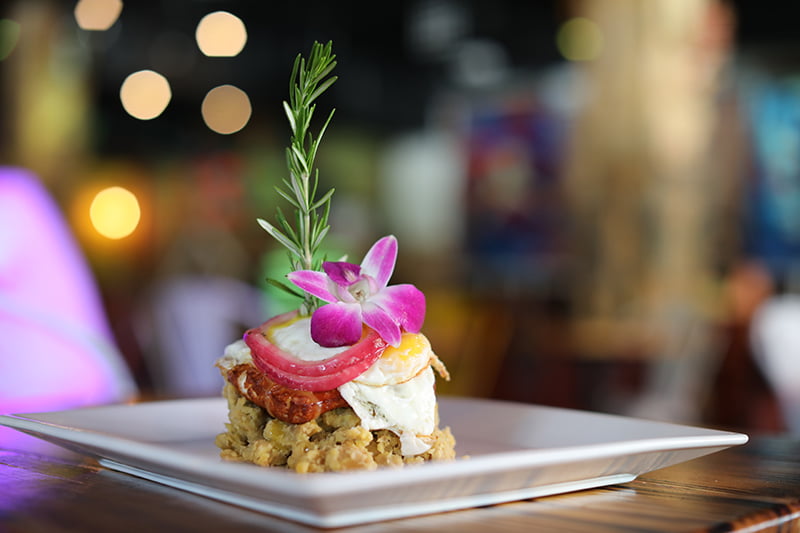
3 Mosqueteros or three musketeers is an interpretation of the traditional Dominican breakfast, ‘Tres Golpes.’ Tiesto serves it as a brunch item, which features two sunny-side up eggs atop a thick slice of salami, fried cheese, and a mountain of ‘mangu’—a traditional Domincan side-dish of boiled, mashed plantains. A topping of sautéed, pickled red onions completes the dish. In addition to the excellent presentation, the combination of flavors and textures, though simple, was irresistible. I was tempted to completely consume this large meal, but had to leave room for the sushi.
Tres Mosqueteros from El Tiesto cafe. PHOTOGRAPHY DAVID I. MUIR
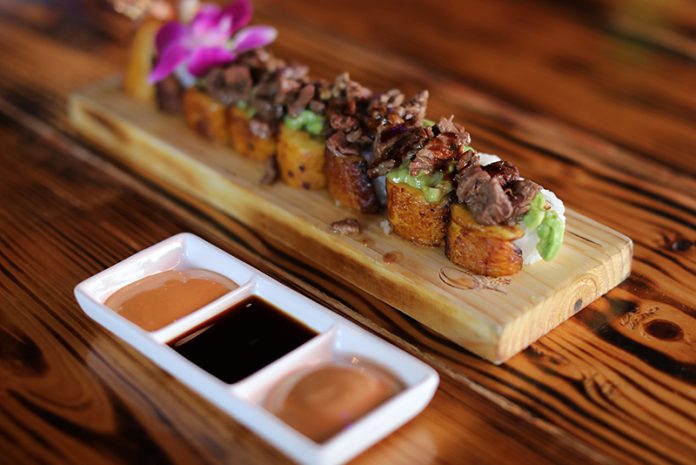
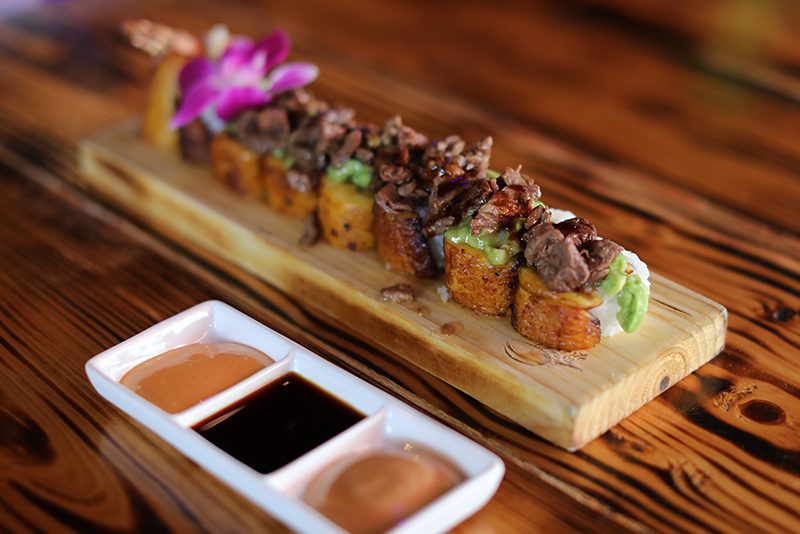
Tiesto’s Mar y Tierra Roll feels like a visual masterpiece, rolled with ripe plantains on one side and the rice on the other. Then the dish finishes with saucy miniature cuts of steak. Their rolls with shrimp tempura are also a feast for the eyes and the melding of flavors—queso-frito, maduro, guacamole, steak and special sauce absolutely blew my mind.
Mar y Tierra Roll from El Tiesto cafe. PHOTOGRAPHY DAVID I. MUIR
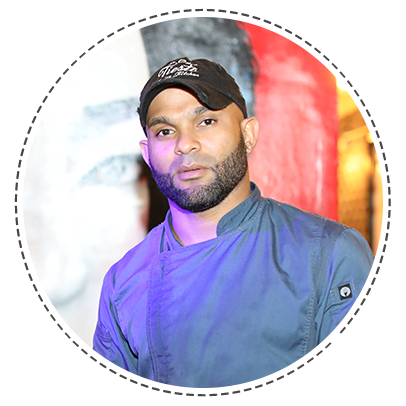
To complete the meal, I tried the rolls with each of the three accompanying sauces. While the spicy mayo and soy sauces did not disappoint, the Tiesto sauce was by far my favorite. These sushi-bites, dipped in their sauce, rank among the best I’ve ever tasted. There was no way I could leave without meeting the person responsible for such deliciousness, Chef Raphel Rosa.
Chef Raphel Rosa
PHOTOGRAPHY DAVID I. MUIR
The food at El Tiesto Cafe is worth traveling for, no matter where in South Florida you reside. And when you do visit Tiesto located at 3023 Biscayne Blvd, Miami, FL 33137, tell them Island Origins sent you!
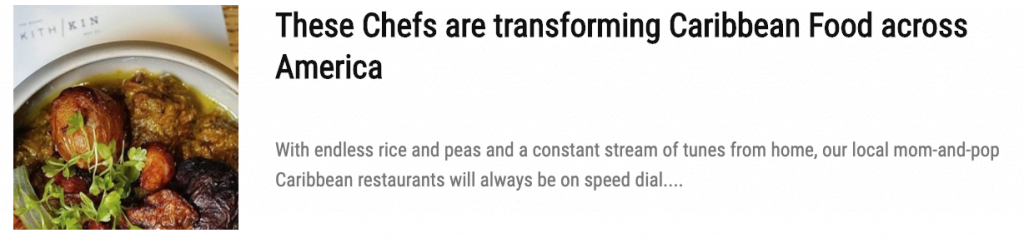
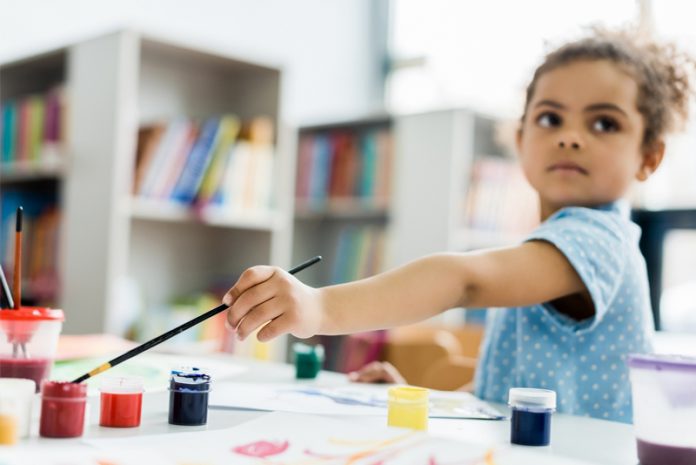
Give a child a set of crayons and a sheet of paper, and watch their imagination light up. Even the most active child enjoys slowing down and engaging with these tools of creative self-expression. That is why art activities for kids form an integral part of the social and academic development of all children.
Dr. Timothy Leistner, former Programs Manager at Children’s Services Council of Broward County (CSC), says art remains a valuable tool children. For kids, art becomes a way to learn storytelling. “It’s amazing how they layer the story on the same canvas,” says Dr. Leistner. “They may start with a house or playground on a sunny day with grass, flowers, children and adults. Then suddenly they may overlay approaching clouds to tell the story of a storm coming. And then they might add rain drops and so on. Even before they learn to read and write, they expand their literacy skills using art.”
Engaging Kids Through Art
In Broward County, CSC encourages engagement for kids through many art activities. This includes MOST (Maximizing Out=of-School Time), Youth FORCE (middle school after school), STEP (special needs), and Respite programs. They also provide small-group and individualized art therapy for children with special needs through the Cadenza Center for Psychotherapy and the Arts.
Other programs that use art to address trauma and engage youth in family strengthening and diversion programs are provided through the newly established Eagles’ Haven Wellness Center in Coral Springs and the Broward Behavioral Health Coalition, as well as Smith Community Mental Health. At Eagles’ Haven in particular, they have brought in a variety of outside vetted resources including art services for their wellness programs.
For more information about art focused programming for children and youth throughout Broward, visit the Arts Education Directory on www.broward.org/ Arts/ArtsEducation, maintained by the Broward Cultural Division.
From 'Feral Feminine,' a
collaboration between Niki
Lopez, Nikki Detour Butterfly
and Dangerwing Photography
When my brother Rich began his master’s degree program in expressive art therapy in the early 2000s, I thought—really?
Art therapy? As life would have it, years later I found myself immersed in a world where this discipline, which I considered inconsequential, would prove to be a healing force for many of the people I have grown to respect and admire.
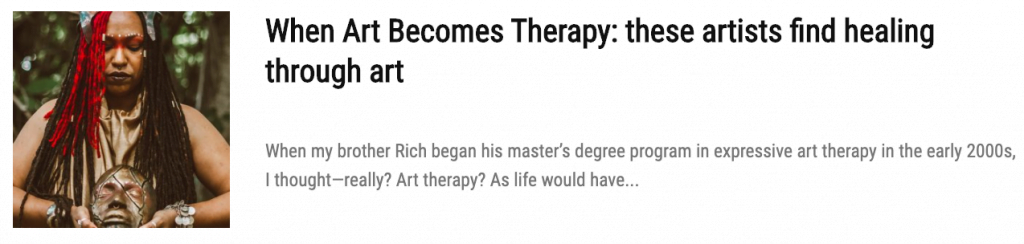
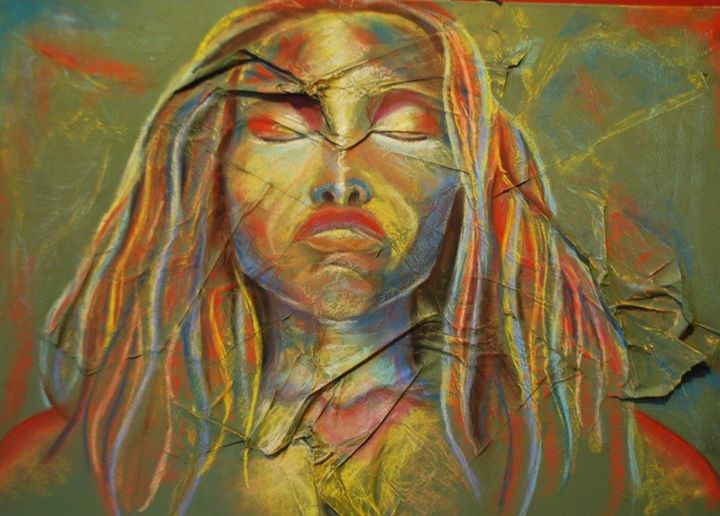
One of these people is artist Niki Lopez, who has struggled to overcome unspeakable trauma for years. For me, the situation is personal, because I have seen it up close—in her eyes, in the crying eyes she paints, in the smiling mask she wears to get through the days, and the distorted ones she sculpts.
It wasn’t something she spoke about initially—the emotional, physical and sexual abuse she endured growing up in a religious cult. But after we became intimate, she opened up to me and started sharing the nightmares of her childhood.
By way of her survival story, I’ve learned that art is a tool that can be used to cope with physical, emotional and psychological damage. Niki, and some of the other brave women in my circle, have shared stories of how artistic self expression has helped them heal.
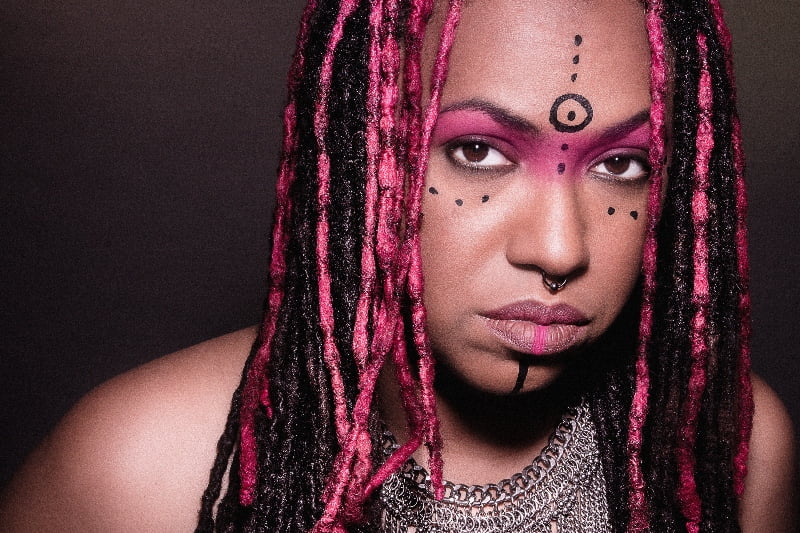
Niki Lopez
Artist Niki Lopez
Niki, who is of Panamanian, Jamaican and Cuban descent, used art to help her survive the 14 challenging years she spent in the cult. She confided, “I remember I would always draw eyes that were crying that bled into an ocean. I would write. There was nothing I could do about my situation.”
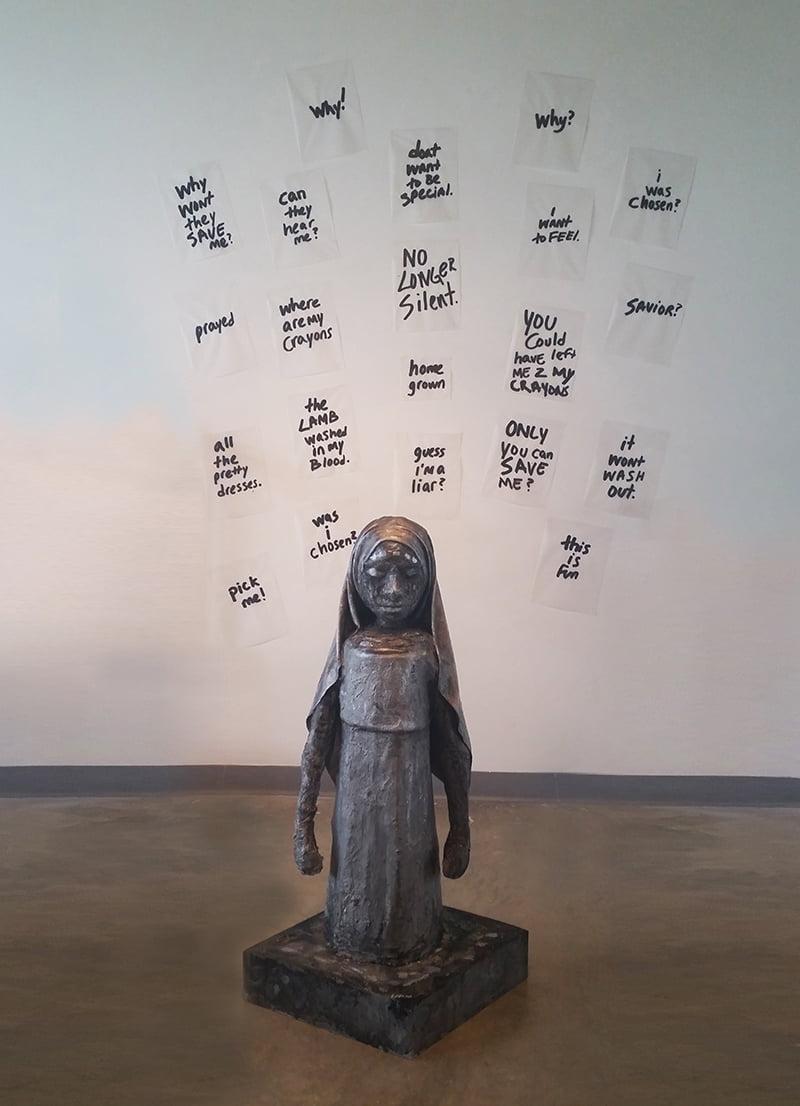
Homegrown was her first piece directly related to that time in her life. It’s a sculpture of her as a child wearing a hijab—a head covering Muslim women and girls are traditionally required to wear. Behind the sculpture are handwritten phrases like “I was chosen?” “Can they hear me?” and “where are my crayons?”
Homegrown by Niki Lopez. PHOTO: LOUIS DAVIS
“Through art, I was able to start addressing my traumas and eventually got into counseling. This was 15 years after escaping the cult, but it started coming out in my work. And then I started sharing and people were impacted.”
Her signature mask Healing from Within is the first work in which she dealt with mending these wounds. “This is about the work I’ve done from the inside. This is when I really started to shift my life.”
In addition to making art, Niki hosts workshops and talks, creating safe spaces for herself and others to discuss topics considered taboo.
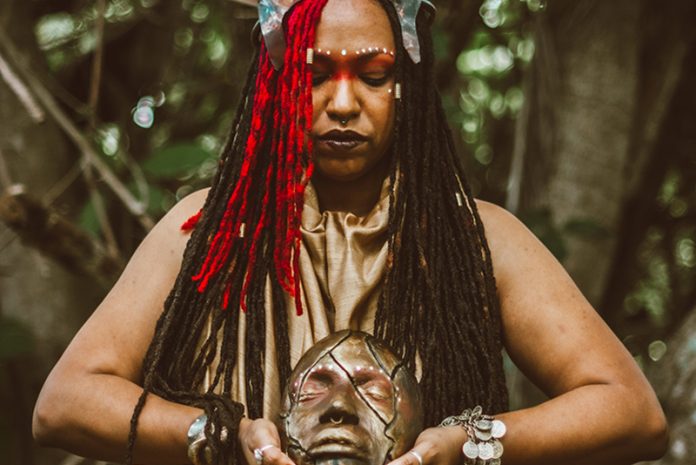
Nzingah Oniwosan
Artist Nzingah Oniwosan
As a child, Haitian multi-disciplinary artist Nzingah Oniwosan was physically and emotionally abused by her mother, who suffers from a mental illness, and was molested by a close family friend.
“Had it not been for art, I would have probably killed myself or would not have been able to survive. It was an escape from reality. I created a world that I didn’t have. My work was very pretty and I cared about perfection.”
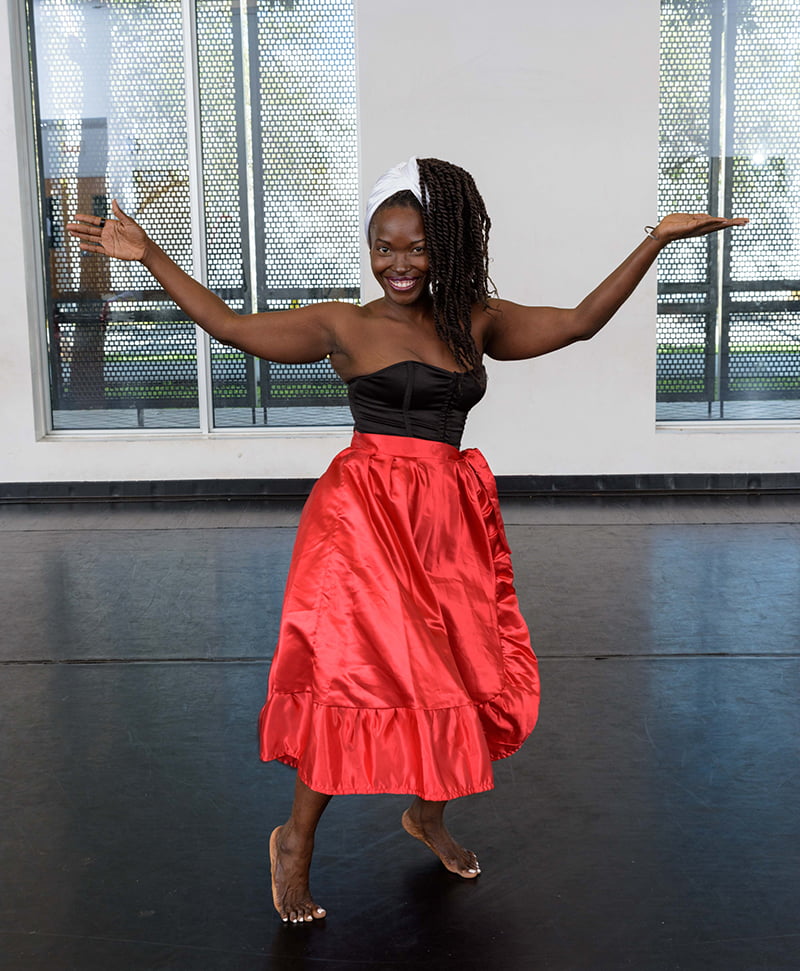
While she was growing up, she was forbidden to dance by her religion. Today she dances passionately in celebration of her freedom from the emotional bondage of her early life. Some of Nzingah’s work addresses the trauma directly—her poetry, a one-woman show, and art exhibits that “unpack what we don’t talk about as survivors.”
Shels by Nzingah Oniwosan
“If it wasn’t for the art, I wouldn’t be the version of the person I am today. Art helped me cope. Prior to getting counseling, it allowed me to channel what I was feeling.”
Sonia Baez-Hernandez
Artist Sonia Baez-Hernandez
Sonia Baez-Hernandez was a professor at the University of Chicago when she got diagnosed with breast cancer. The illness itself perhaps proved not as traumatizing as the way the healthcare system treated her as a black woman, as a Latina woman (of Puerto Rican and Dominican descent), and as a person without health insurance.
She recalls getting an over-the-phone diagnosis, and the doctor scheduling surgeries without informing her about the details of the procedures. She advocated for care with dignity and used art to help her navigate her experience.
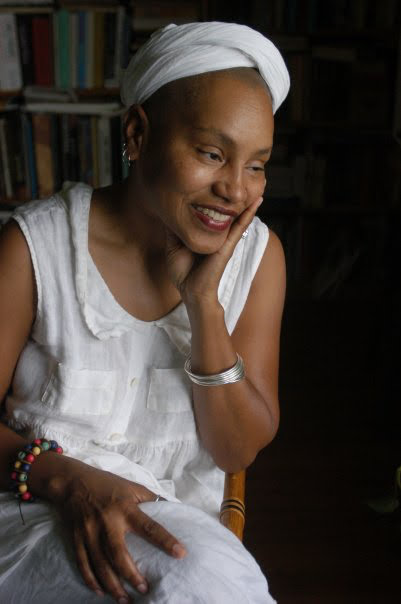
Sonia began photographing and video recording herself through chemotherapy, surgery and all other details associated with cancer treatment. She produced the film Territories of the Breast which shares her personal narrative and the stories of other cancer survivors. “My first work following the experience was about the pain and suffering encountered but never expressed. All these violations of rights. The modification of my body.”
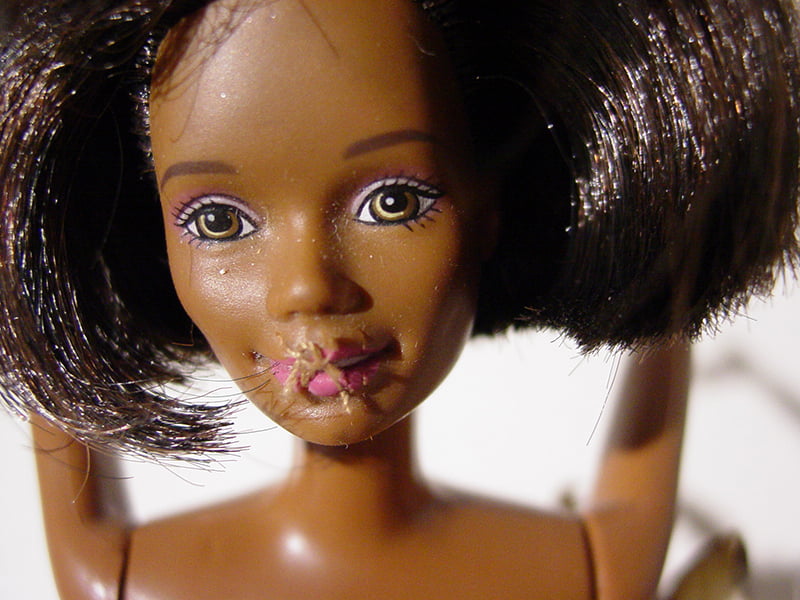
Reconstruction II by Sonia Baez-Hernandez. PHOTO: DIANA SOLIS
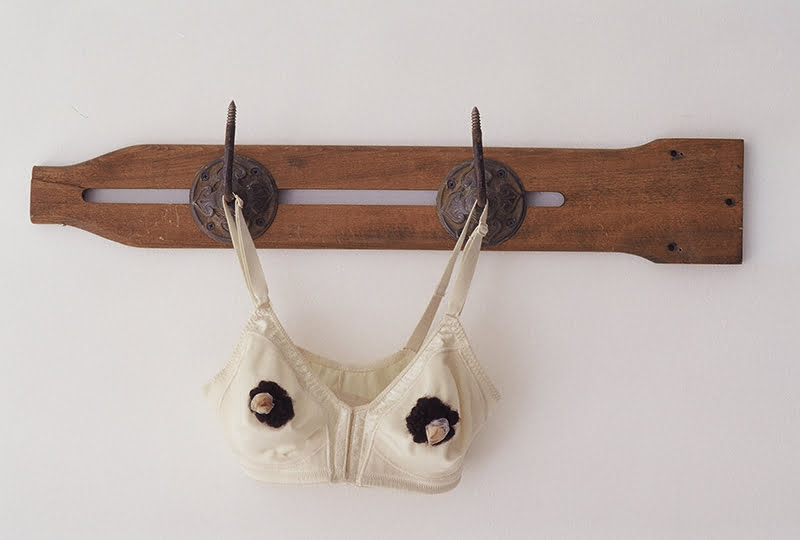
For her visual installations she began working with Barbie dolls. “I wanted to talk about how we think about perfect bodies through the doll. Talk about the fear women have with breast cancer—fear of making love, being seeing without breasts, without nipples, with scars.”
Dancer Will Power by Sonia Baez-Hernandez. PHOTO: DIEGO PEREZ
Her work with the film allowed her to share breast cancer as a collective experience. “People feel moved and connected to the work, not just for breast cancer. It’s universal—the fragility of life.”
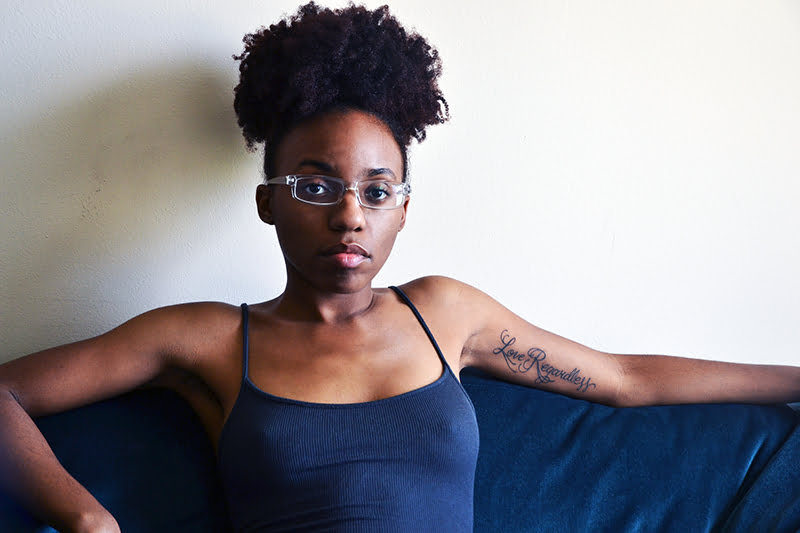
Chastity Pascoe
Artist Chastity Pascoe
Chastity, who has ancestry from Jamaica and The Bahamas, describes “trauma related to racism and misogyny” consistently present in the day-to-day lives of black people and women in America.
She points to the environmental impact of spaces “not being created with us in mind and spaces created to exclude us.” She recalls her first encounter with racism at eight years old, in a new school where she was the only black student.“There was an expectation that I’d fall into the angry black girl trope. My peers expected aggression out of me that I hadn’t previously felt pressured to express.”
At present, Chastity uses artistic sculpture as an outlet for her feelings. She says her art is visually beautiful but hopes it also comes off as alarming. “I want to stir something, some sort of urgency.” A dichotomy of raw emotion juxtaposed against the subtle backdrop of everyday objects and shapes is apparent in her work.
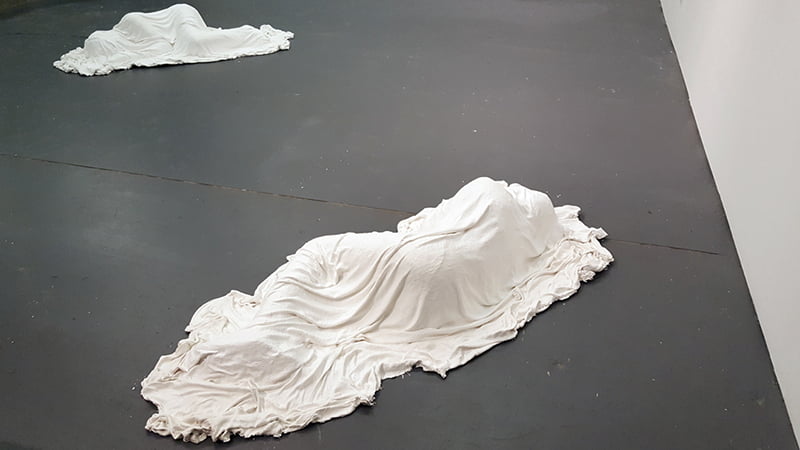
For her piece Together she lay on the floor and created a cast of her body, then duplicated it to look like two bodies sleeping far apart, covered with separate pieces of fabric. “This piece allows me to share trauma and be present to the trauma.”
Looking at the piece you recognize her sadness, her need to be seen and desire to be protected. Creating art has been a means of coping for Chastity, who says, “There are so many problems, but art gives me the opportunity to focus on the specific issue that I’m making my work about.”
Together by artist Chastity Pascoe. PHOTO: CHASTITY PASCOE