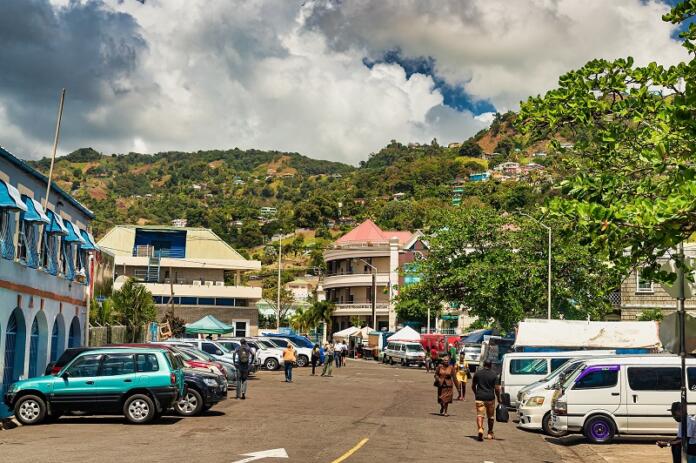
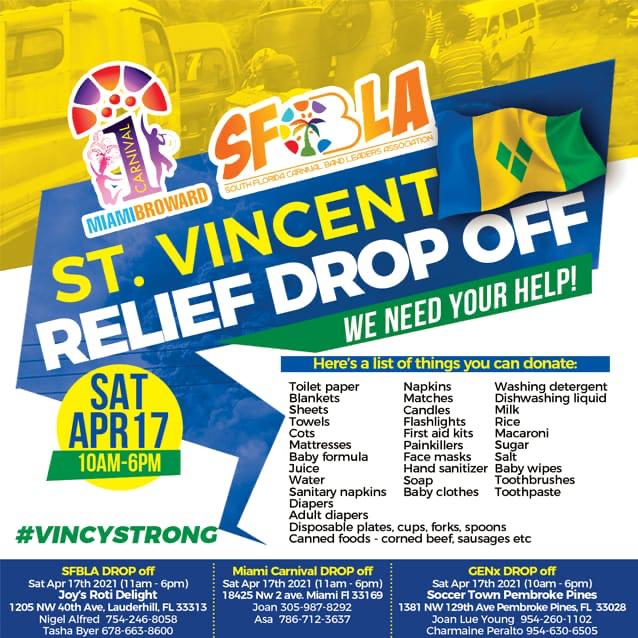
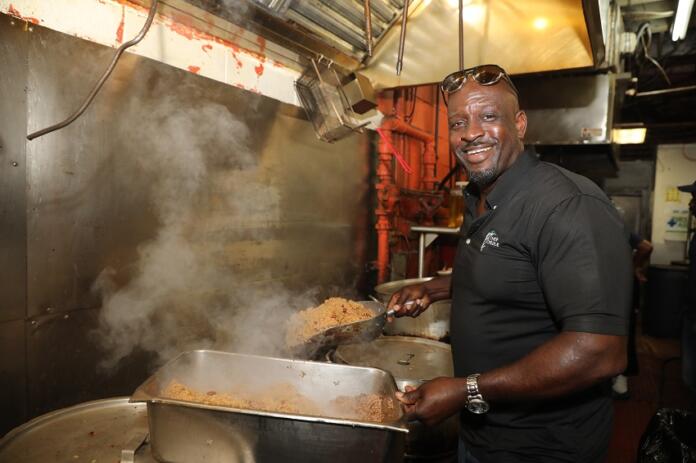
Miami Carnival, Joy’s Roti Delight, GENx Mas Band, and the community of South Florida join efforts to collect needed supplies for those impacted on the island of St. Vincent; as a result of the La Soufrière volcano which first erupted this past Friday, blanketing the island in a layer of ash and forcing some 20,000 people to evacuate their homes. Scientists say that they expect the eruptions to continue for days or even weeks. Neighboring islands Barbados and St Lucia will also continue to be affected by the volcanic ash.
When: Saturday, April 17, 2021
Where: You can drop your supplies off at one of the following locations:
Miami Carnival Office: South side, 18425 NW 2nd Ave. Miami, FL | Open 11 am-6 pm
Joy’s Roti Delight (BackYard): North side, 1205 NW 40th Ave., Lauderhill, FL 33313 | Open 11am-6pm
GENx: Soccer Town Pembroke Pines, 1381 NW 129th Ave., Pembroke Pine, FL 33028 | Open 10am-6pm
The police killing of George Floyd in Minneapolis last summer reignited the long simmering Black Lives Matter movement and invigorated broader campaigns for Black equity.
Just before that, in February and April 2020, about 41% of Black-owned small businesses closed, devastated by pandemic-related closures and reduced customer traffic, according to a study by the National Bureau of Economic Research. Although small companies across the board struggled, Black entrepreneurs were hit hardest. Haitian owned businesses in Miami rode the economic wave.
Yet, these dual crises also inspired new investments in Black businesses, reinforced long-standing traditions for Black communities to look after their own, and spurred some to pursue new opportunities despite pandemic uncertainties.
“It’s hard to quantify how many Haitian owned businesses are in South Florida, so it’s harder to say how many closed last year,” said Djénane St. Fleur, vice president of the Florida-based Haitian American Chamber of Commerce. Nonetheless, the organization has worked to limit the harm, offering classes on topics such as how to apply for grant funding. The chamber also supports Haitian restaurants by regularly purchasing hundreds of meals for its food distributions.
“We want them to survive,” St. Fleur said.
Some have managed to thrive.
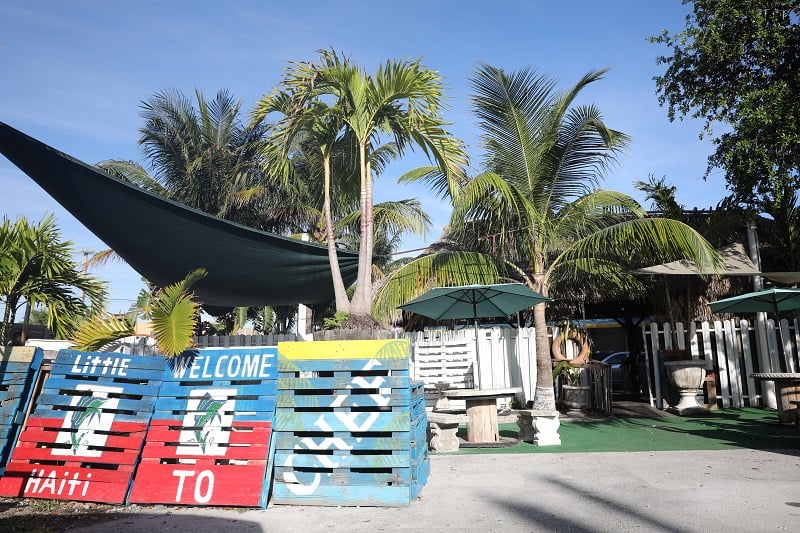
Two sisters opened Welcome to Little Haiti, an online coffee shop that grew while competitors shut down. With the support of grants established for Black businesses in the revolt against racism, the owners of a digital marketing and clothing company expanded their reach. And Christian Dominque kept his restaurant, Manjay, open while carving out plans for new ways to feed Miami.
All agreed that 2020 was a challenge, but they survived because of expanded, targeted support for Black ventures. “People were DM-ing me on social media, asking me, ‘Are you a Black business? I want to support you,’” Dominque said.
Joann Milord, of Welcome to Little Haiti, said friends and family supported her business first, then others followed.
Black customers always were the core customers of COOL Creative, but Co-founder Johanne Wilson noticed increased interest after the social justice revolution. For that, she’s thankful.
Learn more about these three Haitian owned businesses, which either started during the pandemic or scaled up to meet opportunities while many wondered if the sky had indeed fallen.
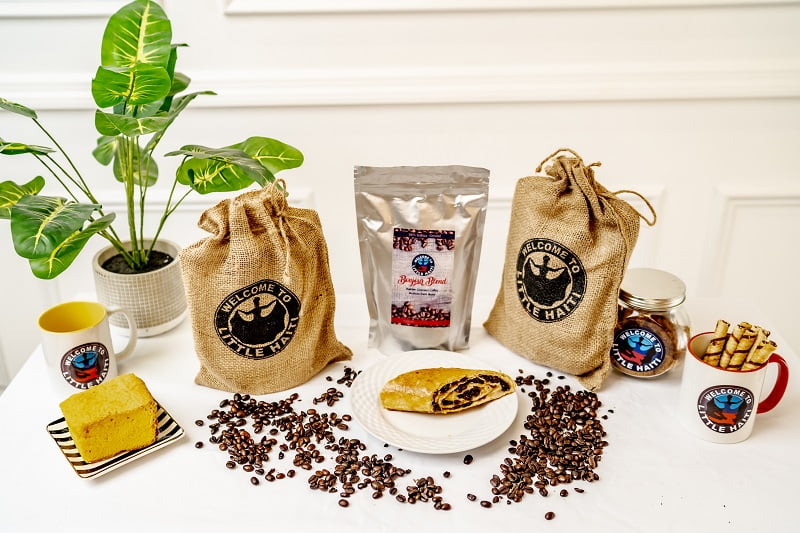
Welcome to Little Haiti
Photo courtesy of Welcome to Little Haiti
Joann Milord grabbed onto a concept that puts focus squarely on her culture and a changing Miami neighborhood, Little Haiti.
Milord remembers drinking Haitian coffee from an aluminum cup with a saucer when she was sent to the island for childhood summer breaks. Coffee beans grown in Haiti are known for producing a mellow-bodied dark roast that is smooth, slightly sweet and low in both bitterness and acidity. The brew is traditionally enjoyed black to savor the natural flavor, often including hints of smoke and chocolate.
The drinkability of plain Haitian coffee stands in contrast to the cafe cubano — a sweetened espresso with cream foam — served in little plastic cups at walk-up windows throughout Miami.
Photo courtesy of Welcome to Little Haiti
Milord married her love for Haitian coffee and Little Haiti to launch Welcome to Little Haiti, an online coffee and merchandise store that aims to support Haitian owned businesses and preserve Haitian traditions.
It started when COVID-19 upended life as she knew it. Milord resisted the urge to curl up in loungewear and ride out the pandemic. Instead, she used the time for introspection and to answer the question: What’s next?
In previous roles at Miami Bayside Foundation and the Haitian American Chamber of Commerce of Florida, Milord helped small Black businesses solve problems. She drew on that experience and realized the time was right to elevate Haitian culture. Milord also reflected on how the 18-acre Magic City Innovation District was changing the face of Little Haiti. Dubbed a campus by developers, the district will include residences, retail shopping, a business incubator, and art and public spaces. Although some have criticized the development, Milord knew it was inevitable and seized the opportunity to be a part of shaping what it would become.
“Little Haiti is the epitome of Haitian culture,” she said. “We just want to highlight aspects of the culture.”
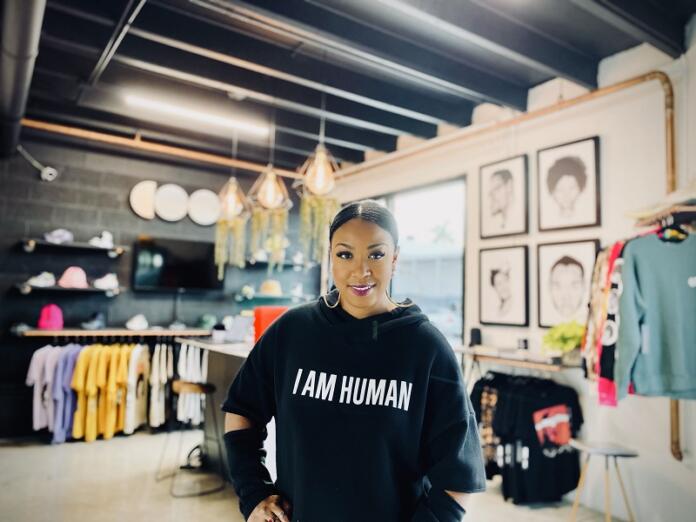
COOL Creative
Photo courtesy of COOL Creative
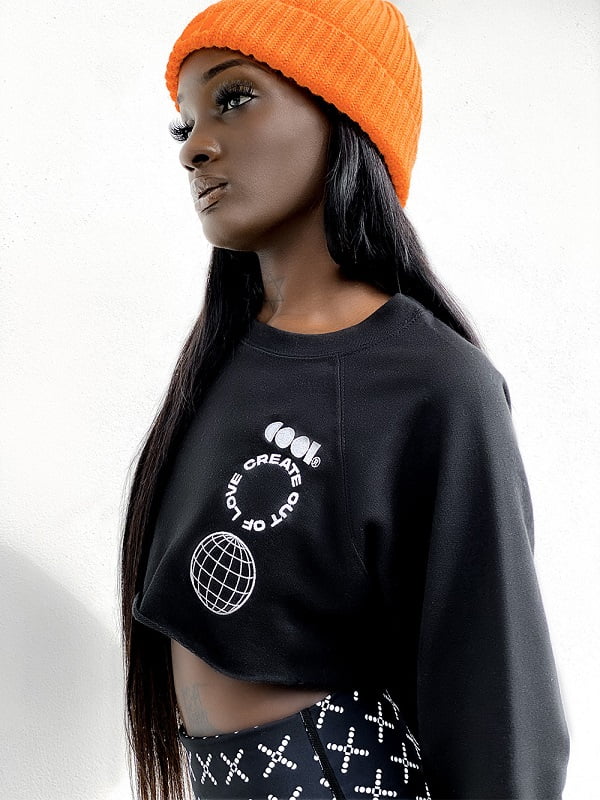
COOL stands for Create Out Of Love. The phrase captures the people-centric philosophy of this boutique-style brand design and digital agency that has a specialized focus on Black customers and businesses.
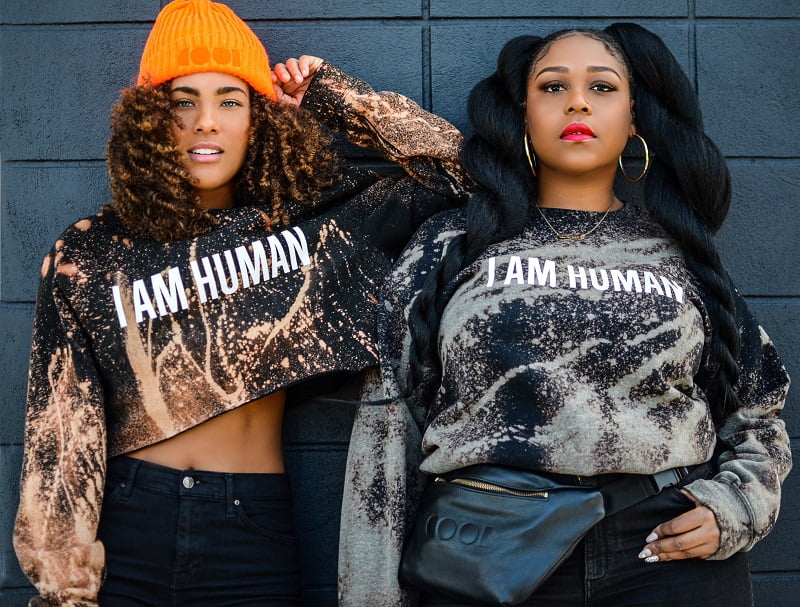
Love, art and culture also were behind the business’ latest and, arguably, most popular expansion. An illustrator by trade, Co-founder Terrance Wilson drew Black historical figures to teach his daughter about significant people of color. Then he started putting the faces of Angela Davis, Tupac and Maya Angelou on clothes.
“People bought them; people really took to them,” said Johanne Wilson, Terrance’s wife and COOL’s co-founder. “We took it casually and did the apparel just for fun. Some celebrities got a hold of it, and it started to gain some traction. Then we got some wholesale orders.”
The owners decided to open a store in Miami. They signed a lease in December 2019 and opened March 2020 – just as COVID-19 awareness flared. Soon, they struggled to fill orders.
Photo courtesy of COOL Creative
“We were set up to do really well in 2020 and then everything happened,” Johanne said. “We did the most with what we had. We kept on pushing. We are not complaining. Everyone went through it.”
Always on the lookout for ways to support the business, Johanne entered Comcast Rise, a program to provide marketing support to underrepresented business owners. She won three months of advertising on Comcast Network. That led to an appearance on the Kelly Clarkson Show and another $5,000.
The social justice revolution of the summer propelled the COOL brand even further. Many of the shoppers were of African-descent, seeking ways to support Black businesses and to honor Black history makers.
Manjay
Photo courtesy of Manjay
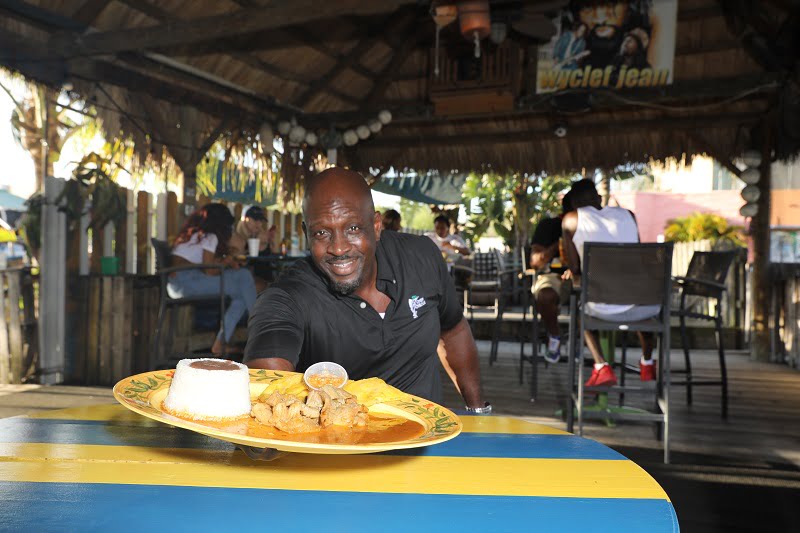
Black Americans, including people of Caribbean descent, have always been frequent customers at Manjay.
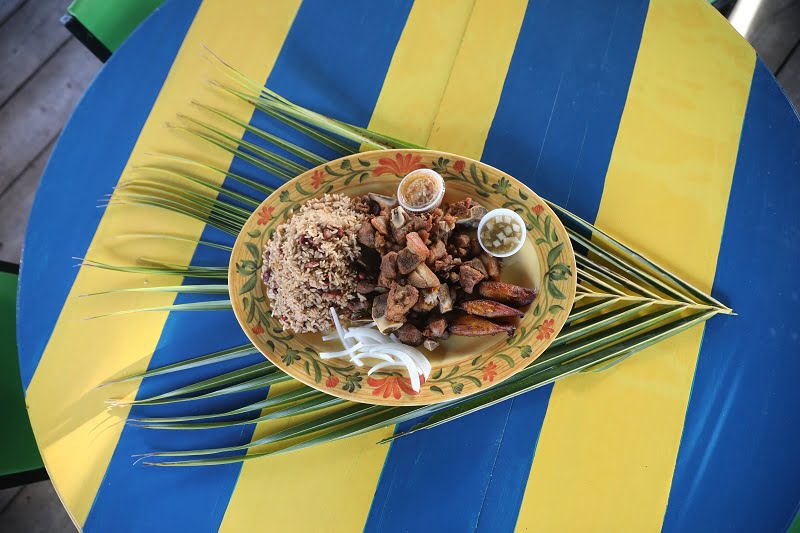
Christian Dominque established Manjay in 2017, planting it in The Citadel food hall in the Little River neighborhood of Miami. He and his wife, Sabrina, reimagined the cuisines of Caribbean islands – Haiti, Jamaica, Dominican Republic, The Bahamas and others – as fast-casual dishes. “I use the influence I get from the islands and make it modern,” said Dominque, who grew up working in his family’s hospitality businesses. “I take flavors in those dishes and create something unique.”
The business thrived. COVID-19 tested its resiliency.
Photo courtesy of Manjay
Dominque offered family-plan meals for takeout. When Uber offered free delivery to customers who bought from Black businesses, sales soared.
“People weren’t coming out. That campaign made my sales increase 100%,” he said.
Instead of retreating or holding steady until the economy rebounded, Dominque expanded instead. He secured a second brick-and-mortar location in Wynnwood and soon will launch a food truck, which will be powered by Instagram updates on location and menu.
“Most of the investors that I have read about invest when times are not good,” Dominque said.
Screenshot of St Vincent Volcano erupting as thousands evacuate. Courtesy UWI.
The island of St Vincent is currently on high alert as La Soufrière, a volcano that has been dormant since 1979, seems to be on the verge of erupting. This seismic event is threatening up to 16,000 residents on the island, which is currently under an evacuation order.
The island is the largest in the nation of St Vincent and the Grenadines, and is the home country of singer Kevin Lyttle of “Turn Me On” fame.
After several days of volcanic activity tremors, Prime Minister Ralph Gonsalves declared a disaster alert on Wednesday, April 8. Via twitter he stated, “I have issued an evacuation order to all residents living in the RED ZONES on the North East and the North West of the island. All residents are asked to act accordingly with immediate effect to ensure their safety and that of their families.”
Cruise lines, including Carnival, Royal Caribbean and Celebrity, are sending ships to assist in evacuating residents to nearby islands, including Trinidad and Tobago, that have offered refuge. Venezuela has offered to send supplies and humanitarian support as the St Vincent volcano continues to threaten residents of the island.
While no official channels have been announced, those who want to help can donate through Food for the Poor, a constant support for the Caribbean and Latin America.
It is easy to become confused. Scrolling through social media, visiting your favorite websites or chatting with armchair experts exposes you to many nutrition and fitness myths. But it is important to know what is a fitness fact versus falsehood. Here are several myths that can actually undermine efforts toward achieving our fitness goals.
Myth No. 1: Carbohydrates are bad.
Balanced nutrition includes proteins, fats and carbohydrates. Even if you are setting a weight loss goal, carbohydrates are essential to a healthy diet as a primary source of energy. The key is the source — not all carbohydrates are created equal. It is best to focus on natural sources and minimally processed foods like fruits, vegetables, beans, nuts, whole grains and dairy for your carbohydrates. For people with an active lifestyle, it’s the carbohydrates in your diet that fuel those workouts and ultimately help you be a healthier you.
Myth No. 2: A detox diet or juice cleanse is the solution.
A detox or juice diet sounds like a healthy and natural way to lose weight and improve your health. However, the body has an innate detoxifying machine: the liver. Detox and juicing may provide short term benefits, but your best detox method is to maintain a balanced diet, decreasing the workload on your liver. Reducing your intake of alcohol, sugar and processed food helps to improve liver function, ultimately boosting our body’s ability to reduce inflammation and increasing our energy. Maintaining proper water intake is also key in keeping the body functioning as it should.
Myth No. 3: You have to sweat for physical activity to count.
The main purpose of sweating is to cool your body down. Typically during exercise, as your heart rate increases, your body begins to sweat. However, this might not always happen, especially if you are working out in a cooler environment. Moving your body and raising your heart rate are the most important elements of effective exercise. As you increase your physical endurance and capabilities, you may start to sweat more when you’re active. Also, keep in mind that as you get older you may sweat less during similar workouts. The takeaway is that if you’re moving your body more than you usually do, you are working toward better fitness, sweat or no sweat.
Myth No. 4: Weight loss is just about diet and exercise.
Many people view weight loss as a two-part equation involving food deprivation and excessive exercise. However, there are several factors beyond diet and exercise to consider when you’re trying to shed some pounds. Some medications, including birth control or diabetes medication, can cause weight gain. Drinks like juices, coffee, soda, sports drinks and alcohol can lead to an overload on empty calories, so opt for water instead. Underlying medical conditions, including thyroid issues, can affect your weight, particularly if undiagnosed or your medication is not optimal. Stress can cause weight loss or gain, which can lead to a cycle of further stress and further weight fluctuations.
If you notice your weight loss journey is difficult despite a balanced dietary plan and physical activity, consult with your doctor. Approaching weight loss with a more holistic view can increase the chances of accomplishing your goal.
Nutrition and FitnessMyth No. 5: Lifting weights will inevitably make you more bulky.
Weightlifting helps build muscle, which in turn increases your ability to burn calories and lose weight. Strength training should be something that we all incorporate into our exercise routine. Unless you are intentionally trying to “bulk up” by lifting heavy weights, it is unlikely that this will occur. Also, women will not increase their muscle mass the same way men do. Use lighter weights and more repetitions to accomplish a toned body type instead of a muscular one. Don’t ignore those weights. Give them a try and see how they can fit into your health journey.
Island Origins Director of Business Development Tamara Philippeaux recently had a chat with her old friend, celebrity chef and serial entrepreneur Ken Sejour, the restaurateur behind the Chef Creole brand. For almost 30 years, Chef Creole has been satisfying foodies across the cultural spectrum as the king of Caribbean fusion cuisine, all while being a model for responsible citizenship. Island Origins had the chance to listen in while they caught up.
Tamara: So Chef, how did you actually get started in this business?
Ken: We started December 5, 1992. The concept was to display seafood so “you buy, we fry.” We’d show you a big display of seafood and charge according to the weight. The concept took off like a jet.
Our people are very economical. So if something costs $10 and they can get it for $7, they’re gonna get it for $7. Other communities received Chef Creole because we got a little creative. Carmen Hope at WEDR told me, “You need to invite another demographic. Your food is good. It should be good for everyone.” At the end of the commercial [I ran with them], they told everyone to try the fried fish. Oh my God, was she right! I went from selling, let’s say, 50 fried fishes in a day to, like, 250.
When people came in, they didn’t question the prices. They said, “Is that the same fish I got yesterday? Yeah? Give me five of them.”
Tamara: Nice! And what would you say was a time that challenged you like you hadn’t been challenged before?
Ken: There was an opportunity to buy 54th Street, which would have been our third restaurant. Everyone said it was a bad idea because the Haitians are on the north side of 54th and we were looking on the south side. But what they didn’t know was that my intention was to go after a Black-American crowd. When we opened it up, of course we had growing pains. I even closed the restaurant down and took off on vacation for 14 days to clear my head. But I came back, it took about a year, and ever since, it’s been like a jet.
Photography: David I. Muir
Tamara: So you’ve always been innovative, butwhat would you say is the “secret sauce” that makes Chef Creole’s Caribbean fusion cuisine so successful?
Ken: I’m Bahamian and Haitian. When you take [Bahamian] conch salad or fried conch and you cross it over, now you’ve got a bigger market you are catering to. [Haitian] creole food is, of course, traditional legume, griot, tasso. So we took fried conch and we “creole-fied” it. Nou manje queu boeuf but oxtail is popular because of Jamaicans — we “creole-fied” it. So when other nationalities came in, they identified their food and the flavor that we gave them. That’s what made the difference.
Tamara: You’ve seen phenomenal growth over the years. You now have six locations throughout Miami, including one at Miami International Airport — congrats on that. That’s not based only on the Caribbean fusion cuisine that goes into the pot. Is there some kind of guiding principle behind the way you’ve grown?
Ken: When we first started, we sponsored everything. The Haitian community at that time was into foutbòl and [for the championship team], we had our names on the shirt. That was our first date with giving, and you saw the impact that had on the community. When people got familiar with always seeing us sponsoring, they started to come to us with their concerns. When you saw the impact you had on just one person [when you gave them] help, you saw the world change in their eyes.
From that point, it always stood out to me that success is not just taking or receiving, success is also giving. If you’re able to make a profit, and from that profit you are able to give back, that in itself is a profit. It’s a practice that we embedded in the brand. That’s just the way we do business.
Photography: David I. Muir
Tamara: I know this. I’ve seen how much you give back to the community and how you’ve changed people’s lives. And the whole country saw that philanthropic spirit in action when the news was covering you feeding the TSA workers at MIA for free when the airport was shut down.
Ken: Yeah, I think we were there [with a new Chef Creole location] no more than maybe four or five months. [I thought] — we’ve got inventory, we might as well do some good with it. I didn’t start it to say that I was going to keep feeding people. I started it because the Holy Spirit put it in my heart.
I’m thinking I opened up a can of worms. But the next day I got phone calls from suppliers that said, “Hey, we like what you’re doing. How can we help?” I say, “Give me a couple cases of chicken.” They said, “We’ll do better than that. We’ll drop a hundred cases off to you.”
So I went from feeding 200 people, then it was 200 people a shift, and we ended up feeding people for a month. I was the one that said no, no more. Although I had the support, although they kept giving me food, it was exhausting.
I started something. Everyone that’s been here before me should now say to themselves, “Let’s take the baton from him,” and that’s exactly what they did.
Photography: David I. Muir
Tamara: Where do you see yourself going in the future?
Ken: In the next 10 years, I would hope that I become a vehicle to continue employing people, because at the end of the day, I think the best thing you can do for someone is give them a chance to work and make money. That way they can build up their self-esteem. Making money is freedom.
I would hope that we’re blessed enough that maybe we could start building affordable housing units. That way we could keep our people safe. Little Haiti, for me, is a very sensitive issue because of what’s going on right now with gentrification. It’s heartbreaking. I see that little by little it’s dwindling away, and it’s being done in such a creative and constructive manner that when it’s all said and done, people wouldn’t even know that there were Haitian people in this area in the first place.
2020 was a time where I did a lot of reflection. I looked at my family. I looked at the employees. I said, “I’m tired. I want to rest. I want to take advantage of all the work that I’ve done.” There was a voice inside of me that said, “Stop working hard, work smart. You’re going to have to open up at least a thousand stores.” And I asked myself, “How am I going to do that?” And then myself told me to figure it out — so I have to figure it out!
So this year we will be selling franchises. That’s the best that I can do. We will be in Broward, South Miami and then Orlando.
Tamara: I’m really proud of you. The whole Haitian community is.
Ken: Thank you for being proud of me. You should be more proud of my wife! Siw m pat gin on bon fanm bo kotewm, mwen tap tet anba. (If I didn’t have a good woman by my side, I would be upside down.)
If I was worth a hundred million dollars and tomorrow they said, “Look, you’ve got to make a choice. Out of the hundred million dollars, we’ll leave you with $1 million and your wife, or we could find you another woman that is just as good as your wife and we’ll give you $99 million,” I would say leave me with a half a million and my wife. Take the half a million dollars just for closing the deal.
Your successes as a businessman, as a man on this planet, is your woman. Not any woman. The woman that God chooses for you. Not the woman you choose, ’cause you don’t know what the hell you’re doing.
Learn more about Chef Ken Sejour and Chef Creole restaurants offering Caribbean fusion cuisine at chefcreole.com.
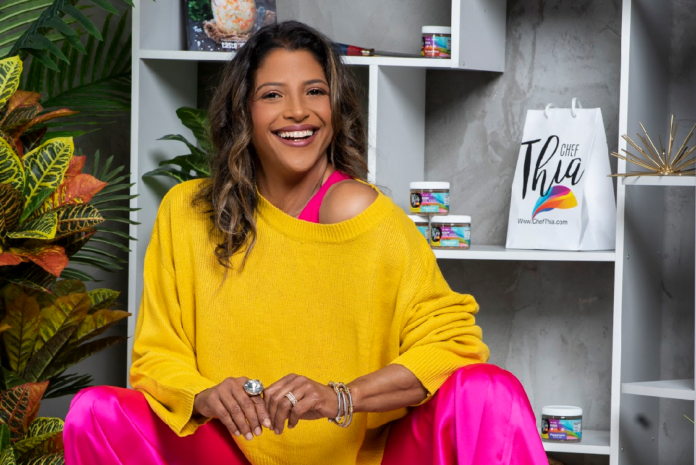
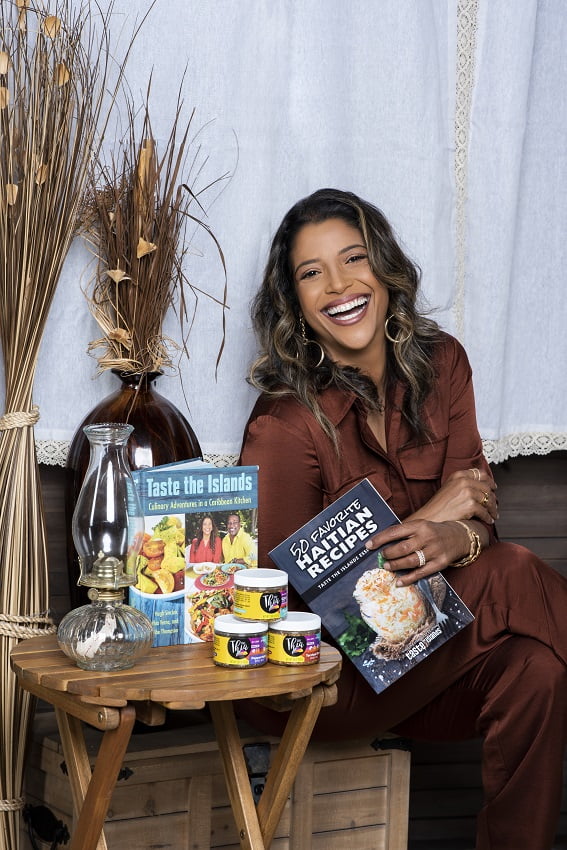
Chef Thia's New signature Haitian Spices | Photo by Maybeline Despagne (Pix City Studio)
An accomplished culinary expert and social media influencer known for Haitian-fusion cuisine and a larger-than-life personality, Cynthia Verna is adding a few new elements to her impressive curriculum vitae, including an exciting new venture into her own signature Haitian spices.
Hundreds of thousands of fans have tuned in to “Chef Thia” on her Facebook live broadcasts — from her impassioned prayers and family dinner preps to backstage award show peeks. She seems to have done it all. She’s been a restaurant owner, a host of TV show Taste the Islands, a best-selling biographical author and a women’s advocate.
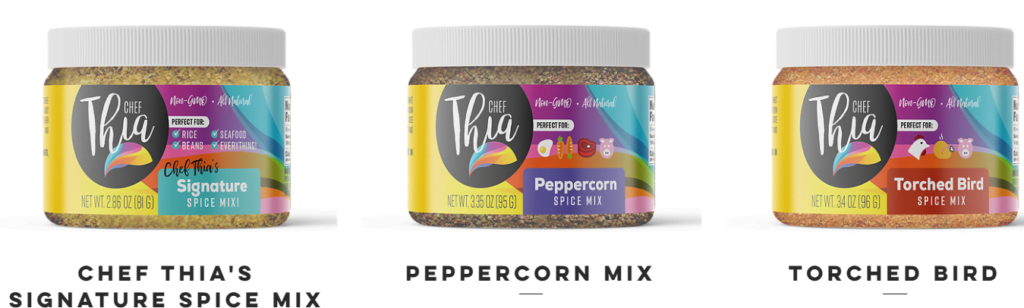
Adding to her accomplishments, Verna has recently debuted a new hardcover cookbook and her own line of signature Haitian spices. The collection, branded Chef Thia’s Spice, features four dry seasoning blends for seafood, steak, poultry, meat and even rice.
“It’s been a dream of mine to just have something created from the heart,” said Verna.
Haitians are familiar with the term “epis,” a popular blend of oil, herbs and spices used in creole cooking as a base for nearly any savory dish. To get around the need for refrigeration, Verna developed the dry spice line to offer similar flavor with a much longer shelf life. And the packaging is as vibrant as she is.
Her Signature Spice Mix is a simple, all-purpose blend. Verna’s Peppercorn Spice Mix includes pink, green, black and white peppercorns and is ideal for red meats and vegetables. Her Torched Bird Spice Mix should be paired with poultry and other white meat. And her seafood seasoning, coming soon, contains “a little bit of wine, dry butter and all the goodies,” she said.
The new cookbook, “Taste the Islands: Culinary Adventures in a Caribbean Kitchen,” was developed with the team from the TV show and the University Press of Florida. It was also a labor of love for Verna. It took around two and a half years to perfect, with the recipes being thoroughly tested and tasted before the final product was presented to the public. One of her favorite recipes from the book is an elevated take on soup joumou, Haiti’s famous Independence Day fare.
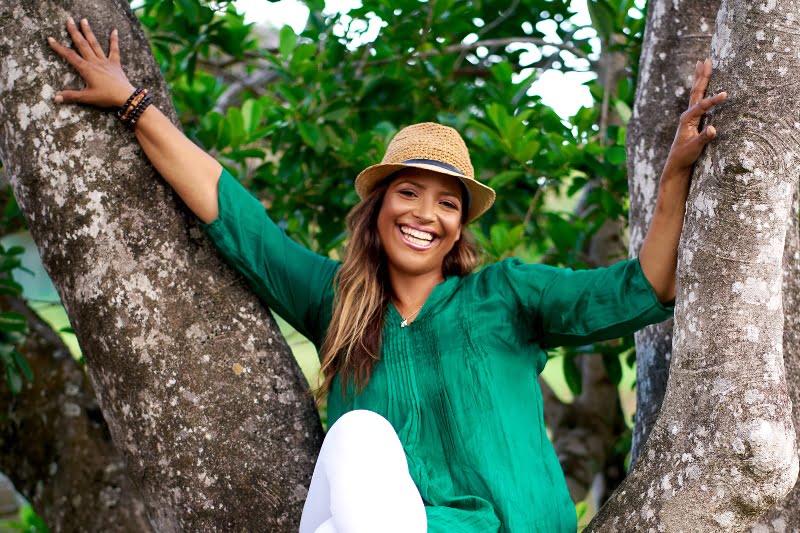
Photography: Maybeline Despagne
“When you come from the Caribbean,” she said, “You walk inside a Barnes and Noble and your book is right there with all the top chefs, it’s beautiful and powerful to see.”
When she’s not crafting delicious signature Haitian spices, seasonngs, and recipes, you can find Verna traveling the world as a private chef. She recently returned from catering an intimate, exclusive event in Dubai. “I focus more on bringing my country, my culture, my roots around the world. You want to eat Haitian food. You contact Chef Thia. I bring Haiti, my heart, to you.”
Photography: Richard Lecoin
An avid artist and serial entrepreneur, she’s got lots more in the pipeline. Through her newly developed mobile app, her legions of fans — existing and future — can connect fully with her brand. They can purchase her signature Haitian spices or subscribe to get them delivered monthly. They can also purchase any of the three books she’s authored, explore other product offerings such as Chef Thia-designed clothing and home accessories, and, in the near future, contact her for curated cooking advice or one-on-one help in the kitchen.
Caribbean and Black Americans are hesitant about taking the COVID-19 vaccine
After a year of dealing with a deadly pandemic which has disproportionately affected Black people, you would think we’d embrace something that promises to return us to normalcy. But that’s not the case. Even as COVID-19 vaccines become more available, Black Americans continue to have vaccine hesitancy and Caribbean folks are still disproportionately skeptical about getting the shot.
In late February, a nationwide poll by the Pew Research Center found that 69% of U.S. adults had already been vaccinated or said they wanted to be. The rate was a lower 61% among non-Hispanic Blacks, although that is up dramatically from 42% in November just before the first vaccines were authorized in the United States.
I confess that initially, I myself had vaccine hesitancy. I thought perhaps it was best for me to see how it worked on others before taking it myself. My knowledge of the vaccines was sketchy at best, and posts on social media that questioned their safety and efficacy made me even more uncertain. Many of the friends I polled on Facebook shared my worries. Some have since changed their minds.
“I do not know what is true anymore,” said Karen, of Trinidad. Her trust grew weaker as rumors and questionable information proliferated online. But she also is in a high-risk category and fears COVID-19. “So I have decided, if I have an opportunity to take the vaccine, I will get it. Growing up in Trinidad, all the vaccines were mandatory. I turned out fine.”
Aisha, who is of Jamaican, Panamanian and Senagalese ancestry, was nervous about how quickly the vaccine was created and also did not trust that adequate testing had been done. But when her mother’s care facility called to ask if she wanted her to be vaccinated, she immediately said, “Yes.”
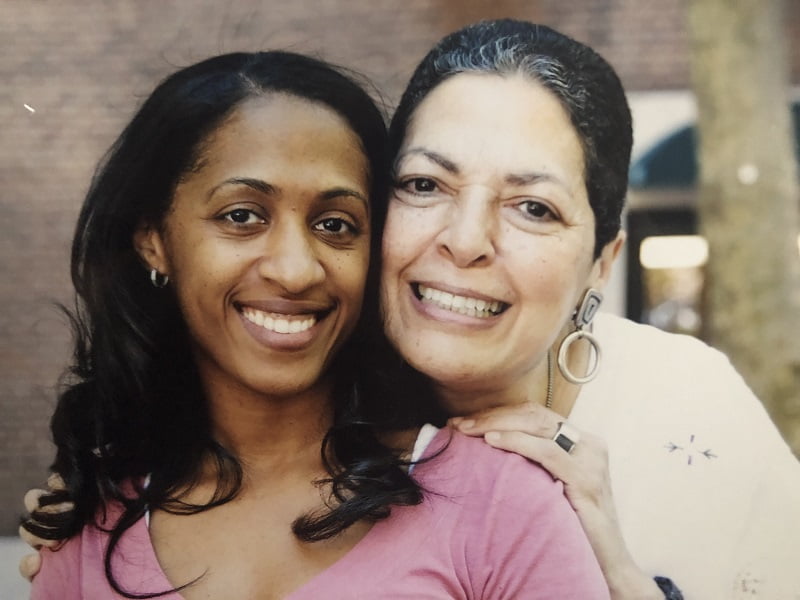
Aisha and her mom
“That made me pause and ask myself, if it is okay for her, why is it not okay for me? So I am getting it now.”
I started researching this article to answer my own questions as well as those raised by friends and family.
Now, I have a much better understanding of how the COVID-19 vaccines work and which companies were authorized to create them here in America. I learned the majority of scary social media posts I had seen were either false or did not include critical context. There are, of course, reasons to be concerned about medical racism today, but Black doctors are among those who developed the vaccines and are advocating for their use.
A Timeline of Events
In short, here’s how the vaccines were ready to go — safely — in less than a year:
Nearly two decades of research. COVID-19 comes from a family of viruses that have been well studied. Scientists got a headstart on COVID-19 from their work on vaccines for the 2002 SARS coronavirus and the 2012 MERS coronavirus. The Pfizer and Moderna vaccines were created based on the work of a team that includes viral immunologist Dr. Kizzmekia “Kizzy” Corbett, a Black woman. Their work included developing the mRNA technology used in two COVID-19 vaccines. Corbett also was a hands-on leader in the creation of the Moderna shot.’
Quick response. Infectious disease experts and vaccine researchers had long predicted a global pandemic involving a respiratory virus. When COVID-19 appeared in China and started to spread globally, key researchers immediately began developing a new vaccine. In January 2020, the first vaccine had already been drafted by the National Institutes of Health team that included Corbett. Early studies showed promising results and the first human trials started in March, just as many states issued their first lockdown orders.
Worldwide economic impact. Because COVID-19 brought the world economy to a halt, billions of dollars were donated from private and government entities to fund the research and development of the vaccine, significantly decreasing the financial and bureaucratic barriers usually associated with medical research.
Global collaboration. Researchers worldwide collaborated to produce the vaccine quickly and safely. Volunteers lined up in the tens of thousands for the trials. Blacks were still underrepresented, but the gap was smaller than often seen in such studies: Blacks accounted for about 10% of people in the clinical trials but are 12% of the U.S. population. The group was large enough to soundly conclude vaccine safety and effectiveness was similar across racial and ethnic groups.
How the Vaccines Work
So far, two types of vaccines have been developed. To trigger the body’s defense system, one uses a fake, inactive virus, the other uses mRNA proteins.
Historically, vaccines used an inactivated virus cell to trigger an immune response. That is the strategy the single dose Johnson & Johnson vaccine employs. A modified version of a different, harmless virus teaches our cells how to fight COVID-19. The coronavirus spike protein is effectively no longer able to attach to our cells.
“mRNA” stands for Messenger RNA, a string of proteins that the body uses to communicate with our DNA. The dual-dose Moderna and Pfizer-BioNTech vaccines are the first mRNA vaccines to be approved, although the strategy has been in development for about 15 years. In short, the mRNA vaccine teaches the body’s immune system to develop antibodies that fight the coronavirus should the real thing appear. (Note: The vaccine does not alter your DNA, it just instructs it.)
Both kinds of vaccine can cause temporary side effects such as a fever, fatigue, rash and body aches, among others. These symptoms typically last less than two days. They are signs that your body has recognized the vaccine and is learning how to fight to protect you.
Allergic reactions have been rare, but speak with your doctor if you have had problems with a previous vaccine. Serious adverse reactions have been incredibly rare — only a handful — after more than 80 million people in the United States have received at least one dose.
Cuban American Olga was initially going to take the vaccine but now has concerns that it could impact her fertility (a claim that has repeatedly been debunked). Since she is younger, she also believes she would handle COVID-19 well enough should she get it.
My Jamaican nurse friend, Ana, also worried about the potential side effects, but decided to seek vaccination after doing her own research.
“The worst result of COVID is death and the worst result of the vaccines are adverse effects (which we know are rare),” she said.
On reflection, Ana recognized how vaccines, such as the BCG vaccine to prevent tuberculosis, have historically improved the lives of Caribbean people. That was first developed in 1921. Knowing that some Black Americans have vaccine hesitancy, she offered this advice, “Look how far we have come — so many significant medical developments. I feel like I should trust now more than then.”
While the new vaccines don’t promise to prevent COVID-19, clinical studies show that the Pfizer and Moderna vaccines are about 95% effective at preventing symptomatic illness, hospitalization and death. It is not yet clear if people who are vaccinated and become infected can still spread the virus if they do not have symptoms. That is why authorities ask people to continue wearing masks and taking other precautions even after vaccination.
Vaccine Hesitancy and How to Fix It
Black people are four times more likely to be hospitalized and three times more likely to die from COVID-19 than white people in the United States. Nearly 80% of Black Americans know someone who has been hospitalized by or died from COVID-19. Yet, white Americans are getting immunized at a rate three times higher than Black people in America who still have vaccine hesitancy.
Some of it has to do with barriers to access, like age limits and lists of “essential” jobs that disproportionately excluded Black people. But some of the gap also is because Black Americans have vaccine hesitancy due to uncertainty about the vaccines and mistrust of the healthcare system.
Medical atrocities against Black people in the United States, like the government-sponsored Tuskegee Experiment, and everyday health care disparities contribute to the distrust of the medical community.
Black adults who do not want to be vaccinated told the Pew Research Center that their major reasons were:
Side effects (84%)
Fear about the speed of vaccine development (74%)
Uncertainty about how the vaccines work (71%)
Prior bad experiences with medical system mistakes (about 50%)
The list included some of the concerns I had, or had heard from others, before I started research for this article. I talked to Dr. Sidney Coupet, a Haitian American, about why vaccine hesitancy runs so deep in Black communities.
“Healthcare has never treated us well,” Coupet said. “In fact, it has abused us, caused us harm, used us for their benefit.”
Coupet, who also has a master’s degree in public health, dedicated his career to addressing healthcare disparities in our community. He said America needs to take a three-pronged approach to gain the trust of the Black community and limit vaccine hesitancy: Apologize, listen and co-create.
After apologizing for past harms, Coupet believes health professionals need strategies for active, ongoing listening to the Black community about their experiences and concerns. And then they need to collaborate with us to resolve barriers to equitable care.
The Black Coalition Against COVID-19 (BCAC), which is working to provide accurate information and resources, has found that many people, like myself, have adopted what they call the “wait and see” approach. And while BCAC understands that vaccine hesitancy is understandable, the group notes that delayed vaccination jeopardizes our health.
Dr. Vanessa Cumming, who works in a sickle cell clinic in Jamaica, has seen the divide first-hand. Her patients who are immunocompromised have been anxiously waiting for their chance to be vaccinated. The general population, however, is less trusting.
“We know that for some semblance of ‘normalcy’ to return, we will need to vaccinate a high percentage of our population,” she said.
If enough people are immunized, we collectively achieve herd immunity. For the world to put this horrendous episode behind us, there are no other options. I hope others can find their way from vaccine hesitancy to optimism, the way I ultimately have on this journey.
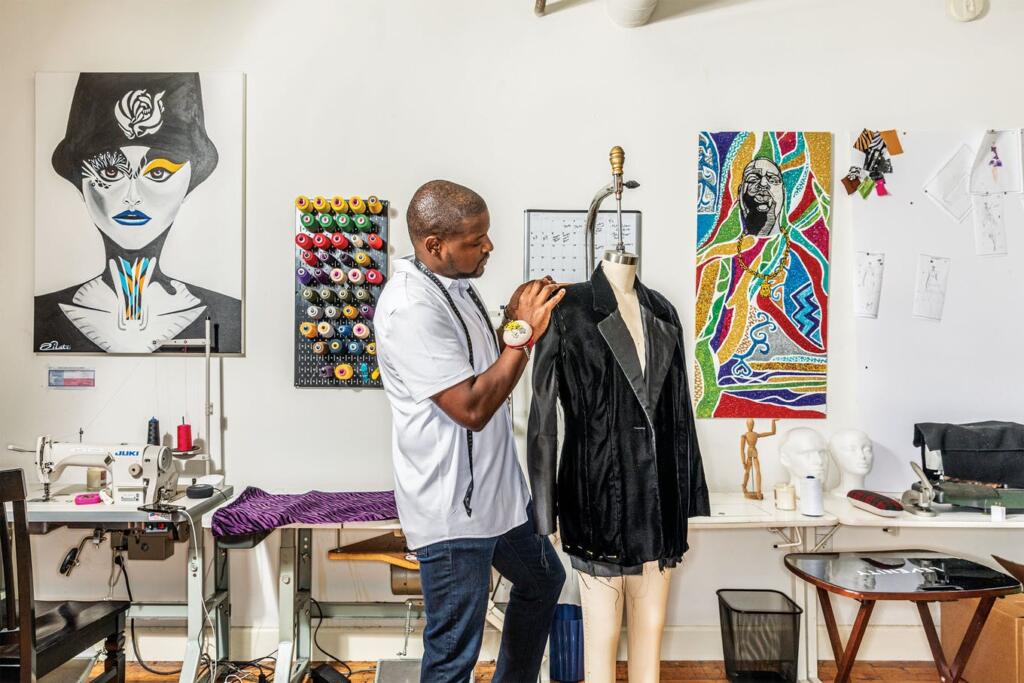
Venny Etienne, who is most recognizable for his stint on Season 17 of Project Runway, has established himself as a legit designer to watch. His prints and patterns have been seen on the likes of Beyonce, Cardi B., and actress Michelle Williams, just to name a few. For a little background on Beyonce’s Haitian American designer, Etienne’s parents migrated from Haiti to New York, specifically Brooklyn, where Etienne grew up and where he discovered his desire to be immersed in the fashion industry.
He started designing clothes for his church fashion shows at a young age and eventually attended fashion school, studying under couture experts in the fashion capitals of the world, Milan and Paris. Etienne attended college at the Fashion Institute of Technology in New York and later transferred to Wade College in Dallas where he graduated as salutatorian of his class with a degree in merchandising and design. It was in Dallas that this Haitian American designer made a name for himself in the fashion scene through networking and local fashion shows.
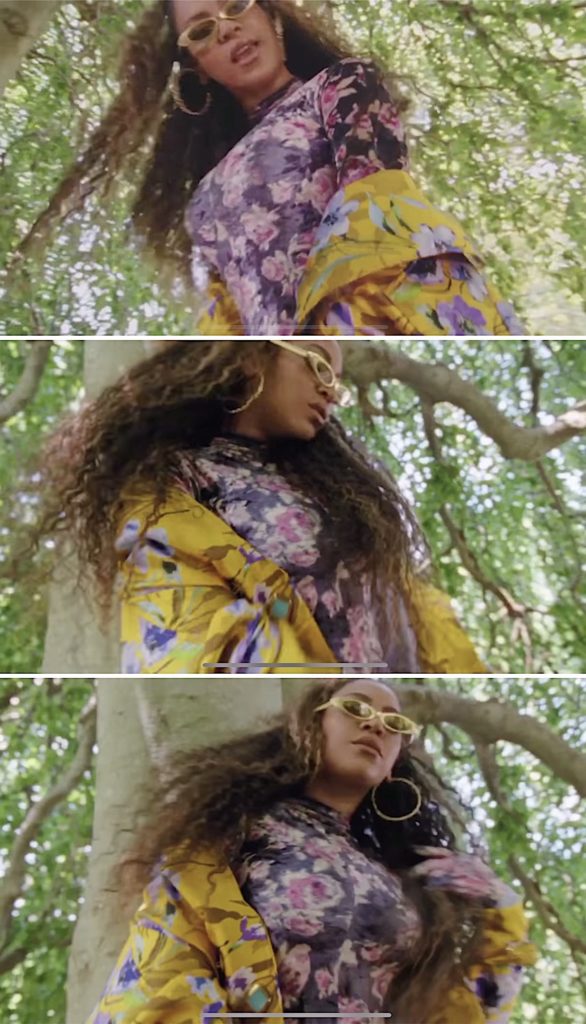
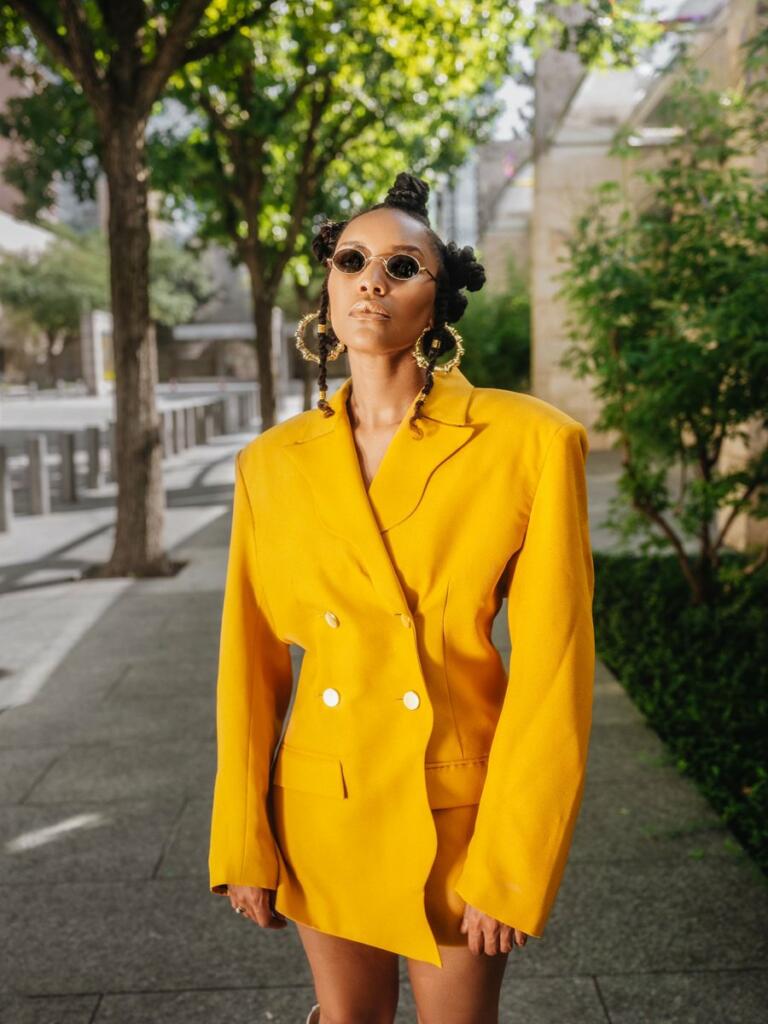
However it wasn’t until 2019 when Etienne’s talents were finally recognized on a national scale after landing a spot on Project Runway, a fashion design TV show, and placing in the top seven of the cast. This catapulted his career and put him in the public eye. The Haitian designer, however, is getting most of his recognition for having a hand in one of Beyonce’s most iconic looks: a jaw dropping structured yellow belted jacket dress, adorned with multi-color flowers of blue, purple and green worn in the “Black Is King” music video. Designing this dress could only be described as a dream come true for the designer who always aspired to dress Queen Bey herself.
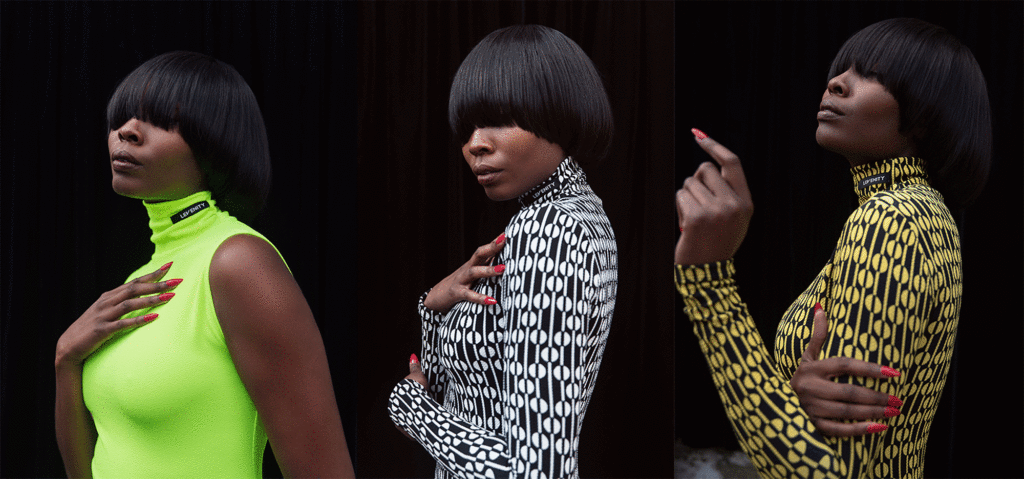
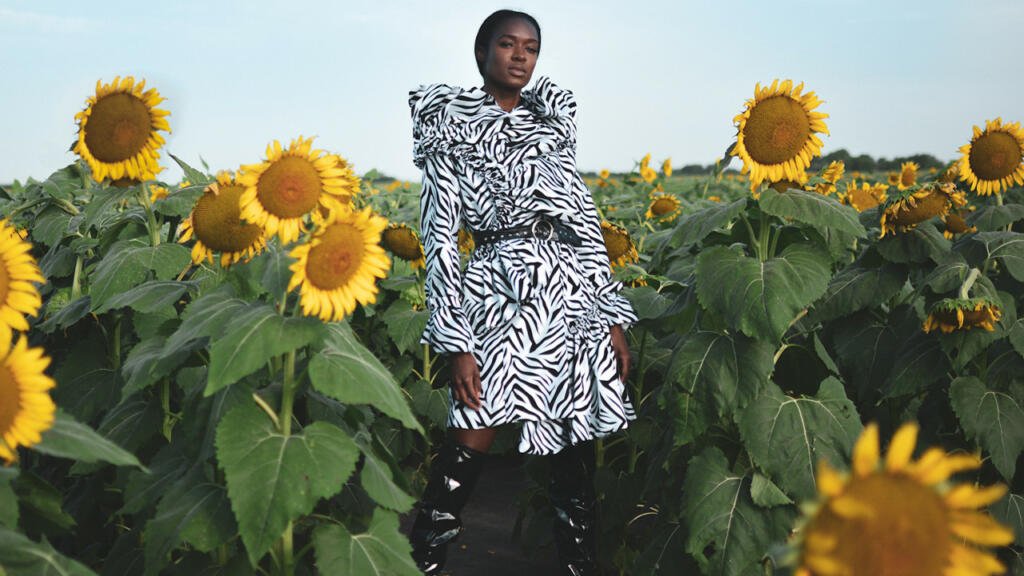
Etienne has recently taken on a new project, his own brand: LEVENITY. Inspired by the look he created for Beyonce, the brand is recognizably American sportswear but with a sophisticated, edgy twist that makes it wholly unique. The bold colors and patterns seen in his newer collections are influenced as well by his Haitian roots and New York living, celebrating his Caribbean heritage as well as the city that inspired him to pursue his dreams.
Being a bride-to-be is a difficult job—they have to worry about planning their wedding, picking out the reception hall, and choosing the perfect dress. Picking out the perfect gifts for a bride-to-be can sometimes feel like an even harder job, especially if they’re picky.
No matter how close you are to the newlywed, you want your gift to feel impactful and thoughtful, even if you’re on a tight budget. Start by brainstorming some small gifts for a bride-to-be with these ideas that will please any lucky lady before her big day!
Give Her a Spa Day
Any future bride who is close to her wedding day will have her hands full with stressful chores and preparations—even with help from her fiancée. If you know she’s waist-deep in wedding preparations, gift her the most precious present of all—a break.
Give her a certificate for a manicure, pedicure, or massage, or start a pool with the bridesmaids to give her a full treatment at a luxurious spa. Though it’s only one day away from the stress of life and planning, the refreshing break will mean more to her than it would under normal circumstances. If you want to turn it up a big notch, get her and hubby-to-be a trip to a Caribbean spa to enjoy on their honeymoon.
Accessories for Her Ring
A bride’s engagement and wedding rings hold a special place in her heart. If you’re searching for a more unique or thoughtful gift to avoid duplicates, consider getting her a piece of décor or accessory for around the house to keep her rings and other valuables safe. You don’t have to give her a basic, boring safe—just give her something to place her ring on while she’s showering, cleaning, or working out.
Find a beautiful ring stand or jewelry box to sit on her dresser that will act as elegant décor for her bedroom and a useful gift to protect her rings from getting lost or damaged. If she’s not comfortable leaving her ring anywhere, give her a portable ring safe that can sit on a lanyard while she’s hard at work—especially if she has a job that requires dirty work, such as a profession in healthcare or cleaning.
Personalized Photo Album or Frame
The big wedding day comes with plenty of joy, emotions, and precious memories. Help the bride-to-be keep the memories close to her heart by giving her a personalized photo album or photo frame. Find something cute that matches her and her fiancée’s relationship perfectly, and get their names engraved, embroidered, or stamped on the front of an album or the mat of a frame.
She can fill the pages or the frame with the most memorable images from the wedding or the honeymoon and display them front and center for guests to see when they visit. It may be a small gift to get a bride-to-be, but it’ll have a lasting impact in her home and in your friendship.
From Gucci to Sports Illustrated to Aerie, these beautiful island girls stomp down runways, demand your attention on billboards, and sport designer dresses in A-list catalogues. Although these women can be seen in the most elaborate garb at New York Fashion Week and similar events, they have dreams and aspirations beyond their beautiful features. Read more to discover the most iconic next-gen Caribbean women in the modeling industry to be on the lookout for.
Tami Williams
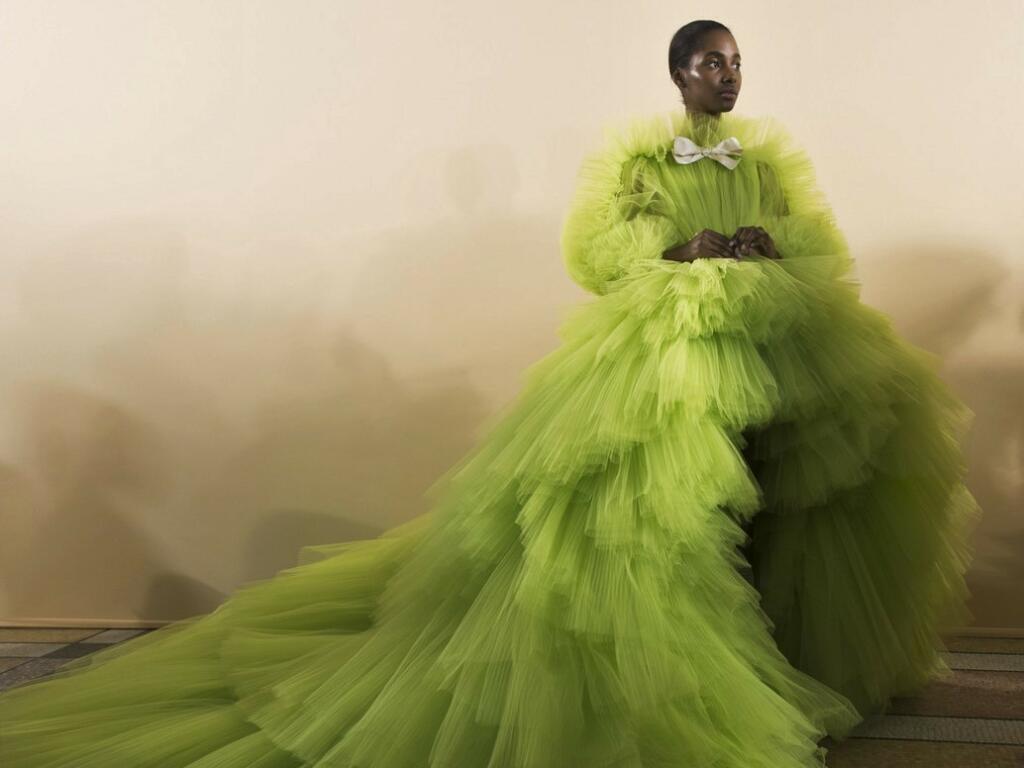
Giambattista Valli at Couture Spring 2018
Everyone can agree that American Vogue editorial model, Tami Williams, is one of the most beautiful island girls. She was born and raised with her four siblings by a single mother in Kingston, Jamaica. She was discovered at the young age of 11, already standing at 5’8”, by Saint International’s CEO, but turned down the offer because she wanted to experience childhood. Two years later, Williams placed second at Saint International’s Fashion Face of the Caribbean contest and started modeling — by then she was 5’11.” She moved to New York to pursue her modeling career and signed with modeling agency Elite New York.
Williams is the first Caribbean model to be shown in Calvin Klein and by the time she was 16, she had been in American Vogue multiple times. Williams is categorized as an “it girl” with the biggest designers already on her portfolio like Dior, Valentino, Marc Jacobs, Gucci, Versace, Alexander McQueen, Dolce & Gabbana, and Chanel. Though Williams is a regular at places like the Chanel Couture show, success has not changed her and at the young age of 22, she still returns home often and remains one of the most beautiful island girls.
Kai Newman
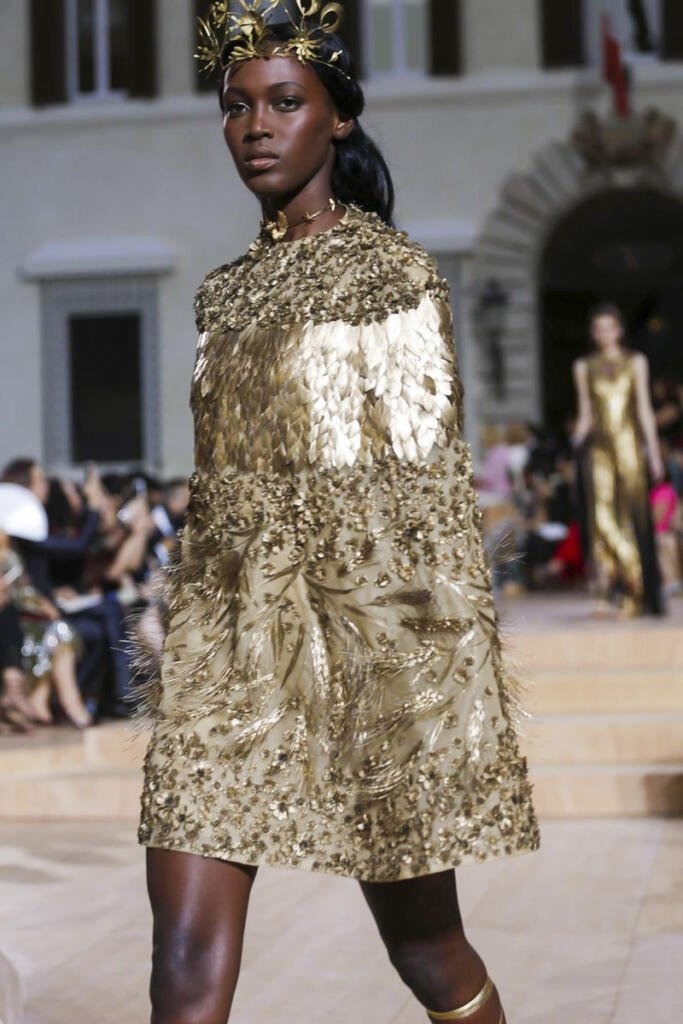
Valentino Couture Fall Winter 2015 Fashion Show in Paris
Kai Newman’s modeling career started at the age of 14 when she was leaving the dentist with her mother. Born in Kingston, Jamican with an impressive height of 5’10, Newman was instantly discovered by Saint International. In 2013 Newman won the Fashion Face Of The Caribbean and was signed by One Management model agency, which represents some of the biggest names in the fashion business.
Considered a one of the most beautiful island girls, Newman is among the industry’s most in-demand models and has worked for the biggest brands like Gucci, Marc Jacobs, Calvlin Klien, Moschino, Rag & Bone, Maybelline, Nordstrom, and Banana Republic. Newman and fellow Kingston, Jamaican model Tami Williams have a model sisterhood that has media buzzing, saying this could be the Jamaican version of the legendary trinity of Naomi, Cindy and Christy Turlingotn. Newman, who can be seen strutting down runways during New York Fashion Week, says she adores coming back to her hometown to do runways in Kingston.
Born in Trinidad & Tobago, Shivani Persad has been seen on campaigns for popular retail brand Aerie. Growing up she was told that she should be a model, but fears of her skin being too dark or not dark enough to represent her culture led Persad to push these dreams to the side. It wasn’t until she went to Canadian Idol as a dancer and was told by one of the judges that she should consider modeling that she started to apply to agencies. Once she started modeling, she became tired of being defined only by her beauty and solely being asked questions like, “What’s your favorite style?” or “Who’s your favorite designer?”
To combat this, she started a podcast called “More than a Model” and decided that she was going to start interviewing models for being entrepreneurs, having blogs, or being activists. Because of her multicultural background she tries to educate others about feminism, inequality, and shadeism. If she wasn’t a model, Persad said that she would want to be doing something of substance in the media, fighting for black and brown girls everyday. Environmental activism is also very important to her, especially being in the fashion industry. According to the United Nations Economic Commission for Europe, the fashion industry accounts for about 20% of the world’s water waste and another 10% of all global carbon emissions.
As a Trinidad native, Naomi Chin Wing attended a modeling workshop in 2015 where she won a competition she had casually entered, and was immediately signed to a modeling agency. Wing later had her breakout moment at the age of 18 years old, when she was cast to walk exclusively in the Saint Laurent Spring/Summer 2019 show in Paris. Only moving up from here, the next stop for the young model was couture.
She appeared on the runway for big-name shows like Dior Haute Couture, Givenchy, Jean Paul Gaultier Couture, and Valentino Haute Couture. In the 2018 Fall/Winter ready-to-wear season, Wing walked in 26 shows in New York, London, and Paris for designers including Calvin Klein, Marc Jacobs, Off-White, and Alexander McQueen. The family she grew up in didn’t have a lot of money, so she now works to create a safe space for her family and herself. If she weren’t a model, Wing says that she would be an artist or graphic designer.
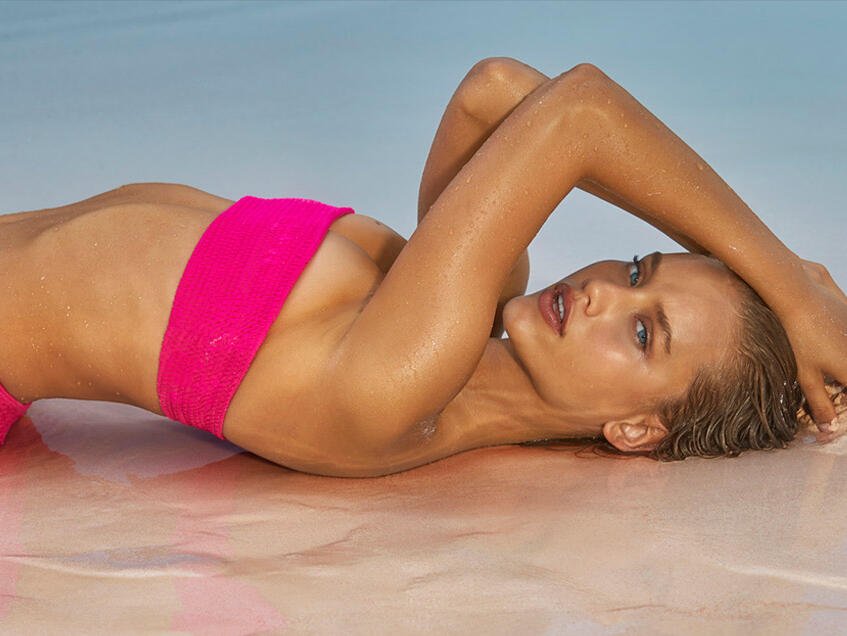
Chase Carter was scouted at the Sydney Airport flying back to her home country of The Bahamas when she was just 13 years old, making her one of the youngest beautiful island girls every discovered. Carter’s first photoshoots were with NYLON, a top modeling magazine, and she has since gained a strong following on her social media accounts, becoming an influencer with millions of followers. Carter’s popularity has grown a lot because of her YouTube channel, MickCheese, that she runs with best friend and fellow model, Meredith Mickelson.
Carter was a 2018 rookie for the Sports Illustrated Swimsuit Issue where she landed a partnership with the athletic brand Under Armour. Her catalog of campaigns includes huge name brands like Victoria’s Secret Pink, Maybelline, Nike, and she has been on the cover of Maxim magazine. Carter has a passion for athleticism and has explained that she wants to give back to her country as much as possible, whether its tennis shoes or helping sports coaches.
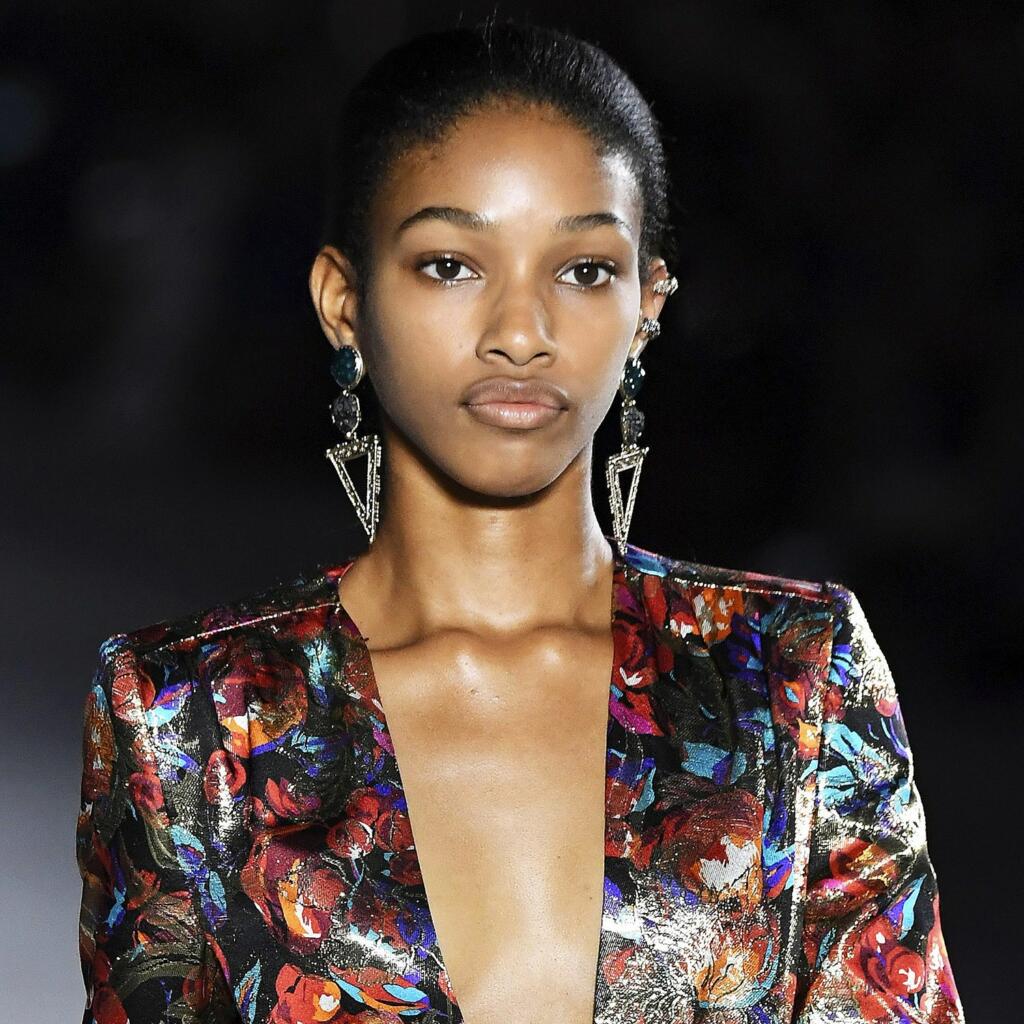
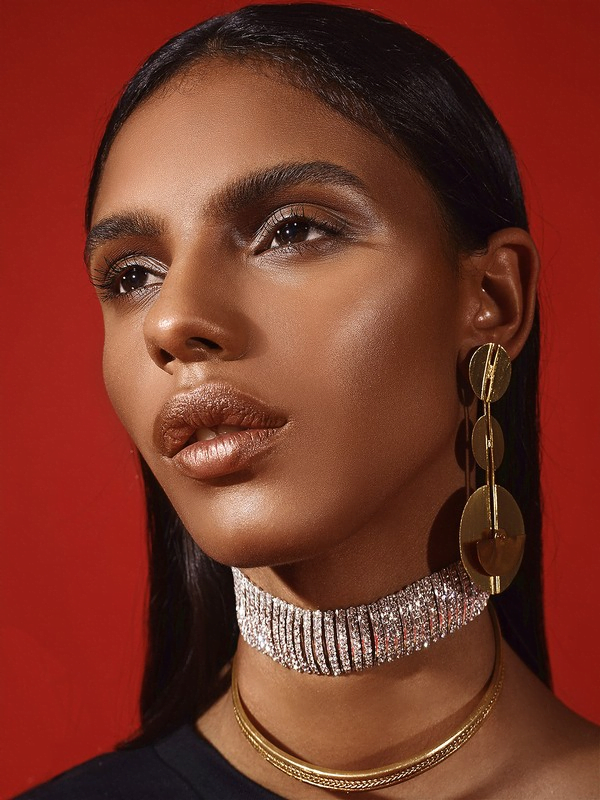
Making Puerto Rico proud is one of the most beautiful island girls every discovered: Mileshka Cortés Bernard, who is quickly fulfilling a lifelong dream to become a model. In 2017, at the age of 17, Bernard’s sharp features and editorial look locked down her first runway show for Yves Saint Laurent at Paris Fashion Week — her entree into the competitive world of modeling. Not long before walking for YSL, Bernard was signed with Elite Model New York. With a promising career ahead of her, she walked in a FENTY x PUMA runway show for Rihanna’s well known lingerie brand. Despite her young age, Bernard has an impressive resume, walking for other designer brands like Alexander Wang, MSGM, Acne Studios, Yang Li.